What Does the Abyei Ruling Mean for the Missiriya?
Due to the Court of Arbitration decision in The Hague, around 1460 square kilometers which were inhabited by two clans of the Missiriya tribe (Mazaghna and Awlad Kamal), have become part of Abyei. This means if the people of Abyei decide in 2011 to be part of the south and vote in the referendum, as the most likely outcome of that referendum will be a southern vote for secession, the newly-drawn administrative boundary will shortly become an international frontier. This may make their journey south very difficult due to the history of violent conflict during the 20 years of north-south war.
Based on the decision of the Court of Arbitration on the disputed Abyei area between the National Congress Party (NCP) and Sudan Liberation Movement (SPLM) I am analysing the impact of the decision on the two tribes in the region, namely the Dinka Ngok and Missiriya, taking into account the effect on their livelihoods and investigating how to overcome any negative impacts on inter-tribal relations and helping in sustaining peaceful co-existence between them.
1. For the Missiriya tribe the decision will affect their seasonal cattle movement north to south and south to north looking for pasture and water. Any disruption of the movement of livestock might create security problem in the area. This issue is considered to be life or death for the Missiyira tribe.
2. There is no water in the areas where the Missiriya have their three marahil (nomadic migration routes), east west and central. Water resources in the area are urgently needed to prevent them from going deep into the Dinka areas which cause clashes to occur between them and the locals or the SPLA in those areas. The best solution is to build three reservoirs, on those areas:
A – the valleys, before El Ragba EL Zarga water source.
B – in the central Missiriya area for settlers.
C – Water wells on their nomadic migration routes.
3. A third option is the establishment of villages to help the nomads to settle, and that will stop them from travelling the whole year north to south and south to north. In turn that will mean changing their life style and also lead to stability and a new methods of rearing livestock at a time of economic and social changes.
Among the Missiriya tribe, cattle have a great social value as well as an economic one. Cattle means the pride of the family or the clan, and to change those habits more education is needed. That can happen by building boarding schools in each of those villages to educate the new generation as the so called nomadic schools faces many difficulties and failed to have any impact on their life.
The needs for each village are as follows:
A- Primary school for each one
B- Secondary school for each two
C- Health Center for each
D- Veterinary centre for their animals.
E- Various administrative units, as needed and rural hospitals.
F- Solar Electricity
G- Technical and administrative unit to monitor the existing facilities in the village as sources of water and electricity.
Changing their life style require changes in their economic activities also and that can be done by helping them to cultivate their land so they can produce their food and other cash crops. The cost of building a village with all the facilities mentioned above is around US $ 11 millions. The cost of allowing the area sliding into violence is hundreds times higher, and will not only affect the area but will spread to the other neighboring regions, other part of north Kordofan, Nuba mountains, and Bahr el Ghazal.
To fund those settlements project, government and donors can contribute. The Sudanese government can pay through investing the 2% share of oil revenue, and it can also borrow against the stock of oil in these areas, to regenerate the area and help the people to overcome the negative affect of the oil exploration which played big role in destroying the environment. UN agencies including UNDP and UNICEF can also assist, along with other donor countries.
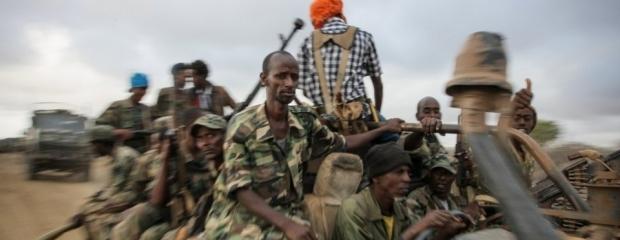
With the tension very high among the Missriyia tribe, the general mode among the majority of them is to fight on and not surrender to the court decision. They have called for a conference for all the tribe in September. The main reason of that conference is to help take a collective decision on how to deal with the court decision.
The NCP cannot afford to support any hardline position even if it totally agrees with it on fear of international condemnation including threats of more sanctions from the UN Security Council. At the end of the day, the NCP has to face itsconstituencies alone, and the alliance between Missiriya and the NCP at last may come to an end as many of the Missiriya now publicly blame the Sudanese Vice President Ali Osman Taha, as he was the one who negotiated the Three Areas Protocol during the CPA negotiations.