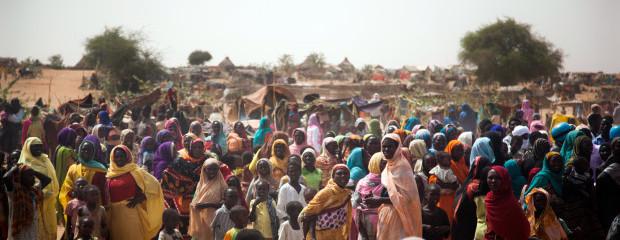
Sean Brooks has published a three-part review of Mahmood Mamdani’s Saviors and Survivors.
The text is available here. The essay reflects the author’s views and not necessarily those of the Save Darfur Coalition.
newsletter
social links
Recent Posts
- Politicizing the ICC Process in Kenya will not let ICC suspects off the hook – By Stephen Lamony & Sunil Pal
- African unity after 50 years of OAU/AU: A dream deferred? – By Solomon Ayele Dersso
- ‘MOVING ON’: WELCOME TO KENYA INC – By John Githongo
- The Diaspora can help fuel Rwanda’s Technology and Digital Ambitions – By Sean Obedih
- The (LRA) conflict: Beyond the LRA lobby & the hunt for Kony… and towards civilian protection – By Kristof Titeca
- The curious case of Africa’s Progress and the missing Millennium Development Goals – By Susana Edjang
- Confucius and the Curate’s Egg: The Morality of China in Africa – a review by Keith Somerville
- Bob Diamond, Uhuru Kenyatta and the rise of Afro-confidence: WEF 2013, Cape Town – By Richard Dowden
- Democratization and the Failure of the Sudan Peace Process – By John Young
- Mali: Which way forward? A chat with Bruce Hall, Baz Lecocq, Gregory Mann and Bruce Whitehouse
- The rise and rise of the African factivists – By Bright Simons and Jamie Drummond
- Can Britain fix Somalia? – By Abdihakim Aynte
- African oil & gas outlook 2013 (part II): analysis by region – Rolake Akinkugbe at Ecobank
- Africa’s oil and gas outlook 2013 (part 1) – By Rolake Akinkugbe at Ecobank
- REVIEW: The Fate of Sudan: The Origins and Consequences of a Flawed Peace Process – By Alex de Waal
- How ZANU-PF stays in power – By Simukai Tinhu
- Making friends in London: is a new rapprochement on Zimbabwe occurring? – By Ian Scoones
- Zimbabwe Elections Scenarios: New ICG Report Cuts Through the Political Posturing
- Kenyatta, Ruto and the ICC: major diplomatic earthquake in the offing – By Richard Dowden
- Somalia seeks lasting support from London conference – By Farah Abdulsamed
- Djibouti, Democracy and the Horn of Africa – By H.E. Mahamoud Ali Youssouf, Minister of Foreign Affairs of Djibouti
- Summits and stereotypes: analysing the analysis of Africa — by Jolyon Ford at Oxford Analytica
- Nigeria: After Baga, JTF lost in a maze of rocks and hard places – By Alkasim Abdulkadir
- After Borama: consensus, representation and parliament in Somaliland – new report from Africa Research Institute
- Lady in Pink: Victoire Ingabire faces her judges in appeal – By Kris Berwouts
- Angola economic briefing: high oil prices compensate for tough business environment – By Gaimin Nonyane
- Tendai Biti: Zimbabwe must stage “a legitimate and credible election” for economic recovery – By Magnus Taylor
- Making African journalism pay: sustainable democracy depends on a strong and independent media – By Yasiin Mugerwa
- Big Pharma in Africa: Weighing corporate citizenship and the bottom line – Adam Robert Green
- Somalia: rumours of Al-Shabaab’s death are greatly exaggerated – By Stig Hansen
Recent Comments
- Robos on Politicizing the ICC Process in Kenya will not let ICC suspects off the hook – By Stephen Lamony & Sunil Pal
- Alexander on Politicizing the ICC Process in Kenya will not let ICC suspects off the hook – By Stephen Lamony & Sunil Pal
- Monroe Swanson on The Diaspora can help fuel Rwanda’s Technology and Digital Ambitions – By Sean Obedih
- Tara Hutchinson on Mali: Which way forward? A chat with Bruce Hall, Baz Lecocq, Gregory Mann and Bruce Whitehouse
- mkenya on Kenyatta, Ruto and the ICC: major diplomatic earthquake in the offing – By Richard Dowden
- achola on Bob Diamond, Uhuru Kenyatta and the rise of Afro-confidence: WEF 2013, Cape Town – By Richard Dowden
- George Tregson Roberts on Making African journalism pay: sustainable democracy depends on a strong and independent media – By Yasiin Mugerwa
- Butler Z Kapumha on Zimbabwe Elections Scenarios: New ICG Report Cuts Through the Political Posturing
- Robos on Kenyatta, Ruto and the ICC: major diplomatic earthquake in the offing – By Richard Dowden
- Kenya’s request to re-introduce impunity | Sharing thoughts and ideas on Kenyatta, Ruto and the ICC: major diplomatic earthquake in the offing – By Richard Dowden
- Monte McMurchy on REVIEW: The Fate of Sudan: The Origins and Consequences of a Flawed Peace Process – By Alex de Waal
- Kenya – Kenyatta reportedly unhappy at snubs during UK visit | Africa - News and Analysis on Kenyatta, Ruto and the ICC: major diplomatic earthquake in the offing – By Richard Dowden
- Evans on Kenyatta, Ruto and the ICC: major diplomatic earthquake in the offing – By Richard Dowden
- ♦ Kofi Anna’s Africa Progress Panel releases a report lambasting Eurasian Natural Resources Corp for “opaque concession trading” costing the Democratic Republic of Congo $725m. | acbnews.tk,40million!readers,EMEA on Kenyatta, Ruto and the ICC: major diplomatic earthquake in the offing – By Richard Dowden
- Peter Higgins on Kenyatta, Ruto and the ICC: major diplomatic earthquake in the offing – By Richard Dowden
- Eric Towett on Kenyatta, Ruto and the ICC: major diplomatic earthquake in the offing – By Richard Dowden
- Saulo Were on Kenyatta, Ruto and the ICC: major diplomatic earthquake in the offing – By Richard Dowden
- FP on Kenyatta, Ruto and the ICC: major diplomatic earthquake in the offing – By Richard Dowden
- Kim on Kenyatta, Ruto and the ICC: major diplomatic earthquake in the offing – By Richard Dowden
Archives
- May 2013 (25)
- April 2013 (30)
- March 2013 (36)
- February 2013 (28)
- January 2013 (22)
- December 2012 (20)
- November 2012 (30)
- October 2012 (35)
- September 2012 (31)
- August 2012 (25)
- July 2012 (31)
- June 2012 (12)
- May 2012 (28)
- April 2012 (32)
- March 2012 (46)
- February 2012 (39)
- January 2012 (36)
- December 2011 (28)
- November 2011 (30)
- October 2011 (24)
- September 2011 (30)
- August 2011 (28)
- July 2011 (30)
- June 2011 (29)
- May 2011 (33)
- April 2011 (2)
- March 2011 (11)
- February 2011 (6)
- January 2011 (12)
- December 2010 (4)
- November 2010 (2)
- October 2010 (6)
- September 2010 (15)
- August 2010 (9)
- July 2010 (12)
- June 2010 (17)
- May 2010 (17)
- April 2010 (18)
- March 2010 (29)
- February 2010 (17)
- January 2010 (15)
- December 2009 (18)
- November 2009 (22)
- October 2009 (34)
- September 2009 (29)
- August 2009 (32)
- July 2009 (35)
- June 2009 (30)
- May 2009 (33)
- April 2009 (42)
- March 2009 (32)
- February 2009 (23)
- January 2009 (24)
- December 2008 (11)
- November 2008 (7)
- October 2008 (10)
- September 2008 (10)
- August 2008 (14)
- July 2008 (27)
- June 2008 (36)
- May 2008 (18)
- April 2008 (10)
- March 2008 (17)
- February 2008 (11)
- January 2008 (4)
- December 2007 (5)
- November 2007 (4)
- October 2007 (10)
- September 2007 (4)
- August 2007 (11)
- July 2007 (5)
- June 2007 (7)
- May 2007 (1)
Categories
- A Civil Society Deferred (5)
- Abyei crisis (3)
- Africa and the War on Drugs (6)
- Africa's Odious Debts (2)
- African Politics Now (433)
- African Union (31)
- agriculture (2)
- agriculture (9)
- Aid (11)
- Aly Verjee (5)
- AU (7)
- Book reviews (6)
- Books and Articles Relevant to Darfur (60)
- Brics Special (3)
- Bright Simons (3)
- Business Africa (82)
- Citizenship (10)
- Civil Society (12)
- Climate & Environment (10)
- Complex Emergencies (7)
- Congo Masquerade (3)
- CPA (5)
- Debate (20)
- Democracy (18)
- Diaspora Debate (23)
- Dodd-Frank Act (3)
- economic development (5)
- Education (4)
- Elections (45)
- elections (11)
- ethnicity (1)
- Exclusive Analysis (11)
- Famine in Eastern Africa (4)
- farming (8)
- Fighting for Darfur (2)
- France (4)
- Gender (13)
- Genocide Debate (24)
- History (7)
- HIV/AIDS (4)
- Human Rights (16)
- Humanitarian Issues (35)
- ICC (109)
- ICC Kenya debate (5)
- In Memoriam (7)
- indigenisation (2)
- International Justice in Africa Debate (16)
- Islamism (16)
- Islamist Groups (5)
- Jo Ford (14)
- Judiciary (8)
- Justice (14)
- Justice and Peace (12)
- Keith Somerville (11)
- Killing Civilians (5)
- Kordofan (20)
- Kris Berwouts (7)
- Land (20)
- Land Reform (9)
- literature (4)
- Making Sense of Sudan (725)
- Mary Harper – Getting Somalia Wrong – reviews (2)
- MDC (19)
- Media and Advocacy (60)
- Mining (7)
- Naomi Pendle (6)
- NGOs (5)
- Nomads (6)
- Notes on 32 years of Zimbabwean independence (3)
- Nuba Mountains (3)
- Numbers (29)
- Oil (12)
- One Foot in Heaven (5)
- Other Regions of Northern Sudan (10)
- Peace Process (47)
- Peacekeeping (33)
- political marketplace (6)
- Political violence (6)
- Politics (61)
- poverty (3)
- Propaganda (2)
- Prosecutions (9)
- Publishing (4)
- R2P (6)
- Rebels (12)
- Rethinking Zimbabwe (52)
- Richard dowden Blog (40)
- SADC (8)
- Sanctions (6)
- Sanctions and Investment (10)
- Saving Darfur (8)
- Saviors and Survivors (38)
- Scramble for Africa (7)
- Self-determination (28)
- Social and economic issues (10)
- Socio-economic Issues (26)
- Songhai Advisory (11)
- South Kordofan (5)
- Terrorism (4)
- The Central Africa Forum (80)
- Truth, justice and reconciliation commission (7)
- U.S. Policy (10)
- Uncategorized (60)
- Urbanization (12)
- US Policy (25)
- Vernacular Politics (9)
- Violence (4)
- War (19)
- Who Rule South Africa? (2)
- ZANU-PF (22)

Though I agree with the general thrust of Mamdani’s message in Saviors & Survivors and believe his book has played a valuable role in bringing some attention to the problematic political usage of the Darfur crisis in the U.S., this review by Sean Brooks does make some valid points. For instance, I share Brooks’ discomfort at with Mamdani’s “citizen”/”consumer” dichotomization of Darfuri IDPs.
Brooks does not seem to perceive that there are political reasons why Darfur garnered such traction in the United States. He does not ask why it is that “The force of Mamdani’s critique raised some eyebrows in academic and leftist circles, but largely fell silent in the mainstream media and human rights community.” Certainly it was not because the critique lacked validity.
Brooks’ contends that “the coalition’s advertising in American media markets was not designed to… make Americans feel good once again about their powers abroad.” Quite possibly that was not a conscious intention – but was that a predictable effect? Brooks might reach different conclusions if he simply reflects upon how it was that SDC, with its “small staff,” was able to attract “noteworthies like then-Senator Barack Obama and Speaker of the House Nancy Pelosi” to its 2006 rally. However, Brooks’ views are unsurprising coming from someone affiliated with Save Darfur Coalition and it is unnecessary to critique them further here.
I must take some issue, however, with Brooks’ contention that “Notwithstanding a difference of opinion on the ICC matter, great overlap and little difference actually exists between the coalition and Mamdani’s own policy recommendations for the Obama administration on how to resolve the crisis in Darfur and hold together Sudan’s fraying parts.” The open letter to President Obama from which Brooks’ deduces Mamdani’s policy recommendations (and which I played a role in drafting) does include some points that the SDC has also endorsed (though not always emphasized or timed properly). (And, contrary to Brooks, the letter does not comment on the ICC beyond banalities, unless the SDC disputes that the warrant for Bashir presents “both opportunities and dangers” or disagrees that Washington should also submit itself to the jurisdiction of international law.)
However, Brooks does not mention two of the most prominent of the letter’s five recommendations:
# End the CIA’s close ties with the notorious Sudanese intelligence agency, which is deeply implicated in the violence in Darfur.
# Establish a fair and accessible process by which Darfurians can seek asylum in the US
It is difficult to find any mention, let alone emphasis upon these points from any quarter of SDC. Given that these two actions would be among the easiest and most direct ways for Washington to actually support Darfuris, it is remarkable that such simple measures receive zero attention from SDC. Read in totality, the policies advocated by the letter were not “remarkably similar to the calls from Save Darfur at the very same time.” Quite to the contrary. Moreover the differences in policy recommendations reflect the ideological biases of the SDC that I touch upon above.
Mamdani’s book is certainly not “outdated” given that Bush’s War On Terror continues under different language. If we accept Brooks’ assertion that the SDC’s “intentions have always been similar to those who advocate for unheard victims in places like Iraq and Palestine (both causes that seem very close to Mamdani’s heart),” we must ask why the organization has learned so little from advocacy around these conflicts.
Dear Steve,
Thanks for your comment. I am not going to respond point by point because the review sets out my opinion as to why the accusations about conspiracies or certain ideologies driving the Save Darfur Coalition’s efforts (or serving as key factors for its success) are completely false and poorly researched. As I alluded to in the review, it would be nice if those focused on this so-called spin machine spent as much time investigating how Sudanese actors (especially Bashir and the National Congress Party) manipulate the local, regional and international media to serve their interests.
As for the joint letter, I acknowledged in the article that the ICC issue is a key difference between the Save Darfur Coalition and Mamdani (and others). So I think you misunderstood me. It is also important to note that members of Save Darfur and others in the activist movement have questioned the CIA’s relationship with the Sudanese intelligence agency. The problem of building an advocacy campaign around the issue is that there is no way for the general public to ever know if US policy has changed, as the nature of these affairs is obviously confidential and rarely addressed publicly. Perhaps those in the movement should have emphasized the relationship more, but again I am not sure exactly how the movement could have evaluated any changes to American policy or whether US relations were really holding back Washington’s pressure on Khartoum.
Concerning Darfuris seeking asylum, I can tell you from firsthand experience working with the Darfuri diaspora in the US for almost four years that Sudanese do receive preferential treatment within the American asylum and refugee processing system. They have had Temporary Protective Status for years. All of the Darfuri cases that I have personally seen in the US have been decided quickly by immigration courts. Oftentimes I have recommended experts or translators for their cases. I also know of an extraordinary case of dozens of Darfuris who were kicked out of Iraq and into Jordan, where they were not allowed to register as refugees. They were ably assisted in the resettlement process by the US which took unusual steps to get them out of Jordan. Most of these Darfuris are now living in Midwestern states in the US.
This does not mean that the system is working to the benefit of all refugee seekers. There are 250,000 Darfuri refugees in Chad and thousands more in Egypt and Israel. Save Darfur has tried to stay abreast of the treatment and processing of refugees and has on different occasions made interventions with US, UN, Chadian, Egyptian, and Israeli officials when necessary and appropriate. The diaspora networks in the United States to my knowledge have also never called on the advocacy movement to make this an advocacy priority.
So again, with the exception of the ICC issue, I would again argue in spring 2009 that the policy recommendations being made by Save Darfur closely matched those in your joint letter. For what its worth, at least five of the individuals or organizations that signed that letter collaborate or have collaborated with Save Darfur in the past.
Best regards,
Sean