
Boko Haram and the many faces of Abubakar Shekau – By Jacob Zenn
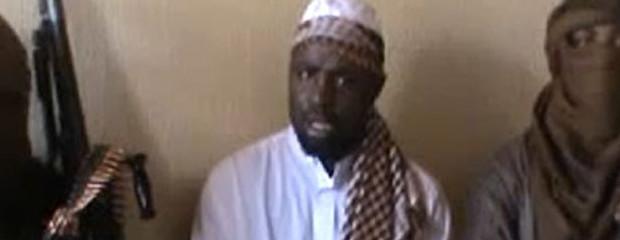
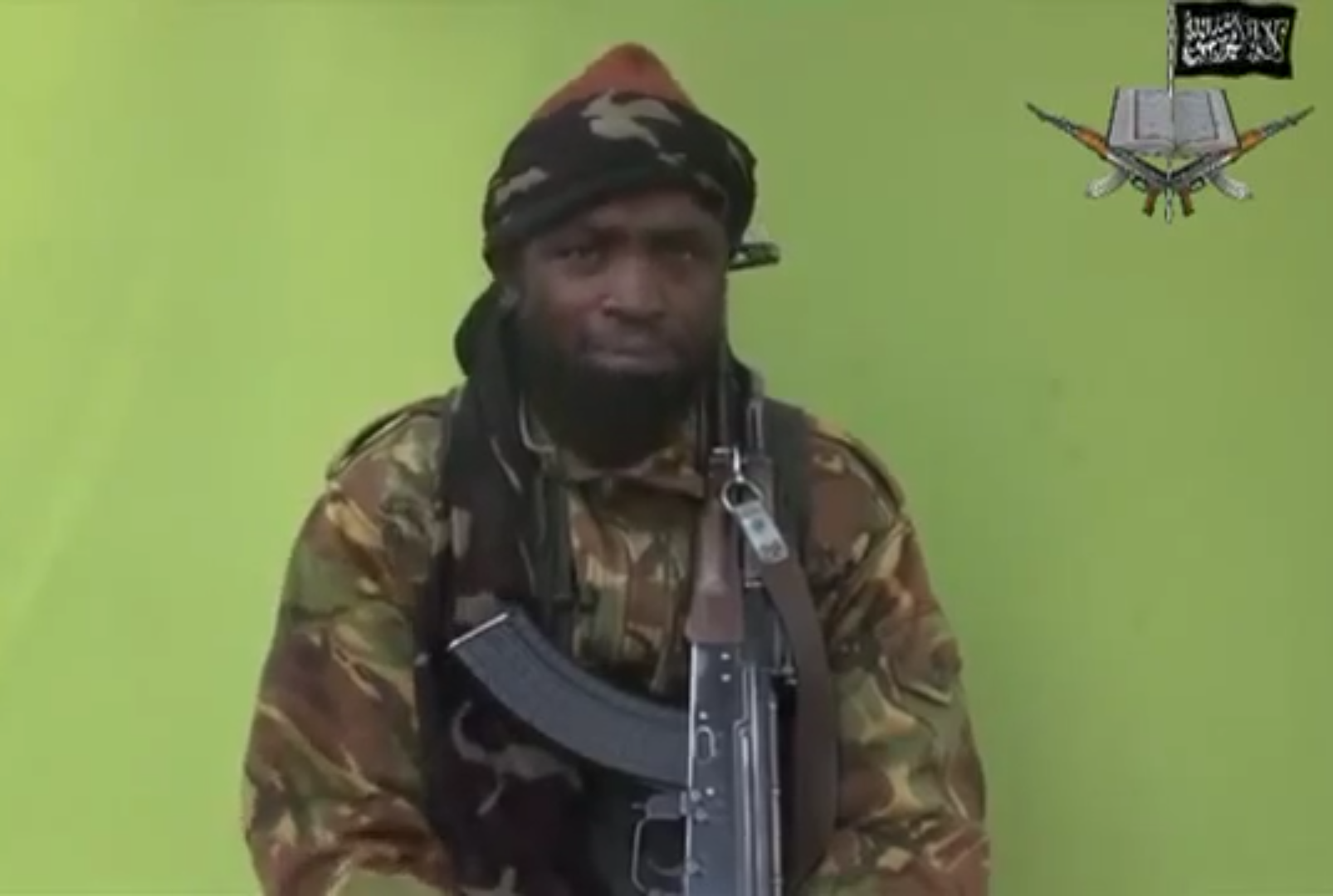
‘Abubakar Shekau’ in May 2014.
On September 24, 2014, Nigerian and Cameroonian sources provided video evidence (6:24) that a Boko Haram commander named Bashir Muhammed, who “˜doubled’ as the group’s leader Abubakar Shekau, was killed in Konduga in Borno State. This prompts the question: Where is the real Shekau? There are several credible theories about Shekau’s whereabouts (and whether he is even still alive) and what the impact of this imposter’s death may be for Nigerian security ahead of its presidential elections in February 2015.
Explaining the Shekaus
It remains possible that the Nigerian security forces were correct when they claimed to have killed Shekau in July 2009 along with 1,000 other Boko Haram members, including founder Muhammed Yusuf and key financier Alhaji Buji Foi. When a heavier-looking Shekau re-emerged in a video in July 2010, the security forces claimed the image was “digitally manipulated.” The Shekau of July 2010, as well subsequent commanders claiming to be him in Boko Haram videos since then, may have been several people (including Bashir Muhammed.) In other words, the real Shekau may have been dead since July 2009 but because, unlike Muhammed Yusuf’s death, this was never proven with video or photographic evidence, Boko Haram was able to “˜duplicate’ him.
Another possibility is that Shekau survived the July 2009 crackdown and appeared alongside several imposters until July 2013, when he was killed in Amchide, Cameroon by defectors from his ranks or the security forces. Since July 2013 several imposters, including Bashir Muhammed, could have appeared as “˜Shekau’. However, UAE-based Nigerian journalist Ahmed Salkida now claims that Shekau is still alive along with one or two other imposters, except, of course, Bashir Muhammed. Future Boko Haram videos will likely provide more insight on whether Shekau is dead or alive or if there is a successor.
A second question that arises is why Boko Haram would decide to feature several Shekaus? One possibility is that this leadership structure was learned or appropriated from Niger Delta militants. Their spokesperson, Jomo Ngomo, represented several commanders who all used the name “˜Jomo Ngomo’ to communicate with the press, so that when one commander was arrested the others could take over under one voice. Similarly, when Boko Haram spokesperson, Abu Qaqa defected and was arrested in 2012, other Abu Qaqas emerged, who were then known as Abu Qaqa II and Abu Qaqa III.
This “˜revolving’ leadership structure may also have been taught to Boko Haram by leaders from its Ansaru faction. Ansaru was led by Nigerian al-Qaeda in the Islamic Maghreb (AQIM) members and targeted foreigners for kidnapping and Nigerian soldiers in northwest Nigeria in 2012 and 2013. In fact, one of the first probable Shekau imposters appeared in a split-screen video of “˜Shekau’ and seven French hostages in Cameroon in what was very likely an Ansaru-led attack. Some Ansaru cells reintegrated with Boko Haram in northeastern Nigeria in 2013 and seem to have multiplied the “˜Shekaus’ in operation.
The existence of several Shekaus has made it more difficult for the security forces to gain the morale boosting victory of “˜decapitating’ Boko Haram’s leadership, while making it also more difficult for foreign governments like the US and UK to confirm the location of Shekau, who is a designated terrorist.
Bashir Muhammed is Dead, What’s Next?
Now that Bashir Muhammed is dead, what are the opportunities for the Nigerian security forces? First and foremost, the death may allow the security forces to exploit Boko Haram’s factionalization and negotiate with its different constituent parts. The existence of multiple Shekaus suggests that there are several Boko Haram factions that have had a mutual understanding with each other. Otherwise, one of the Shekaus would have released a video declaring the others Shekaus as fakes.
This has not happened. It has only been commanders who have fallen out with Shekau who have gone public and said there were fake Shekaus prior to Bashir Muhammed’s death. These commanders tend to favour some form of negotiation with the Nigerian government for the release of Boko Haram prisoners and compensation for the families of victims of the July 2009 clashes. The elimination of Bashir Muhammed may strengthen these commanders, thus providing an opportunity for the government to test negotiations through back channels, probably involving religious leaders.
It also appears that some of Bashir Muhammed’s fighters were disloyal to him and told him that Konduga was safe for travel while secretly setting him up for the ambush that killed him. These fighters may now join another Boko Haram faction, such as Ansaru, which claims to be more “˜humane‘ than Boko Haram – criticizing Boko Haram’s killing of Muslim civilians. But if the government and civil society groups act quickly enough they may be able to reintegrate some of these informers into society through educational and employment programs before they consider re-engaging militancy under any faction.
One reason for growing disloyalty in Bashir Muhammed’s faction may be related to forcible recruitment. Under Muhammed Yusuf and during the first year after Shekau declared “˜jihad’ against Nigeria in 2010, Boko Haram had some support from the local population in Borno State. Their followers sympathized with Yusuf’s call for a “˜pure’ Islamic State that he believed would eliminate the corruption, poverty, and impunity of Nigerian society.
In 2010 and 2011 Boko Haram focused mostly on targeting politicians and religious leaders, who some followers viewed as corrupt. But when Boko Haram started massacring civilians and carrying out suicide bombings at churches and markets in 2012, it lost some popular support and in 2013 began forcibly recruiting young men as foot soldiers. Most notoriously, it also began kidnapping women to use as scouts, cooks, porters and sex slaves. These types of forcible recruits may be more likely to leave Boko Haram and offer the sort of intelligence that the security forces need to locate the group’s hideouts and undermine its domestic, regional and international networks.
Conclusion
There have been few points of optimism recently in the Nigerian security landscape. But the death of Bashir Muhammed does present opportunities. The Nigerian government and security forces have precious little time before elections in February 2015 to right the ship in the country (especially Borno State) so polls can be held there. As a result, all efforts should be taken to see whether there are now some factions willing to negotiate a ceasefire and members willing to leave militancy altogether, provide intelligence on Boko Haram to prevent future attacks, and rejoin society through programs that the government and civil society should immediately create.
Jacob Zenn is an analyst of African Affairs and author of “Northern Nigeria’s Boko Haram: The Prize in al-Qaeda’s Africa Strategy,” which was published by The Jamestown Foundation.