Congo’s Katanga Governor Moïse Katumbi leaves ruling party, breaks silence
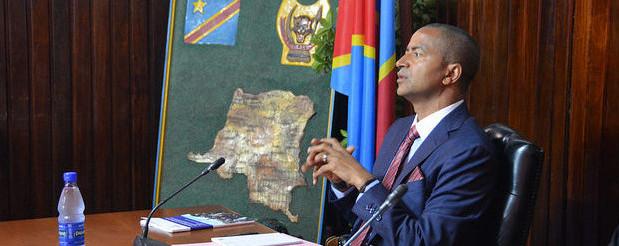
Katanga’s popular governor Moïse Katumbi could be the one politician able to mobilise enough votes across the DRC to challenge President Kabila.
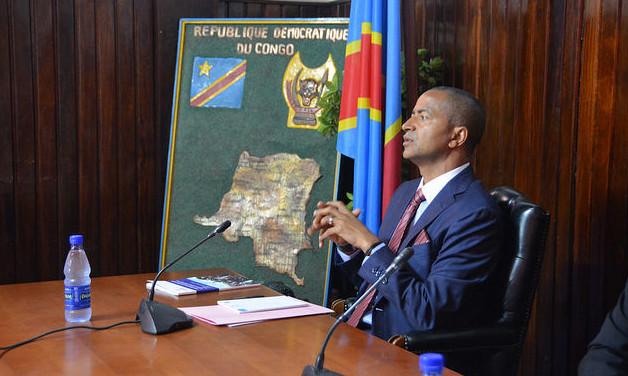
Governor Moise Katumbi of Katanga Province, DRC. Photo by Kaukab Jhumra Smith/USAID.
After a long silence, Moïse Katumbi has finally spoken out. On 29 September, the celebrated governor of the Democratic Republic of Congo’s (DRC) Katanga province announced his resignation from the People’s Party for Reconstruction and Democracy (PPRD), the country’s main ruling party led by President Joseph Kabila.
The DRC is in the middle of a complex electoral process where the key question is whether Kabila will leave office in 2016. Kabila has been in power for 14 years, and according to the constitution, he will not be eligible to run for elections once his two terms as elected president come to a close next year. However, that has not stopped him trying to circumvent these provisions.
Indeed, in Katumbi’s declaration, the governor strongly condemns recent attempts by the regime to change the constitution or delay elections to prolong Kabila’s reign. He also criticises the arbitrary arrests of pro-democracy activists as well as increased intimidation and repression. And he calls on the Congolese people, political parties, and civil society to fight against fatalism and to help save the DRC’s young democracy.
A challenger to Kabila?
Although born in South Kivu, Kabila’s home province is Katanga. And through 2014, the president witnessed as public opinion in the region increasingly moved away from him. By the end of the year, Katumbi, who has been governor of the province since 2007, was distancing himself from Kabila too.
In December 2014, coming back from a long absence abroad, Katumbi indicated in some of his speeches that he was against Kabila presenting himself for a third mandate. The governor raised expectations in his public speeches in December 2014 and early 2015, but remains quiet about any presidential ambitions he may have.
At the end of February, Katumbi met with Kabila and they talked for more than two hours in private. Following this, different versions of what was said emerged, but what the various accounts have in common is that: 1) Kabila proposed something concrete to Katumbi (though what this was depends on which version of events you trust); 2) Katumbi refused; and 3) both leaders agreed not to air their disputes in public.
Katumbi, for instance, has not openly criticised découpage, the policy of splitting up of the DRC’s 11 provinces in 26. Although this idea was mandated in the 2006 constitution, Kabila’s recent drive to implement the move has been widely interpreted as a way to disempower Katumbi by breaking up the huge, copper-rich Katanga province and his authority over it.
Kabila has also engaged in other tactics to undermine the popular governor. In June 2015, the president filed a criminal complaint against more than a dozen current and former government officials for fraud and corruption, including Katumbi. This initiative hasn’t been taken further since June, but it hangs like a Damocles’ Sword above Katumbi’s head, presumably to be dropped in the event that he decides to lead an opposition faction. With yesterday’s declaration and Katumbi’s departure from Kabila’s party and presidential majority, this eventuality seems a little closer.
Great looks, dark shadows
As governor of Katanga, Katumbi has been is responsible for positive changes and new dynamics in the province. He has a good reputation as businessman and manager, and is seen to be generous. He also has the money and looks for a great campaign. He is charismatic and has cleverly used his success in football and development to feed into his political ambitions. In fact, Katumbi is currently seen as one of the few – if not the only – politician who might be able to mobilise a considerable electorate in most of the country’s 26 provinces.
However, Katumbi also has a many elements playing against him. There are some dark shadows hanging over his business past, he might not have the strength of personality to be a leader, he is not considered to be a sophisticated intellectual or visionary, and he has a lot of adversaries in Katanga. The business community of the province complains that he uses his political mandate to reinforce his economic empire and acquire as many commercial monopolies as possible. And the fact that his father is Jewish is also likely be used against him in some way.
The question now is of how Katumbi will position himself on the political chessboard. He will certainly need strong alliances if he wants to present himself as the leader of a credible and sustainable process of change.
Whatever happens next, Katumbi’s declaration ends a turbulent September for President Kabila. Earlier this month, the opposition UDPS party broke off negotiations with the government over conditions for a national dialogue regarding the electoral process. Meanwhile, seven senior political figures, some close to Kabila, signed an open letter urging Kabila to respect the constitution. The politicians, who were the leaders of a group of parties within the ruling coalition known as G7, were later expelled.
The combined effect of these events is nothing less than an earthquake which could redraw the vast DRC’s political landscape.
Kris Berwouts (Ghent, 1963) studied African linguistics and history. He worked over 25 years for a number of different Belgian and international NGOs focused on building peace, reconciliation, security and democratic processes. Since January 2012, he works as an independent writer and expert on conflict, security and democratization in Central Africa. He can be followed on Twitter @KrisBerwouts.