Beyond Projects: Rethinking Agricultural Investment for Sudan’s Post-War Recovery
This essay concludes a three-part series by the author on agriculture in Sudan. Read the previous instalments here and here.
A different approach is needed to determine what to invest in, where to invest, who should benefit, how investments should be financed, and how they should adapt when conditions change.
This distinction is important. The previous article in this series examined a century of agricultural investment in Sudan and explored why such extensive investment failed to generate broad-based development. The answer was not merely poor management or insufficient funding. The deeper issue was fragmentation: investments were often designed around individual projects rather than the agricultural system within which those projects had to operate.
Post-war reconstruction exacerbates these weaknesses, making them even more consequential. Rebuilding an irrigation canal without restoring markets does not revive livelihoods. Providing seeds without resolving land rights can intensify conflicts. Constructing a road without addressing the political economy of transport may simply create another route for resource extraction. Attracting investors without implementing environmental and social safeguards can perpetuate the land and resource pressures that initially contributed to instability.
Sudan, therefore, needs to transition from project-based agricultural investments to an integrated investment model—one that effectively connects recovery, markets, institutions, finance, natural resources, and peace.
The Model proposed here, the Integrated Agricultural Investment Model for Post-Conflict Reconstruction in Sudan (IAIM-Sudan), is designed based on this premise. It views agriculture not as an isolated productive sector but as a system through which livelihoods, markets, institutions, natural resources, and the relationship between citizens and the state can be rebuilt.
From Projects to Systems
The central principle is simple: an agricultural investment should not be evaluated solely by what it constructs, but by the system it helps to establish. Sudan’s post-war agricultural recovery will occur amid displacement, damaged infrastructure, contested land, disrupted markets, weak institutions, climate stress, and limited public financing. In this context, conventional linear planning is insufficient. A project may be technically sound yet still fail if the surrounding conditions are not met.
This is why the proposed Model begins with an analysis of context and fragility. Before determining which crop to promote or which irrigation scheme to rehabilitate, investors and policymakers must understand the political, economic, social, institutional, and environmental conditions in which the investment will take place.
The Model, therefore, integrates several analytical lenses: political economy, conflict sensitivity, systems thinking, market systems, value-chain analysis, spatial development, and responsible investment. The purpose is not to accumulate methodologies but to use them collectively to address a practical question: What combination of investments can generate the greatest economic, social, and peace dividends under Sudan’s current conditions?
This changes the role of investment planning. Instead of starting with available projects and then seeking funding, Sudan would begin with national and local recovery objectives and identify the investments necessary to achieve them.
The Investment Tree
The Model employs a straightforward metaphor to operationalise this systemic logic: the agricultural investment tree.
The Roots: Fixing the Foundations First
The primary investment priority, therefore, is not necessarily physical infrastructure. The security of the foundations on which investment depends is crucial.
Land is the most obvious example. In many parts of Sudan, competing claims over land and natural resources are inseparable from conflict. A post-war investment program that ignores customary rights risks turning reconstruction into yet another mechanism for dispossession.
The Model, therefore, places transparent land governance at the foundation of agricultural investment. This includes documenting community and individual claims, recognising legitimate customary rights, establishing accessible mechanisms for resolving competing claims, and ensuring that major investments cannot proceed without meaningful consultation with affected communities.
Human capital is equally important. Post-war reconstruction must create productive opportunities for young people, displaced populations, and former combatants. Agricultural recovery can offer such pathways through vocational training, agricultural services, machinery maintenance, processing, logistics, and other rural occupations.
This is where agriculture becomes an integral part of peacebuilding. The objective is not merely to return people to farming but to reconnect displaced and marginalised populations with productive economic systems.
The Trunk: Restoring Production and Essential Infrastructure
Once the foundational issues are addressed, investment can focus on restoring productive capacity.
Food security must be an immediate priority. Sorghum and millet are especially important because they are central to Sudanese food systems and well adapted to rainfed conditions. However, food security does not mean abandoning cash crops. Sesame, gum Arabic, livestock, and horticulture can generate income, foreign exchange, and employment when developed within sustainable value chains.
Livestock should be treated as an integral part of agricultural recovery rather than as a separate sector. Livestock routes, water points, veterinary services, quarantine systems, and market infrastructure can simultaneously support rural incomes and reduce tensions between farmers and pastoralists.
Water and energy are equally strategic resources. Rather than waiting for every national infrastructure system to be rebuilt, the Model favors decentralized and scalable solutions where appropriate—including solar-powered irrigation, community water systems, and local energy infrastructure.
Climate resilience is integrated at this level rather than treated as an environmental add-on. Water harvesting, land restoration, and climate-smart farming can simultaneously create employment, protect productive assets, and reduce competition over scarce resources.
The branches: The agricultural sector must generate value beyond the farm
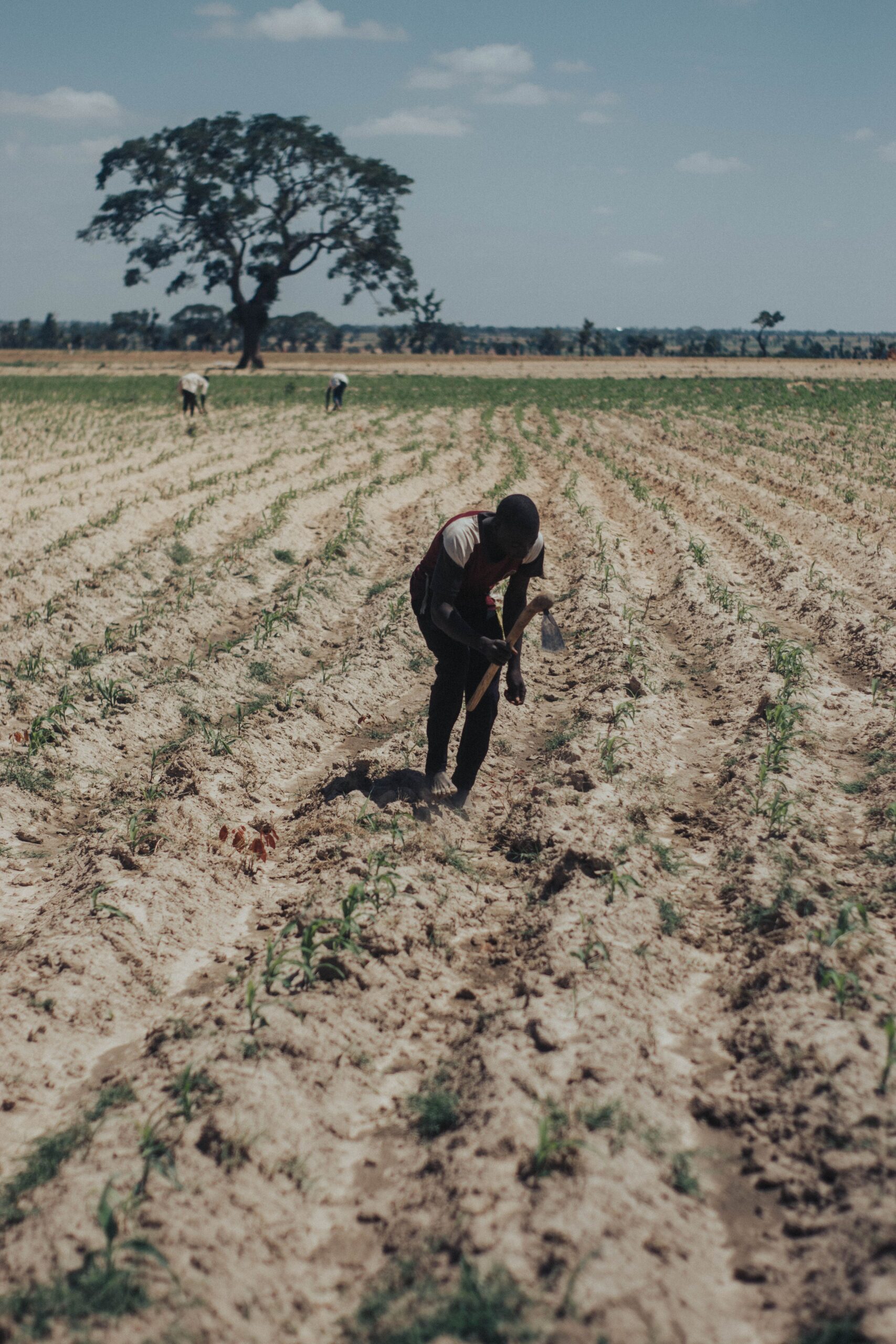
Restoring production is just the beginning. If farmers remain confined to low-value raw commodity markets, increased production may yield little improvement in rural incomes. The next step, therefore, is to develop the branches of the agricultural economy: processing, logistics, market information, finance, and private enterprise.
Small- and medium-scale agro-processing can be especially important in post-war Sudan, as it generates employment opportunities beyond farming while reducing post-harvest losses and alleviating transportation challenges. Processing groundnut into oil, developing livestock and leather value chains, processing horticultural products, and adding value to gum Arabic are examples of how agricultural production can serve as the foundation for rural industrialisation.
This also changes the role of the private sector. The objective should not merely be to attract capital into Sudanese agriculture; rather, it should focus on attracting responsible capital into productive value chains.
Investment should, therefore, be evaluated based on its contribution to employment, local value addition, food security, environmental sustainability, and producer participation—not merely on the volume of capital invested.
Finance must adhere to the system, not the other way around
One of the most important implications of this Model is that different components of the agricultural system require distinct forms of financing. Public resources and donor grants are especially important for public goods and high-risk recovery investments, such as rural roads, water systems, research, extension services, institutional reform, and emergency production support.
Concessional finance can support infrastructure and productive investments that are socially important but not yet sufficiently attractive to commercial investors. Private capital becomes more appropriate as markets stabilise and commercially viable value chains develop.
Blended finance can bridge these layers. Public and concessional resources can absorb part of the risk through guarantees, first-loss mechanisms, or risk-sharing facilities, enabling commercial banks and investors to enter sectors and regions they would otherwise deem too risky.
The Model, therefore, proposes a multi-window financing architecture that links humanitarian recovery, development finance, and catalytic private investment. This approach aims to prevent the common post-war issue where humanitarian funds, development programs, and private investments operate in isolation from one another.
Investment must be geographically strategic
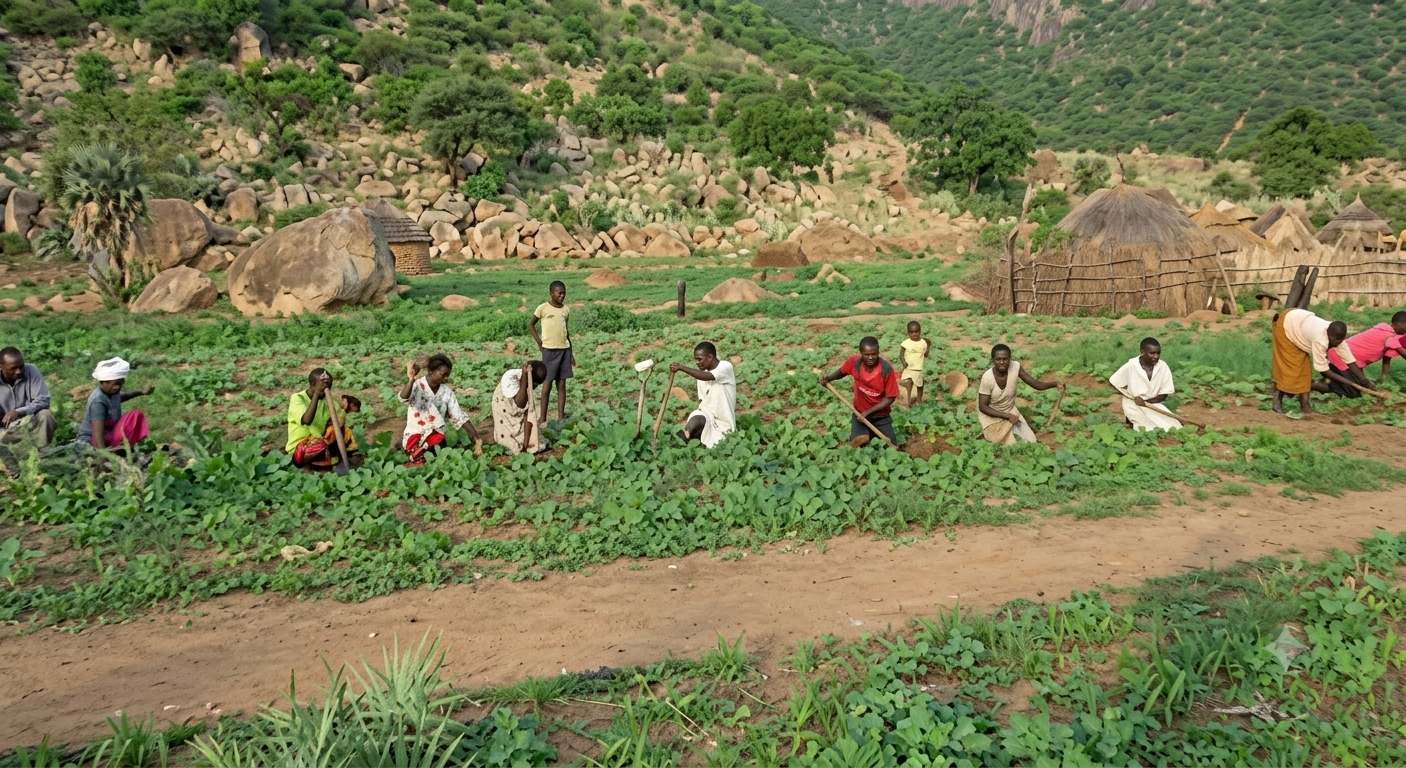
A national model does not imply distributing investment equally across all regions. Equal distribution can perpetuate inequality when regions start from vastly different levels of infrastructure, poverty, market access, and institutional capacity. The model, therefore, proposes spatial prioritisation based on need, potential impact, and peace dividends.
This means giving greater attention to historically underserved rainfed regions in western Sudan, areas with high concentrations of displaced and returning populations, and locations where relatively modest investments can reconnect producers to markets. The principle is not simply about where production is cheapest.
Where can investments simultaneously generate livelihoods, reduce vulnerability, improve food security, and strengthen social stability? That is a fundamentally different investment criterion.
A different compact among the state, investors, and producers
The ultimate purpose of the model is not solely to enhance agricultural investment. The goal is to change the relationship between investment and the state.
For decades, agricultural development in Sudan was often approached through centralised programs that viewed communities primarily as passive beneficiaries, while investors were typically evaluated based on the amount of capital they contributed. The proposed model inverts this logic. Small producers are not merely beneficiaries; they are investors and economic actors whose accumulated land, labour, knowledge, livestock, and savings constitute a significant portion of Sudan’s agricultural capital.
The state, meanwhile, should focus on providing the public goods, rules, and institutions that enable this capital to become productive. The private sector should drive investment, foster innovation, enhance processing capabilities, and improve market access. Development partners should provide concessional finance, technical expertise, and risk-sharing mechanisms without undermining national ownership. Communities should have a meaningful role in decisions regarding the resources on which their livelihoods depend.
The result is a unique form of public-private-community partnership, in which investment serves as a mechanism for rebuilding both markets and the social contract.