
Cameroon Has the Power. It Cannot Deliver It
The dams Cameroon dreamed of for fifty years are built and running. What blocks their megawatts is everything downstream: wires, transformers, unpaid bills, and the current that leaks away before it arrives.
On the morning of 29 March 2025, half of Douala went quiet. Maintenance work had taken down the main transmission line into Cameroon’s economic capital. From six in the morning until six at night, nothing for industrial zones, food factories, a hospital… Upstream, all was well. The dams held their water. The turbines could turn. The electricity existed. It could not get through.
Those twelve hours said what the official figures now confirm. In January 2026 the energy minister came to reassure Douala’s business leaders with numbers. The southern interconnected grid, which feeds the two main cities and most of the economy, can produce 1,536 megawatts. National demand is 1,206. On paper, comfort. In practice the cuts go on, some days every day, and Douala’s factories lose their power first.
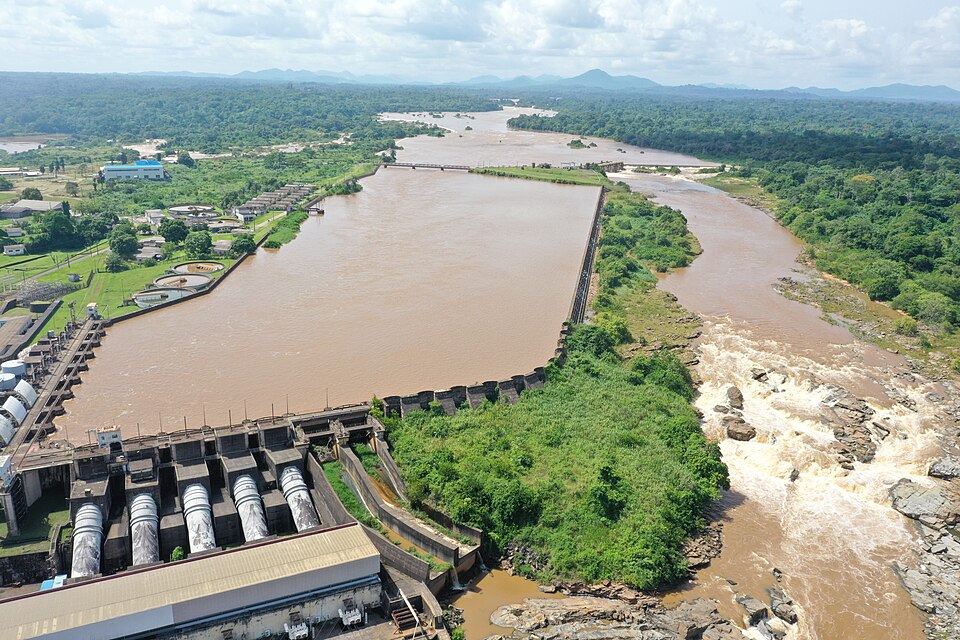
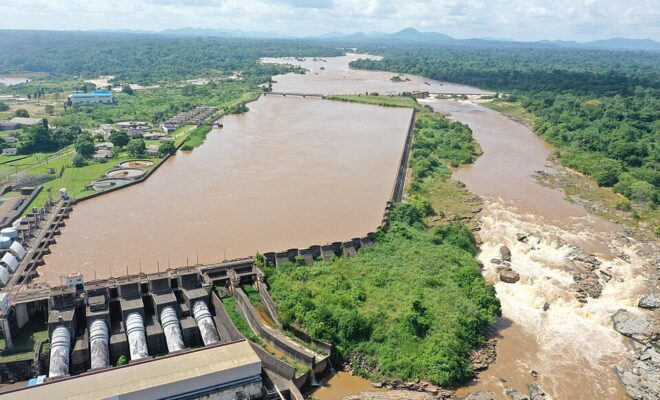
In Cameroon, the hydroelectric dams have been built. The new challenge is delivery.
For half a century Cameroonian electricity was a story about missing megawatts. That story is over. Nachtigal, 420 MW built with EDF and international lenders, reached full output in 2025 and now carries about a third of the southern grid. Lom Pangar regulates the Sanaga. Memve’ele added 211 MW. Installed capacity is close to 2,000 MW. The deficit did not disappear. It moved out of the dams and into the wires.
Close to a third of the current never arrives
The regulator counts the failures itself. ARSEL’s cost-of-service study, delivered in October 2022, charts the energy not distributed between 2015 and 2019 by cause, and the causes it tracks are production, transmission and distribution. The same study series starts its modelling from a network that loses 6.48 per cent of the current in transport and 28.5 per cent in distribution, and aims for 5 and 14 per cent by 2031. The World Bank’s Mission 300 compact says the same thing the other way round: distribution runs at 73 per cent efficiency and should reach 88 by 2030. In short, close to a third of the electricity that leaves the substations never arrives at a paying metre. Memve’ele, meanwhile, ran below capacity for years, for want of lines to carry its output away.
The bottleneck has an address. Between Edéa and Douala, the line carries 540 MW. The zone wants 671. When the thermal plants at Dibamba and Limbé stop, the Logbaba transformer climbs to 140 per cent of its rated load, Bekoko to 120. The distributor then chooses: to spare households, it cuts the largest consumers. Industry absorbs the shock. The engine of the economy protects the grid that is supposed to serve it.
The grid is also split in two. South and north are not connected to each other, so hydropower in the south cannot relieve the thermal-dependent north. The line to join them is still at the study stage. A 557.5 billion CFA franc interconnection with Chad is meant to plug the north into a wider market. Until then every megawatt stays a prisoner of its region.
What leaks away
Then there is the current produced, carried and never paid for. The government puts fraud at more than 60 billion CFA francs a year (around $100 million). One inspection campaign this June found 3,000 cases in three weeks in Yaoundé and Douala. Load-shedding has bred its own insurance market: Douala households pay to be wired twice, taking a second line from a feeder in a neighbouring district, so that when one quarter goes dark the other keeps the lights on. Rational for each customer. Ruinous for a network carrying duplicate connections it can neither see nor bill. Since the distributor returned to public hands, official figures credit these controls with recovering some 24 billion francs. Real money, and a fraction of the leak. The arithmetic does not forgive: a megawatt not lost costs less than a megawatt produced.
The bills
A grid is also a chain of payments, and every link of Cameroon’s is under strain. Household tariffs have not moved since 2012. The distributor, Eneo, renationalised in May 2026 as SOCADEL after the state bought out the British fund Actis, owed the transmission company SONATREL some 273 billion CFA francs (around $450 million) in 2025. Nachtigal’s operator has arrears of about 70 billion francs, with new invoices of roughly 10 billion falling due every month. The government is negotiating a 100 billion revolving facility with local banks to keep its flagship dam paid. In January 2025 Globeleq, whose two thermal plants supply a fifth of national output, had already cut production over unpaid bills. A network nobody pays is a network nobody maintains. Maintenance deferred is the transformer at 140 per cent.
Beyond the metre, the kitchen
All of this concerns only the Cameroonians the grid reaches. About a third of the population still lives without electricity. And access on paper is not use in practice: connection fees, appliances and bills outrun incomes, so the kitchen stays with firewood and charcoal, as for four in five people across sub-Saharan Africa. Wood cooks food badly, and its smoke kills. The World Health Organization attributes millions of premature deaths a year to household air pollution, women and children first, because they keep the fires.
Nigeria’s mirror
Readers of this site know the pattern. Nigeria, as African Arguments reported in July, designed the cure for its electricity crisis and stopped administering it halfway: the plants exist, but nobody can be sure the power will be paid for. Cameroon offers a variation on the same lesson, with the state rather than the market in the leading role. Dams are no longer the frontier. Wires, transformers, meters and balance sheets are. That is where Mission 300, the drive to connect 300 million Africans by 2030, will be won or lost. The stakes are industrial as much as domestic. The Cameroonian economist Fabrice Nzepang has shown that outages “negatively and significantly affect the efficiency” of the country’s manufacturing firms, the very firms Cameroon counts on to industrialise.
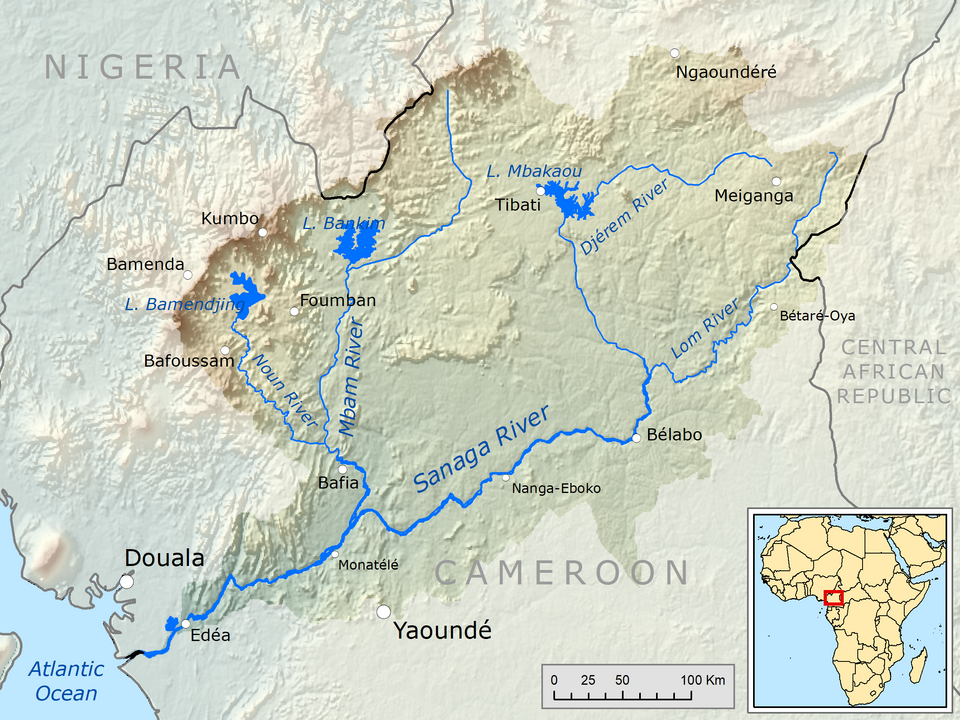
Dams on the Sanaga River basin power the economic capital at Douala.
What already works
None of this is a story of a state that cannot act. Some of the best public work in the sector is precisely about delivery. The World Bank-backed rural access project has made 163,000 connections in twenty months by letting families pay the connection fee in instalments through a revolving fund. It has revised its target upwards, to more than 234,000, which infrastructure projects rarely do anywhere. In Yaoundé, the sector reform programme opened a regional energy academy in April, training the utilities’ engineers and managers. A grid is maintained by people before it is maintained by budgets. The teams running these programmes work seriously. What they cannot do from their offices is rebuild the Edéa-Douala corridor, join the two grids, or repair the chain of payments. That belongs to the state and its lenders.
A dam is built once, and a president cuts the ribbon. A transformer has to be serviced on time, a bill settled on time, a loss hunted down before a new plant is ordered. With Nachtigal, Cameroon showed it can still build the dam. Its next decade, its industrialisation, its competitiveness and a fair part of its statehood turn on the rest. On whether the current arrives, every day, at the socket. And past the socket, at the stove.