
Nigeria designed the cure for its electricity crisis. It stopped administering it halfway.
Ask anyone who has lived in Nigeria what NEPA stands for, and they will tell you it stands for Never Expect Power Always. The National Electric Power Authority (NEPA) was the state monopoly that, for decades, generated the country’s electricity, carried it across the country, and sold it to Nigerians, badly. The joke outlived the institution, but the problem it named did not. The generators still hum outside shops and homes, and the grid still delivers a fraction of what the country needs.
The usual explanations are familiar: too few power plants, no gas, and a fragile grid that collapses without warning. All true. But beneath them sits a quieter and more decisive problem, one that explains why money does not flow into the Nigerian electricity sector even when the engineering is solvable. Nobody building a power project can be sure that the electricity will be paid for. Lenders call this bankability, and its absence is why so many projects never leave the drawing board.
Here is the part that is usually missed. Nigeria already designed the cure twenty years ago and then stopped administering it halfway.
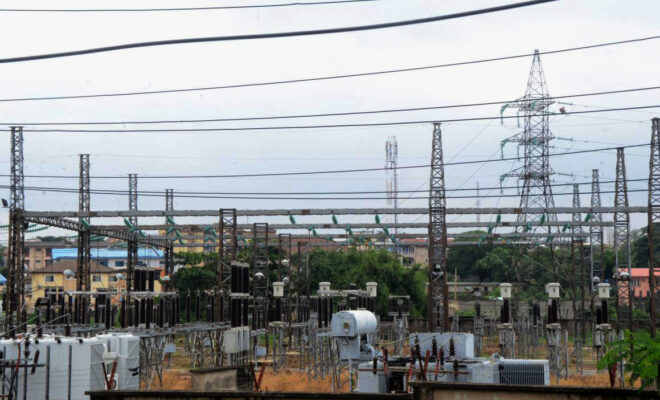
An Ikeja Electric sub-station in Alausa, Lagos
A market, designed and then abandoned
In 2005, the Electric Power Sector Reform Act broke NEPA into pieces: companies to generate power, a company to move it, and companies to distribute and sell it. The Act set out a roadmap with a clear destination — a competitive market where many sellers compete for many buyers, where prices reflect what electricity actually costs, and where contracts, not politics, decide who gets paid. The market would begin in a protected ‘transitional’ form and graduate, step by step, to full competition.
Twenty years later, Nigeria is still in that transitional stage. Understanding why it never graduated is the key to the whole crisis. I argued in a recent piece for the LSE’s Africa blog that Nigeria’s power projects fail to raise finance not for want of regulation but for want of creditworthy demand, that is, electricity buyers a lender can trust to pay. This article is about the institution that turns trustworthy buyers into bankable contracts. That institution is a finished electricity market.
The middleman became a trap
The 2005 design recognised a real problem: at the start, none of the sector players would be creditworthy. The newly privatised distribution companies, the firms that deliver power and collect the bills, had weak finances and patchy collection records. No generator would sign a twenty-year supply deal with them, and no bank would lend against one. So, the designers inserted a temporary middleman – the Nigerian Bulk Electricity Trading company (NBET). This government-owned buyer would purchase all the power from generators and resell it to distributors. Backed by the government and World Bank guarantees, NBET was a buyer banks could trust. Generators could raise finance against NBET’s promise to pay. This was meant to be training wheels, to be removed once distributors could stand on their own.
The training wheels never came off. Successive governments held consumer tariffs below what electricity cost to produce, promising to pay generators the difference as a subsidy. The promise was made far more reliably than it was kept. In 2025, generators billed ₦3.16 trillion (about $2 billion) for the power they produced, and were paid less than 40 per cent of it.
This matters because it locates the real fault line. Every power project in the country leaned on the same buyer, NBET, and NBET leaned on a government subsidy that arrived late or not at all. The single point of trust became a single point of failure. This is the classic trap of the single-buyer model, and Nigeria is far from the only African country caught in it, as variants of the same arrangement strain power utilities across the continent. But Nigeria is unusual in one respect: its 2005 roadmap always said the middleman was temporary. The exit from the transitional phase was designed from the beginning.
The exit is finally underway
Over the past two years, quietly, that exit has begun. In July 2024, the regulator ordered NBET to stop signing new contracts and directed distributors and generators to trade directly through bilateral contracts, plain agreements between a willing seller and a willing buyer at a negotiated price. In 2025, a new institution, the Nigerian Independent System Operator (NISO), was split out of the transmission company, with the mandate of keeping the grid stable and running the electricity market. Nigeria’s National Energy Compact, agreed with the World Bank and the African Development Bank, has put a clock on it for the first time, specifying that up to 75 per cent of grid electricity will be traded through bilateral contracts by 2027.
This is the destination the country set for itself in 2005, finally being approached. The question is whether Nigeria completes the journey or stalls again, and for finance, the answer changes everything.

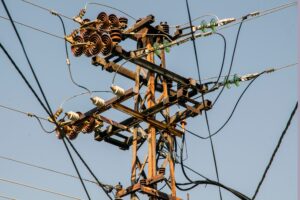
A street in Lagos strung with power lines.
Why a finished market makes projects bankable
A market is more than buyers and sellers. It is buyers and sellers operating under rules that make promises enforceable: contracts that specify who delivers what and at what price, meters that settle who consumed what, a payment system that moves money on time, and a referee with the power to hold defaulters accountable.
For a lender, this is transformative. Under the single-buyer model, every project carried the same hidden risk, whether the government would fund its subsidy, which no bank could see into or control. In a market of direct contracts, risk becomes specific and assessable. A bank can ask questions that have answers: who is the buyer, what is their payment record, and what happens under the rules if they default? No market offers complete certainty; what lenders need is legibility, that is, the ability to know the counterparty, price the risk, and enforce the contract. That is what bankability means, and it is what a single buyer destroyed and a working market restores.
Finishing the job
Settlement must be enforced by NISO, which needs both the authority and the political cover to penalise non-payment. Credit support must grow alongside it — escrow accounts, bank guarantees, and payment-security instruments that allow buyers to participate without poisoning the market. Metering must close the gap between power delivered and power billed, because no settlement system can run on estimates.
Much of this foundation is a public good that no single company will build alone, which is where the development finance institutions come in. For years, the World Bank, the African Development Bank and their peers have de-risked Nigerian power one project at a time, even backstopping the single buyer itself. But propping up individual deals inside a broken market only deepens the dependence the country is trying to escape. The more catalytic use of scarce concessional money is to fund the market’s foundations first — the trading, settlement and payment-security systems through which electricity is sold under enforceable rules. A working market is its own bankability signal; it de-risks not one project at a time but every project at once, showing lenders that they can price the risk and count on payment. Private capital can then build the plants, lines and meters on top. Some of the grid may still need public co-investment, but the sequence matters: structure first, then steel.
Several unglamorous tasks remain, none of which need new laws or new institutions. The Electricity Act of 2023provides the legal framework, the bilateral trading order provides the commercial framework, NISO exists to run it, and the Compact has set the clock. Three tasks stand out. First, political discipline: governments that have grown comfortable promising cheap power and leaving the bill unpaid must let the market’s rules bind them. Second, state-level build-out: regulators must use the Electricity Act to build markets tailored to their own demand, not a copy of the federal template. Third, information: Nigeria must use digital tools and data to pinpoint exactly where the network fails, hold each actor accountable, and benchmark progress.
Twenty years ago, Nigeria diagnosed its electricity problem correctly and designed the cure. The bankability crisis is what a half-finished treatment looks like. The prescription has not changed; what is needed now is the resolve to finish it.