There’s No Conspiracy in the Sahel — There’s a Gap, and Bamako Knows How to Use It
A familiar claim keeps surfacing in the rhetoric of Mali, Burkina Faso and Niger’s ruling juntas, echoed enthusiastically by Russian state media: the West is deliberately working to destabilise the Sahel’s military governments. It’s a tidy story. It bundles sanctions, frozen aid and diplomatic isolation into a single narrative of conspiracy. But look closely at who is actually doing what, and what looks like a strategy of destabilisation turns out to be the side effect of something else entirely — and the chief beneficiary of the gap between intention and outcome is not some abstract “West” or abstract “Moscow”, but Bamako, which reads that mismatch more accurately than any outside player.
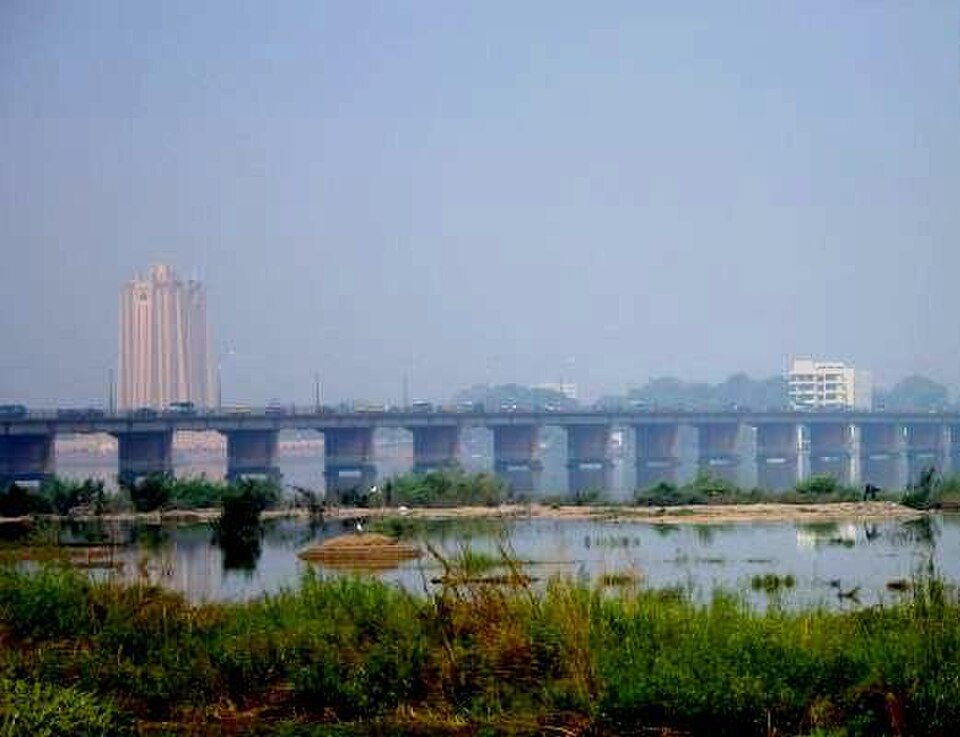
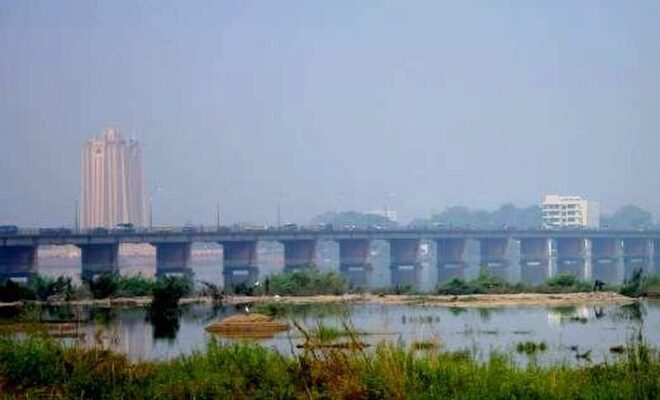
Bamako, Mali.
A real dependency, just not the one people assume
The dependency of the Alliance of Sahel States on Russian military backing is well documented: public defence agreements, official statements, the visible reshuffling of security infrastructure on the ground. After France’s Barkhane force withdrew from Mali, Burkina Faso and Niger in 2022–2023, and the US shut its Agadez base in 2024, the Wagner Group stepped into the role of security guarantor, formally folding into Africa Corps under Russia’s defence ministry in 2025.
Call it a trade, though not as one-sided as it is usually described. The juntas get military backing — uneven on the battlefield, as the April 2026 offensive by JNIM and the Azawad Liberation Front, which retook Kidal, made painfully clear — but it was the only option left once France and the US pulled out. Moscow gets a geopolitical asset: a foothold, leverage against the West, proof that Russia still matters in Africa even while fighting a war in Ukraine. But the arrangement was never static. From the start, Bamako understood that dependency on Russia need not mean exclusivity, and it behaved accordingly.
From that dependency, a syllogism follows easily: if the West is squeezing Russia globally, and Sahelian regimes are tied to Russia’s presence, then pressure on Moscow should ripple outward and hit those regimes too. The logic holds. The problem is the leap from effect to intent. The only way to tell them apart is to look at how the actors involved actually behaved — and how Mali’s own government responded.
Sanctions hit somewhere other than people assume
Between 2020 and 2024, the US, EU and UK rolled out sanctions against Wagner-linked companies and individuals across Africa: gold-mining operations in the Central African Republic (Midas Ressources, Diamville, Industrial Resources), figures tied to the Mali operation, including its coordinator Andrei Ivanov, and Sudan-based entities like Meroe Gold and M Invest. In January 2023, the US Treasury designated Wagner a transnational criminal organisation, framing the goal as countering “Russia’s destabilising activities in Africa” — a response to Russian activity, not an independent plan aimed at Sahelian states.
None of these measures targeted the governments of Mali, Burkina Faso or Niger directly. The only way to test intent is to look at how the same actors behaved in investment and diplomacy — and, by extension, at what Bamako itself managed to extract from that behaviour.
You don’t invest in what you’re trying to wreck — and Bamako knows it
If destabilising the AES regimes were an actual policy goal, you’d expect some consistency: sanctions, isolation, a refusal to engage. The 2020–2026 record shows the opposite.
The clearest case is the United States. On 27 February 2026, the Treasury lifted sanctions on three senior Malian officials — Defence Minister Sadio Camara, Air Force chief of staff Alou Boï Diarra, and his deputy Adama Bagayoko — all three sanctioned since 2023 for facilitating Wagner’s operations. According to The Africa Report, and independently confirmed by africa-eye.com, the immediate trigger was the search for Kevin Rideout, an American pilot kidnapped by jihadists near Niamey in October 2025 and believed held in Mali. In the same period, a State Department official met Mali’s foreign minister, Abdoulaye Diop, in Bamako, and Reuters reported Washington was nearing a deal that would let US aircraft and drones resume intelligence-gathering flights over Malian territory against groups linked to al-Qaeda — Washington was seeking to restart operations that had earlier been suspended. One and the same government ran a sanctions track and a rapprochement track in the same window — and Mali’s side held a dialogue with both wings of the American bureaucracy at once, taking from each what it had to offer rather than choosing between them.
There is a bitter irony worth dwelling on here. The same Sadio Camara whom American sanctions in 2023 named as a Wagner facilitator was not a mere foot soldier in that facilitation — he was its architect. According to the US Treasury’s own 2023 designation, it was Camara who personally planned and organised Wagner’s arrival in Mali back in 2021, making several trips to Russia to seal the arrangement. Five years later, the same man became the central figure in rapprochement with Washington — and two months after that, he was killed in an attack carried out during the very offensive that stripped his own military partner, Africa Corps, of control over Kidal. The sanctions relief carried no condition on Russia’s withdrawal: Africa Corps never left Mali, and continued to feature in reports of abuses against civilians, while Camara himself had flown to Moscow to meet Sergei Lavrov as recently as February 2024, while still under sanction — and went on doing business with both sides until his death on 25 April 2026.
A weaker but telling parallel comes from France: Orano kept pursuing access to Niger’s uranium deposits well after the 2023 coup there.
Sudan and CAR — the counter-example Bamako didn’t repeat
In Sudan and the Central African Republic, Russia’s military presence converted into documented, legally formalised concessions — gold mining through entities linked to the former Wagner Group, a 25-year concession on the Ndassima mine via Midas Ressources. Nothing comparable happened in Mali: neither Africa Corps nor any entity affiliated with it holds such a concession there. The one announced civilian project — a gold refinery outside Bamako, a joint venture between the Russian group Yadran and the Malian state — has failed for over a year to secure financing.
That is not an accident, nor a failure of negotiators. It follows from the fact that Mali’s government, unlike Sudan’s or CAR’s, never handed Russia exclusive control of its resource sector in exchange for protection. Western sanctions architecture against entities in CAR and Sudan is built around concessions that genuinely exist; in Mali, where no concessions exist, no comparable target has emerged — not because the West is softer on Bamako, but because Bamako had nothing to give, as a direct consequence of Moscow’s own weak investment record: where Russia never put capital into the resource sector, it had nothing with which to lock in exclusivity, and Bamako had nothing to lose by holding a parallel dialogue with Washington.
Institutional incoherence as a resource, not a backdrop
America’s intelligence and counter-terrorism agencies value a Malian partner regardless of its ties to Moscow; sanctioning bodies like the Treasury see the same partner as a Wagner facilitator; economic agencies covet Mali’s lithium and gold. A fourth voice recently joined this chorus: on 31 August 2026, the House of Representatives introduced H.R. 10195, the Mali Security Partnership and Counterterrorism Act, sponsored by Jimmy Panetta and Joe Wilson. The bill neither cancels nor replaces the Treasury’s sanctions track or the State Department’s diplomatic one — it is the legislative branch, moving at its own, considerably slower pace, demanding a report on the JNIM threat and its financing, while the executive branch has spent a year running its own, separate negotiations on the very same question. The bill doesn’t create this interest from scratch; it codifies, after the fact, what the State Department and AFRICOM had already been demonstrating in practice months earlier.
A coordinated strategy of destabilisation would require all four tracks — intelligence, sanctions, economic, and now legislative — to line up. They don’t line up, and that is not a side effect Bamako merely endures. It is a gap Bamako exploits.
Who is actually to blame — and who is actually winning
The claim that “the West is destabilising the Sahel” doesn’t survive as a unified thesis. What survives is narrower: the Moscow–West confrontation produces side effects for Russia-aligned regimes without being aimed at them. But that observation does more than let the West off the hook — it points to a more interesting conclusion about Bamako itself. The AES regimes are not simply passive victims of foreign incoherence, nor passive beneficiaries of foreign goodwill. Mali’s government was among the first in the region to learn to read the gap between one state’s sanctions machinery, its diplomatic machinery, and now its legislative machinery as a working instrument — and to use it so consistently that it is increasingly hard to say where American incoherence ends and Malian strategy for exploiting it begins.