A Disaster Waiting to Happen? Brent Bozell and the US-South Africa Relationship
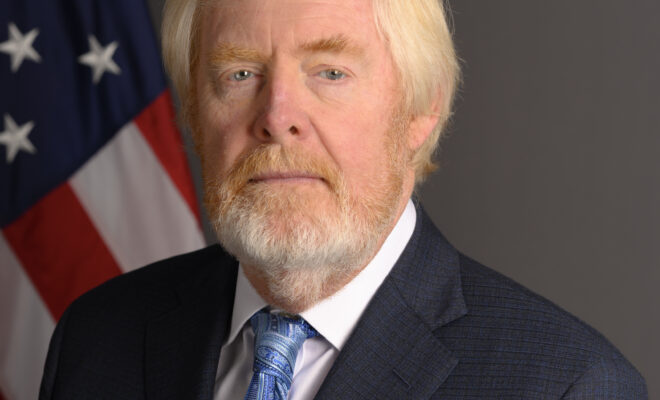
President Donald Trump’s appointment of Leo Brent Bozell as the United States ambassador to South Africa in 2025 was a deliberately provocative act on his part. The appointment always seemed purposely designed to further damage a US-South Africa bilateral relationship which was already fraught due to differences over South Africa’s domestic and foreign policy choices. Put bluntly, for decades Bozell has been a conservative activist not a diplomat and he lacks the basic skills set to hold such an important and sensitive position Trump appoints Leo Brent Bozell III, a defender of apartheid in the 1980s, as ambassador to South Africa | U.S. | EL PAÍS English. As his behaviour in South Africa is demonstrating, that is an environment likely to produce partisan ideologues rather than people with the tact, nuance, patience, and knowledge required for high level inter-state diplomacy. Since taking up the role of US ambassador in February 2026, he has consistently abused his position through hostile posturing and ‘megaphone diplomacy.’ He has disrespected South Africa’s independent judiciary, publicly berated the host government, and has persistently interfered in South African domestic politics – in clear violation of Article 41.1 of the 1961 Vienna Convention on Diplomatic Relations Vienna Convention on Diplomatic Relations, 1961– by aligning himself with Afrikaner nationalist groupings, Afriforum and Solidarity, and amplifying their grievances Between candour and coercion — why SA won’t bend to Washington’s dictates. He has issued a series of ‘asks’ – US demands in effect – on issues such as farm murders and rural crime, Black Economic Empowerment, land expropriation without compensation in exceptional circumstances US to make SA to pay the price of doing nothing. Consequently, he has now been démarched – summoned to receive a diplomatic reprimand – by the South African Department of International Relations and Co-operation on no less than three separate occasions in 2026: in March (after less than one month in position), June and September Dirco summons US ambassador Bozell again over ‘undiplomatic conduct’.
US Ambassador Leo Brent Bozell
Bozell’s ‘extraordinary experience’
All of this was very predictable. Bozell’s appointment has captured in microcosm the broader failings of the Trump administration’s approach to diplomacy and international relations: it was incendiary and was designed primarily to appease white nationalist opinion within Trump’s MAGA base rather than to help mend US-South African relations. In a reversal of standard diplomatic practice, Bozell was sent to South Africa to exacerbate rather than ease tensions and to promote discord. Although Trump stated that Bozell brought ‘extraordinary experience’ to his role Trump appoints Leo Brent Bozell III, a defender of apartheid in the 1980s, as ambassador to South Africa | U.S. | EL PAÍS English, it is actually his South African ‘experience’ which is the main problem. Bozell has a long history of opposition to the African National Congress (ANC) whom he labelled ‘terrorists’ during the 1980s liberation struggle era. He enlisted his National Conservative Political Action Committee in a so-called ‘Coalition Against ANC Terrorism’, a collection of American conservative groupings supportive of the apartheid regime. He strongly opposed the US’s opening of formal diplomatic contacts with the ANC, initiated by then Secretary of State George Shultz in January 1987, in which the Reagan administration effectively acknowledged that there could be no long term South African settlement without its involvement Trump’s Pick For Ambassador To South Africa Actively Opposed Fight To End Apartheid. Bozell was also hostile to the liberation struggle per se as was demonstrated by his support in the 1980s for the regime of President P W Botha, his opposition to the global anti-apartheid movement, and his opposition to the US sanctions contained in the Comprehensive Anti-Apartheid Act (CAAA) of October 1986. The CAAA proved to be of crucial importance in intensifying pressure on the regime and helping to move South Africa beyond apartheid. Anyone doubting its impact need only look at the striking similarity between the US demands, as set out in the CAAA, and the changes announced by President F W De Klerk in his historic speech of 2nd February 1990, over three years later. Bozell was profoundly wrong on everything South Africa-related in the 1980s: wrong to attempt to shore up a failing Botha regime which was leading the country to destruction, wrong to oppose US sanctions, and wrong in his animus towards the most important liberation movement, the ANC. Had Bozell’s approach prevailed, South Africa’s post-Botha breakthrough in 1989-90 would have been delayed and the country would have continued along a path of terminal political and economic decline. His prejudices were advertised again when he bemoaned the ‘mythologizing’ of Nelson Mandela following the iconic former president’s death in 2013 Trump’s Pick For Ambassador To South Africa Actively Opposed Fight To End Apartheid.
Causing offence
Appointing someone with such a track record to the post of US ambassador to South Africa, a country in which the ANC is the largest party in a government of national unity, was designed to cause offence and provided legitimate grounds for South Africa to refuse Bozell agrément under Article 4.2 of the 1961 Vienna Convention Vienna Convention on Diplomatic Relations, 1961. By choosing not to do so, South Africa was taking a more conciliatory approach, opting to look forward not back and signalling its openness to a genuine bilateral dialogue. This stood in marked contrast to the Trump administration’s behaviour when it declared Ebrahim Rasool, South Africa’s ambassador to the US, persona non grata in March 2025 for comments he had made criticising Trump. Unfortunately for Pretoria, this has been interpreted in Washington as weakness, and it has given greater impetus to its determination to bring an errant South Africa to heel. The Bozell appointment confirmed the Trump administration’s overt hostility – and that of its support base – to a post-1994 democratic South Africa which, it is worth noting, would not exist at all had Bozell’s approach prevailed. South Africa is viewed by Washington as a standard bearer for the Diversity, Equity, and Inclusion policies so loathed by this administration. Its opposition to the US attacks on Iran in 2025-26 and the genocide case it has brought against Israel before the International Court of Justice have only deepened the antagonism.
Stormy waters
On Ambassador Bozell’s watch, US-South Africa relations are set to deteriorate further as a confrontational relationship now seems to be Washington’s objective. This was confirmed on November 2 by its decision to remove South Africa from the US African Growth and Opportunity Act of 2000 under which many products from African states enjoy duty free access to the American market US removes South Africa from Agoa trade pact. That expulsion will take effect from January 2027. True, South Africa is not unique among contemporary democracies in having its sovereignty persistently challenged and undermined by the current US administration. Brazil, Canada, Denmark, Germany, Poland, Romania, Spain, and Ukraine have all found themselves at the sharp end of this established pattern of US interference and coercion The U.S. Is Bullying Europe Like Never Before – The Atlantic. However, in a world where we are witnessing genocidal violence in Gaza, Myanmar, Sudan, and Ukraine, the Trump administration has chosen to identify South Africa as an adversary deserving of special opprobrium and punitive sanctions. This is a South Africa which, despite its many failings and huge challenges, has a robust democratic infrastructure with regular free elections (its latest municipal elections were held on 4 November), an admirable constitution, a free press, a thriving civil society, and an independent judiciary. That it has become the target of such deep and sustained US hostility perhaps tells us more about the Trump administration than it does about contemporary South Africa.