6 things we learned from Uganda’s presidential debate
Lesson 3: Underestimate the underdogs at your peril
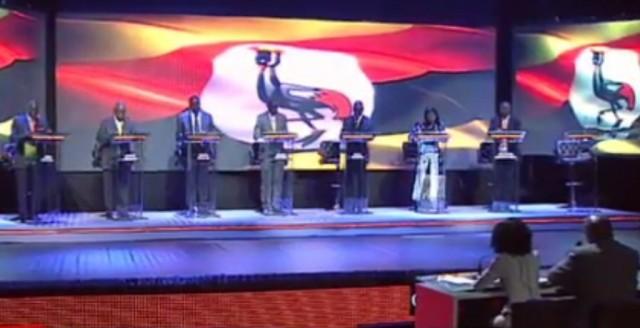
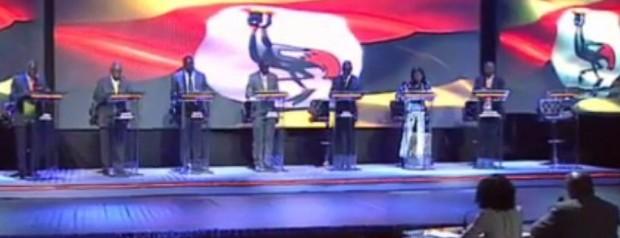
On the night of 15 January, Uganda held its first ever televised presidential debate. The incumbent Yoweri Museveni skipped the momentous occasion, arguing that the “majority of our voters may not be able to watch the debate”, but his seven challengers for office took bravely to the stage.
Former prime minister John Patrick Amama Mbabazi and leading opposition figure Dr Kizza Besigye − seen as the two main rivals to Museveni in the upcoming 18 February poll − were joined by the five lesser known contenders in the race, namely: independent Maureen Kyalya, the only woman in the contest; veterinary doctor Abed Bwanika; Major General Benon Biraaro; evangelical pastor Joseph Mabirizi; and Professor Venansius Baryamureeba.
Moderated by journalists Nancy Kacungira and Alan Kasujja, the debate was full of surprises, humour and awkward moments that shed a light on the candidates’ personalities, strengths and weaknesses.
Here are six of the things we learned from the eventful evening:
1. A poem can be about anything, even a TV debate, and still kill it!
The eloquent, gentle-spirited chair of the Uganda Judicial Service Commission, Justice James Ogoola, never misses a chance to showcase his poetical prowess. He has previously coined new terms to describe the ugly violence Uganda has experienced, and as lead organiser of the debate, he demonstrated his way with words once again as he began proceedings.
His poem ‘The Debate is the Thing’ set the tempo for the evening, and with it Ogoola left the audience enchanted. He declared that this was the time for Ugandans to “choose the adept from the inept” and that the debate would be “no cheap drama of the political rally, no idle talk, no mundane politics, empty pledge or hollow promises”.
2. A killer line goes a long way
The debate began with the candidates making two-minute opening remarks about why they should be president. The only female contender, Kyalya, struggled to introduce herself at first, but after a false start, the lawyer and former presidential aide bounced back to deliver a punch line that earned her immediate applause as she observed: “there is more teargas in police stations than there is medicine in hospitals”.
General Biraaro, who like Kyalya needed to explain to the audience who he was exactly, drew similar noises of approval when he asserted in his opening gambit that “the debate is [the] only level ground in this election”. In one succinct phrase, he summed up the difficulties facing opposition candidates, including physical violence and intimidation, as they try to campaign in the face of Museveni’s disproportionate access to the state machinery and resources.
Amama Mbabazi also started off well by taking the attention away from the other candidates and to the electorate as he asked: “do you want change or do you want more of the same? “ With this short critical question, Mbabazi helped set the framing for the whole debate.
3. Underestimate the underdogs at your peril
Five of the candidates would have been little-known to most viewers and the televised debate offered them the biggest platform they’re likely to get in their campaigns. Some took the opportunity better than others.
Kyalya, for instance, scored some points on education and brought her social worker’s passion to bear by focusing on women’s rights, but consistently veered off topic. Meanwhile, Baryamureeba was not particularly convincing on policy issues, was incoherent at times and didn’t ask particularly exciting questions.
By contrast, Mabirizi was the life and soul, though often for the wrong reasons. The youngest candidate in the race routinely provided answers that sent the room into roars of laughter to the point that some in the audience started to burst out laughing even before Mabirizi had started answering. From oil to female representation to debt, Mabirizi provided comic relief in a tense evening.
Mabirizi is good for Ugandan children – he teaches them that even if you can't win, you should still try #ugdebate16 #ugdecides
— Charles Onyango-Obbo (@cobbo3) January 15, 2016
At the other end of the scale, Biraaro and Bwanika were both eloquent and composed on debt, the economy and unemployment. Their assured performances will no doubt have surprised many and given some of the electorate food for thought.
Bwanika may win this debate in my opinion. He is well informed and answers questions really concise and direct. #UGDebate16
— Evelyn Namara (@enamara) January 15, 2016
When it came to the two frontrunners, Besigye and Mbabazi both had high and low points.
Besigye was best when focusing on governance, accountability and healthcare. He faced some sticky questions about his flip-flops on key pronouncements, including a promise not to run again for president without electoral reform, but overall seemed comfortable.
Mbabazi was strong on maternal health, humanising and reiterating the urgent need to tackle Uganda’s high maternal death rate, but it was far from plain sailing all the way for the former PM.
https://twitter.com/AnneMugisha/status/688218570891722755
4. You can’t have your cake and eat it
With President Museveni’s seat left empty at the debate, the burden of answering for the government deeds and misdeeds rested on Mbabazi, who worked closely with Museveni for several years and was prime minister from May 2011 to September 2014. Running as an independent but still not denouncing his party membership, Mbabazi put himself in the awkward position of having to both attack and defend the government. He understandably received some of the most difficult questions of the night and gave some of the least satisfactory answers.
When asked about allegedly calling for striking teachers to be fired when he was in government, for example, Mbabazi wobbled and meandered. This unconvincing response fed into existing doubts about whether the former PM can be relatable among low-income earners, a group to whom he twice referred to during the debate as “those peasants”.
When asked about state repression meanwhile, Mbabazi failed to distance himself from the ruling NRM’s alleged history of election theft, political persecution, stifling of the media, arbitrary killings, and corruption, most of which thrived when he was a central figure in government. Mbabazi wanted to concentrate on the disappearance of his top aide Christopher Aine and other recent violations against opposition politicians, but he couldn’t shake the perception that he was on the receiving end of a machinery he himself had helped build.
5. The gutter is not an attractive platform from which to run
Gay rights were expected to make it to the debate and on this issue Mbabazi seemed surprisingly ill-prepared. When asked a question about this controversial topic, he immediately took it personally and as an opportunity to attack female politicians he claims have been spreading rumours about his sexuality. Mbabazi challenged these MPs to “try him out” to see if he is gay, but didn’t even stop there. He continued by saying that a certain female politician − whom everyone knew to be Speaker of Parliament Rebecca Kadaga − has no basis to call him gay because he is married with children while she is unmarried and childless.
Qn. Hon Mbabazi, do you support gays?
Ans. I am not gay.
Verdict: Misfired. #UGDebate16
— Sam Agona (@samagona) January 15, 2016
6. Absence doesn’t necessarily make the heart grow fonder
President Museveni’s refusal to stand on the same stage as his opponents says a lot about how superior he feels and some say it shows his paranoia when it comes to anything over which he does not have control. With two tough moderators marshaling the debate, Museveni would certainly not have had an easy ride, but he may nevertheless come to regret his decision when he sees how certain candidates − particular the fringe ones − seized the chance to change voters’ perceptions and present an alternative vision.
The #UGDebate16 has been proof that there is life beyond and without Museveni. It is a moment to remember #UgandaDecides
— Ian Ortega (@OrtegaTalks) January 15, 2016
Whether this debate will change how people actually vote next month remains to be seen of course, but one thing is for sure. This was a great occasion, even without the incumbent, and while discussions over which candidate performed best will continue for some time, one big winner was Ugandan democracy itself.
Say what you may but this #UGDebate16 has shone more light on all candidates' personalities, promises and intentions.
— Grace Natabaalo (@Natabaalo) January 15, 2016
Rosebell Kagumire is a media and communication specialist, digital strategist, public speaker and award-winning blogger. Follow her on twitter at @RosebellK.
For more on this subject, see: