Ebola and Africa’s Preparedness Dividend: From Crisis to Capability
Africa is facing its 17th Ebola outbreak, and this time the continent is meeting it with the most capable response architecture it has ever assembled. The outbreak in the Democratic Republic of Congo (DRC) was declared on 15th May 2026, and both WHO and Africa CDC have classified it as a public health emergency. The Bundibugyo strain in circulation is one of four Ebola virus species that infect humans, and it has no licensed rapid diagnostic, therapeutic or vaccine. The system that catches and contains it is African-built, African-run, and African-coordinated, and it is working.
This African capability is fifty years in the making, however, the financing that built it and was sustaining it is now severely constrained. National health budgets in Africa have not yet met the 15% threshold set by the Abuja Declaration on HIV/AIDS, Tuberculosis and other Related Infectious Diseases in 2001, while Overseas Development Assistance (ODA) for health continues to drop. Whether the next pandemic is contained quickly will depend on whether the architecture designed over time is maintained and functional.
The benefits of past investments are undeniable. Outside the 2014 to 2016 West Africa epidemic, which reached 28,600 cases, no Ebola outbreak this century has exceeded 5,000 cases, and most have been below 500. Uganda’s 2022 Sudan-strain outbreak was contained in under four months. The turning point was the West Africa epidemic, which killed more than 11,000 people and forced the institutional reforms that now define the response, such as Africa CDC becoming operational in 2017, the rVSV-ZEBOV vaccine reaching the market, and national public health institutes being strengthened across the continent.
The architecture of success
1. Frontline workforce
Ebola outbreaks end at community level where they begin, in homes, care settings, and burial practices. The WHO has set the standards for risk communication and community engagement since the first Ebola outbreaks in 1976. The work is delivered by community health workers, transporters, and traditional and religious leaders. In DRC, VillageReach trains these cadres and provides technical assistance to the Public Health Emergency Operations Centre (COUSP). This is the operational interface between the formal surveillance system and the communities where outbreaks emerge, and it is what makes the rest of the architecture function successfully.
2. Sample transport and laboratory turnaround
A case confirmed within 24 to 48 hours with follow-up action stops most onward transmission. A case confirmed in several weeks, as was the case in West Africa in 2014, gives the virus time to seed in different communities. Across 15 Africa countries including the DRC, VillageReach has developed an efficient and effective transport network that shifts into emergency fast-track when an outbreak alert is raised. In 2025, we further strengthened this in DRC by adding a new laboratory in Mweka to shorten the journey from the source. The infrastructure that stops outbreaks is the same one that operates before an outbreak is detected. Containment succeeds when dual-use systems are continuously maintained, not activated only in emergencies.
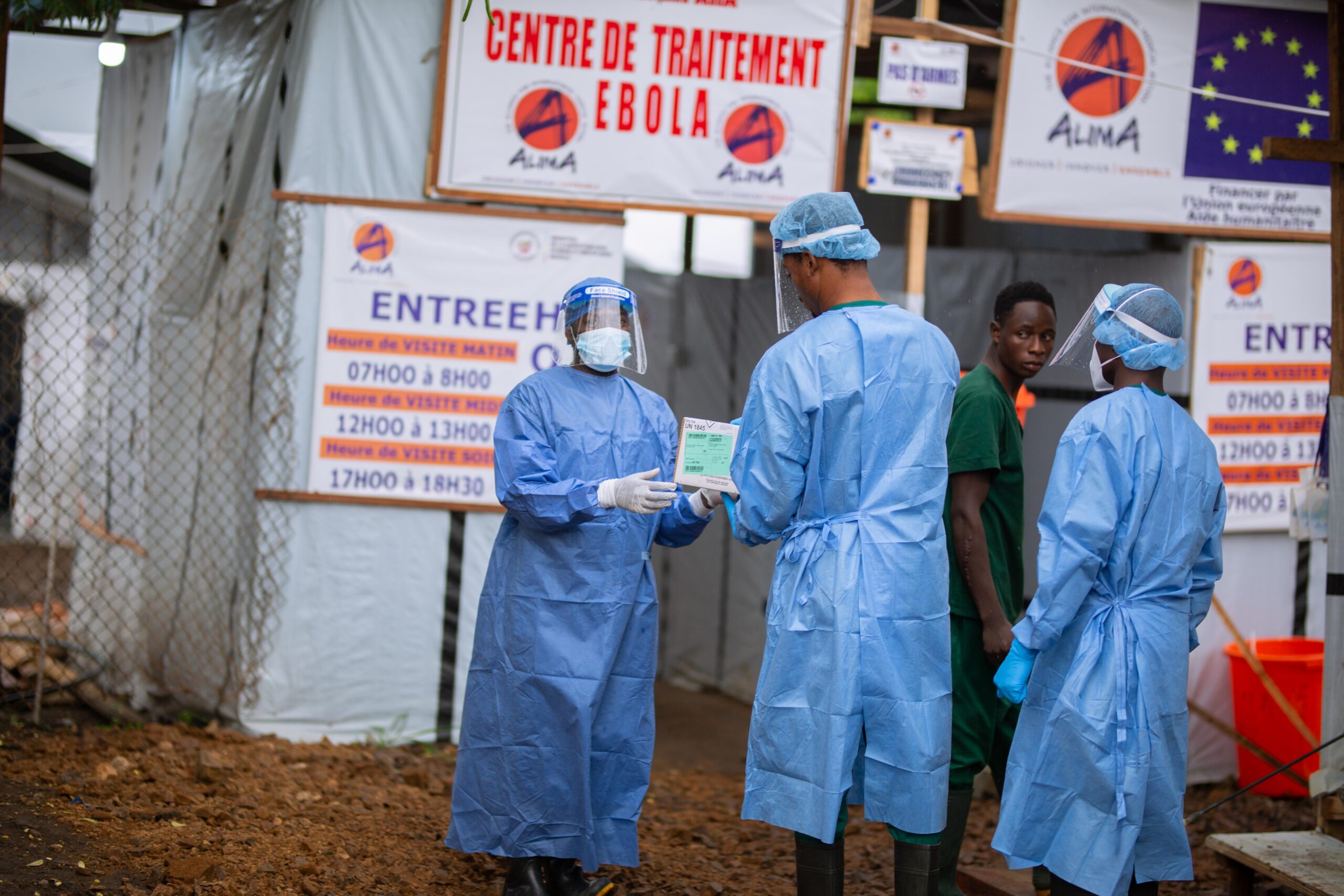
Dr. Christian Ntumba, a medical biologist from the National Public Health Institute in DRC, collecting Ebola blood samples from the treatment center to send to the laboratory for testing Ituri Province, DRC. Photo Credit: Josué Kumbi
3. Surveillance
During my time at Africa CDC, I saw firsthand how much effort went into building surveillance systems capable of detecting outbreaks before they become emergencies. That investment is now paying dividends. Today, the event-based surveillance framework now operates in two-thirds of African Union member states. National public health institutes in DRC, Uganda, Nigeria, and Kenya have built integrated surveillance systems that did not exist a decade ago. The 7-1-7 framework, now widely adopted in global preparedness, sets clear benchmarks – seven days to detect a threat, one day to notify authorities and seven days to mount an effective response. The difference is not technical capacity but proximity. Surveillance works when communities are part of the system, identifying and reporting threats early. Surveillance fails when the first signal reaches institutions only after an outbreak has gained momentum, turning what could have been contained locally into a crisis requiring national and international response.
4. Regional cooperation
The DRC’s 17th outbreak was notified to WHO on the day of confirmation, a turnaround that would have been unthinkable during the 2014 West Africa epidemic, when notifications often took weeks. WHO has coordinated the international response to every Ebola outbreak since 1976, and WHO AFRO’s subregional Ebola partnership coordination platforms have operated across Central and East Africa for decades. The current 17th outbreak response is being led by an Incident Management Support Team jointly coordinated by WHO and Africa CDC, under a single plan and budget. Cross-border coordination is anchored regionally by the Economic Community of Central African States (ECCAS), which covers DRC, and the East African Community (EAC). The Africa Ebola Coordination Task Force, established in 2019 and hosted at the African Union, ties these layers together. Standing arrangements between Uganda, DRC, South Sudan, and Kenya keep surveillance and contact tracing moving across borders. None of this is improvised. It is the accumulated infrastructure of fifty years of outbreaks, translated into faster detection, stronger coordination, and more rapid response.
5. Financing
Finance is as critical to Ebola containment as surveillance, laboratories, and response activities need money. The progress Africa has made over the past fifty years from faster detection and reporting to stronger regional coordination was built through sustained investment by governments, donors, and multilateral institutions. Yet the financing architecture that enabled these gains has always carried a fundamental weakness, it is designed to surge during crises rather than sustain preparedness between them. When Ebola erupts at scale, funding arrives quickly. The United States Congress alone appropriated US$5.4 billion in response to the 2014 West Africa outbreak, and global humanitarian pledges are estimated to have reached over US$3.6 billion during the same period. The message embedded in the system is clear; outbreaks are more easily funded, preparedness much less so. That model is becoming increasingly untenable. Development assistance for health in Africa fell from US$25.8 billion in 2021 to roughly US$13 billion in 2025, even as public health emergencies on the continent increased by 41 percent. The next phase of progress will depend less on emergency mobilization and more on sustained investment in the institutions that prevent outbreaks from becoming crises. That investment must increasingly come from domestic sources not because international partnerships are no longer important, but because resilient preparedness requires financing that is predictable, durable, and owned by the countries it is designed to protect.
6. The preparedness dividend
For decades, Africa and its partners have built surveillance networks, laboratories, public health institutes, and community-based systems that make rapid containment possible. But these gains are not self-sustaining. They require stable financing, permanent institutions, and a workforce supported between crises. Surveillance is most valuable when there is nothing to detect; preparedness is most effective when it prevents an emergency from ever becoming visible.
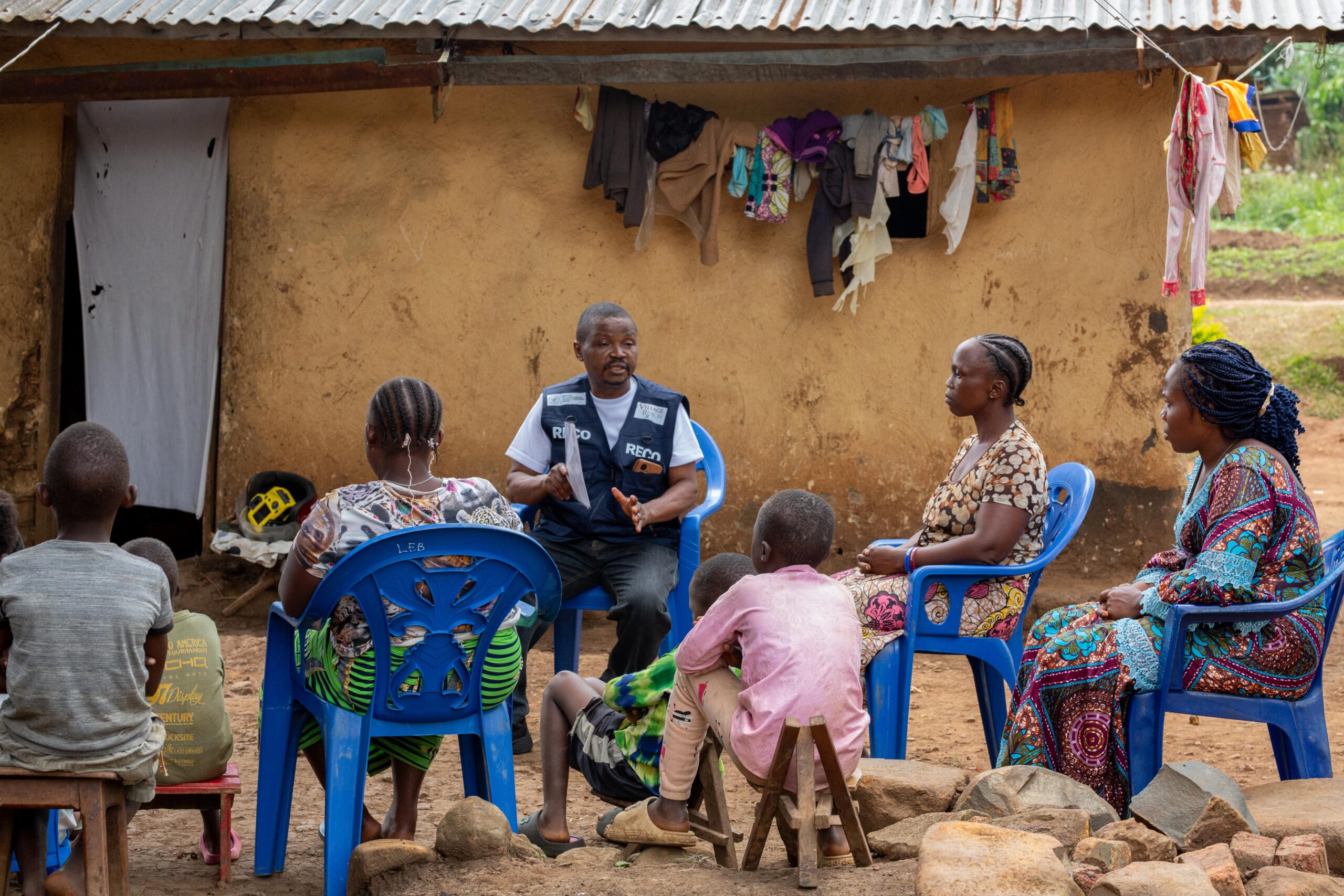
DRC Community Health Worker Bainga Muhito conducting an Ebola awareness session in a village in Nyankunde, DRC. Photo credit: Kaseraka Michel
Preparedness is built and is most effective between crises, not during. The systems that detect, confirm, and contain outbreaks are the ones already running when the first alert comes in. Community-based systems outperform emergency surge models. Outbreaks are detected at the community level or they are not detected in time, and the architecture that works runs outward from communities. Dual-use infrastructure delivers the highest return on health security investment. A system sustained between outbreaks and activated during them costs less per contained outbreak than emergency-only infrastructure assembled each time an outbreak appears.
The choice facing African governments, donors, and development institutions is straightforward, continue investing in the systems that have made today’s response possible, or return to the cycle of neglect, panic, and emergency spending that has defined too many past outbreaks. Africa and its partners have built emergency response capacity over time, and that experience gives us a “preparedness dividend”. Where we had only crises to manage, today we have capability to deploy. Where we once had sad stories from health emergencies, we can now share our successes and even teach others from our experiences.
As we scramble to bring the 17th Ebola (Bundibugyo) outbreak under control, we must plan ahead. The next pandemic will not be stopped by infrastructure built after it begins, it will be stopped by the systems already in place when it arrives. The time to build, refine, and fund those systems is now, not during the next crisis. Africa, and the world, must strive to be ready today, by funding preparedness consistently and intentionally, until we are all safe.