Reading Okot p’Bitek through eyes taught to look away
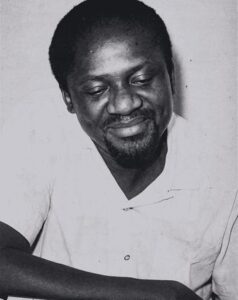
In 1931, Okot p’Bitek was born in Gulu, northern Uganda. It is perhaps fitting that a man who would spend much of his life questioning what Africans had been taught to admire was himself born at a rather interesting intersection of worlds. His father, Jebedayo Opi, was a school teacher shaped by the colonial education system. His mother, Cerina Lacwaa, was an Acholi singer, dancer and storyteller, deeply rooted in the oral traditions of her people.
In Song of Lawino, first written in Acholi and later translated into English, p’Bitek gave us Lawino, a woman bewildered by a husband who had become so impressed by European ways that he could barely recognise the people from whom he came. Ocol had acquired the manners of the ‘civilised’ man, but somewhere along the way he appeared to have misplaced himself.
In African Religions in Western Scholarship, he took aim at the tendency of Western scholarship to explain African religious thought through categories that Africans themselves had not necessarily created. He called this ‘intellectual smuggling’. The problem was not simply that Europeans were studying Africa. It was that African realities could be repackaged through foreign categories and then returned to Africans as knowledge about themselves.
Every now and then, there has been a persistent churn of African literature calling for the decolonisation of African knowledge. However, little has been said about the search for an ‘African identity’ within the very models of Western scholarship to which young African minds continue to be exposed. This, in particular, has been at the expense of confronting the erosion of culture, and more importantly, the ways of thinking of African peoples and subjecting them to a form of Ape Manship.
Within this piece, I muse alongside p’Bitek that Ape Manship is not merely a tendency to imitate Western culture, but is reinforced by Western-oriented education, which shapes how Africans understand their own culture, knowledge and identity.
In the 1700s, the French philosopher Jean-Jacques Rousseau wrote that ‘man is born free’. How wrong he was. As Okot p’Bitek later observed, man is not born free; man has never been free. At birth, he is connected to his mother by the umbilical cord. And when it is cut, man still remains in chains. Man can never be entirely free, as he continues to owe obligations to society, just as society owes privileges to him. That is what makes him human.
It has often been undeniable that the privileges a person obtains in society are influenced by their social strata, level of education and expertise. For the world into which man is born is a competitive one, where few are ‘lucky’ enough to find great joy in circumstances in which many others would find overwhelming despair. Yet, amidst this praxis, another consequence of our pursuit of advancement has begun to emerge. The gradual separation of the educated African from the cultural world from which he came.
When we speak of Ape Manship I often wonder why should the African youth desire to sound like a foreign pop star? Why should he call himself Walter White and rejoice in the name of a fictional drug kingpin? There is no creativity in such imitation. The songs of other societies speak of their histories, their frustrations and their dreams. Let the youth of Africa do likewise. Let them sing of the worlds they inhabit, of their joys and sorrows, their contradictions and struggles. Let African art speak first in the language of African experience.
It is unfortunate that, despite breaking from the colonial asunder and gaining independence, many Africans remain rooted, in one way or another, in Western norms and continue to reproduce the supposed ‘superiority’ of Western culture. Okot p’Bitek recognised this condition as a form of Ape Manship, calling upon the black man to employ his own ingenuity in reconstructing his society and institutions in his own way. Still, before this reconstruction can occur, Africans must first rid themselves of the ‘sin’ of Ape Manship.
In particular, this has proved difficult where education itself has become a means through which the African is recolonised. Through the system of education today, one undergoes a form of ‘religious’ circumcision, a process of ‘cultural training’ through which the African is supposedly ‘polished’ into conformity with Western ways of knowing.
In many contemporary African societies, this starts with the separation of the child from their family. This is often followed by the child being given the title of ‘scholar’, through which they enter a form of exile. They are rarely at home and gradually become removed from the cultural environment in which they were raised, forming a permanent split.
This split is further reinforced by the demand to first make the African pass examinations and, secondly, to make them English in outlook within the same setting. When all is said and done, the already converted African makes a silent prayer, I assume, something like: “Our civilisers who art in the West, hallowed be thy name, thy culture come in Africa, and may thy will be done in Africa as it is in the West; give us this day our (which is yours) daily bread …”
This presents a form of brainwashing in which the converted African struggles to dance to his own cultural songs and speak his own language. I have often wondered why a great number of my common folk in Kenya struggle to read newspapers, communicate, or read books written in Swahili, yet readily reach for those written in English. Perhaps, at times, due to the ‘brainwashing’ occasioned by the conditioning imposed upon them through early education, their heads lament, or their minds feel a certain anguish, when confronted with Swahili or native materials, and so they quietly put them down.
But the end result of this brainwashing has far larger consequences than we tend to register. One of the major consequences is discrimination, although perhaps not the kind that you may know of.
At the beginning of this piece, I pointed out that man is often susceptible to the categorisation of the social strata within a given setting. What then happens? Hierarchical structures begin to emerge. As p’Bitek puts it in his book African Cultural Revolution (p.7), “it is discrimination by Africans against Africans, discrimination by the “black suit” townsmen, discrimination by the educated men in power against their fellow countrymen – their brothers and sisters, mothers and fathers, against their own folk in the village.”
Two distinct societal classes thus emerge, the ‘culturally trained’ and the ‘non-civilised’. In most instances, the civilised are those who have undergone this metamorphosis and usually have a greater say in how the state is run. Meanwhile, the non-civilised, often the poor, have little say, while many of the advantages that accrue to society are not shared with them. Thus, they remain unable to experience true liberation despite the end of colonial rule.
In his book African Cultural Revolution (p.7) p’Bitek further appears to be calling for an African who, regardless of how educated, civilised or urbanised he became, would not forget the cultural values of his people. For him, the knowledge of the traditional sages, oral historians, musicians, poets, artists, medicine-men, prophets and other community leaders should not simply be dismissed because it does not come from a ‘cultural training’.
These people possess knowledge of their own, and that knowledge should have a place in dealing with the problems of contemporary Africa. The knowledge is quite invaluable when one thinks about it rather than assuming that everything valuable must come from Western education. If our education has taught us what knowledge looks like, who taught us to recognise some knowledge as knowledge and other knowledge as ignorance?