Africa Can’t Build a Blue Economy Without the Women Who Bring Its Fish to Market
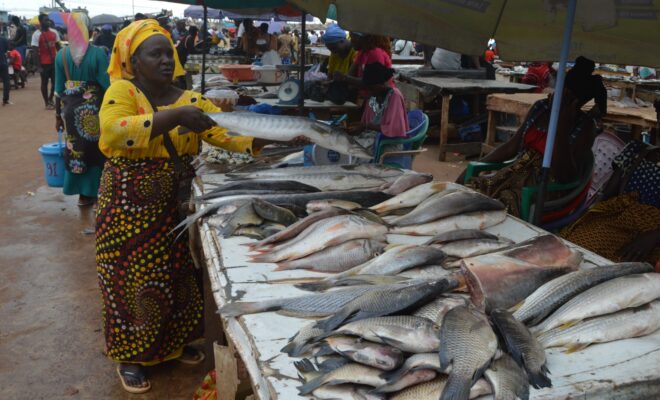
Before dawn, wherever Africa has a coast or a lake, women wait on the shore for the boats. When the catch lands, our work begins. We smoke, dry, salt or ferment the fish, using skills passed down for generations, and carry it to market. We are more than a quarter of the 12.3 million people who work in Africa’s fisheries, and 58 percent of its fish processors.
In July, African ministers meeting in Luanda promised women, youth and local communities at least 40 percent representation in blue economy advisory bodies and financing programmes. The African Union Commission has been tasked with drafting the roadmap to deliver it. Unless that roadmap names women fish processors and traders, and removes the rules that keep us from credit, the promise will pass us by.
Many countries still count fisheries only by what happens in the water, so the millions of women who process and trade the catch barely register. But if you are invisible, you receive invisible budgets, invisible investments and invisible policies.
I am one of these women. I run a fish-processing business in Uganda, where our lakes yield more than half a million tonnes of fish a year, more than any other African country’s inland waters. I also represent a network of women fish processors and traders across 46 African countries, and though we are proud of the work we do, we know we can do even more.
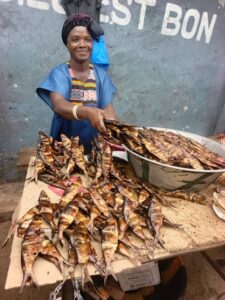
We feed our children with the day’s catch. We keep our culture and cuisine alive in the markets, from the sun-dried mukene of Uganda’s lakes to Senegal’s ceebu jën. And we are the first to notice when fish grow smaller, the waters turn muddy or catches suddenly fall.
Massive fishing vessels and bottom trawlers from around the world are scooping up fish off our coasts, and illegal fishing alone may cost West Africa up to $9.4 billion a year. The UN Food and Agriculture Organizationprojects that if emissions stay high and climate change continues to escalate, most African countries will lose fish this century, with the steepest losses in tropical waters like ours. Inland, pollution, mining runoff and dams threaten our lakes. Along the coasts, mangroves are shrinking, leaving fewer places for fish to breed.
This matters far beyond the shore. Africa has only 9.1 kilograms of fish per person a year, less than half the world average, and supply must grow 67 percent by 2050 just to match the population growth.
But where we have a say, we can reverse the damage. In The Gambia, women oyster harvesters of the TRY Oyster Women’s Association won exclusive rights to manage their fishery in 2012, a first for a women’s group in Africa. They restored mangroves and introduced an eight-month seasonal closure, protecting both breeding grounds and the coastline. Ghana’s Densu Delta oyster pickers copied the model and have managed their fishery the same way since 2020. If we have more of a say, we can replicate these successes.
We have the solutions. Estimates of the catch lost after landing in African small-scale fisheries commonly run from 15 to 50 percent. On Lake Victoria, simple raised drying racks have cut those losses by about 15 percent, and solar tent dryers by about 25 percent.
These fixes are cheap, but they still need capital. Africa’s blue economy already generates close to $300 billion a year, and money is flowing into ports, fishing technology and offshore wind. Little of it reaches the women who process and trade fish. That is the blue economy’s missing piece.
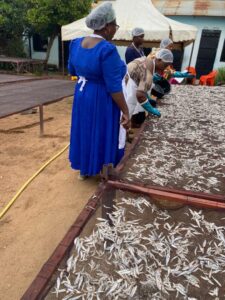
Leaders must break down one of the biggest barriers women face when seeking credit: land titles. Banks ask for them, and few women fish processors have them, because land in many of our communities passes through men. Lenders call that risk. We call it a rule written without us. Our savings groups lend and repay every day; lenders could accept group guarantees, stored stock or mobile-money records instead of title deeds.
The Luanda Declaration offers a path, but its 40 percent target for representation is shared among women, youth and local communities. It could be met without a single woman who smokes or sells fish. The roadmap must name women fish processors and traders as a distinct group, ensure that access to the national blue funds promised by 2027 is not dependent on land titles, and count us, by sex, in the new blue economy accounts across the entire value chain. By the Declaration’s mid-term review in 2028, ministers should be able to say how many of us those funds have reached. AWFISHNET’s chapters stand ready to help map who to count and co-design fund eligibility.
From sardinella and anchovies in West Africa to Nile perch and tilapia in Lake Victoria to sardine and hake in South Africa, the fish are there, and so are the women who know them best. Treat us as partners and invest in us, and Africa gains allies for conservation, nutrition and prosperity at once.