Who Speaks for Sudan’s Emergency Response Rooms?
When four members of Sudan’s Emergency Response Rooms travelled to London in March 2026 to accept the Chatham House Prize on behalf of the movement, the ceremony was widely celebrated as a moment of recognition for one of the most remarkable grassroots humanitarian responses in recent memory. Since fighting broke out between the Sudanese Armed Forces and the Rapid Support Forces in April 2023, ERR volunteers have sustained communal kitchens, health centres, water systems, and evacuation networks across thirteen states, reaching millions of people in areas where international aid organisations simply cannot operate. The Nobel Peace Prize nomination followed. The global attention kept growing.
But inside the movement, a quieter and more difficult question has been building: who actually speaks for Sudan’s Emergency Response Rooms, and through what process are those representatives chosen?
I spent the first half of 2026 conducting research on this question for my dissertation at the London School of Economics, interviewing fifteen ERR volunteers and humanitarian practitioners in Arabic. What I found complicates the picture that international audiences have been given.
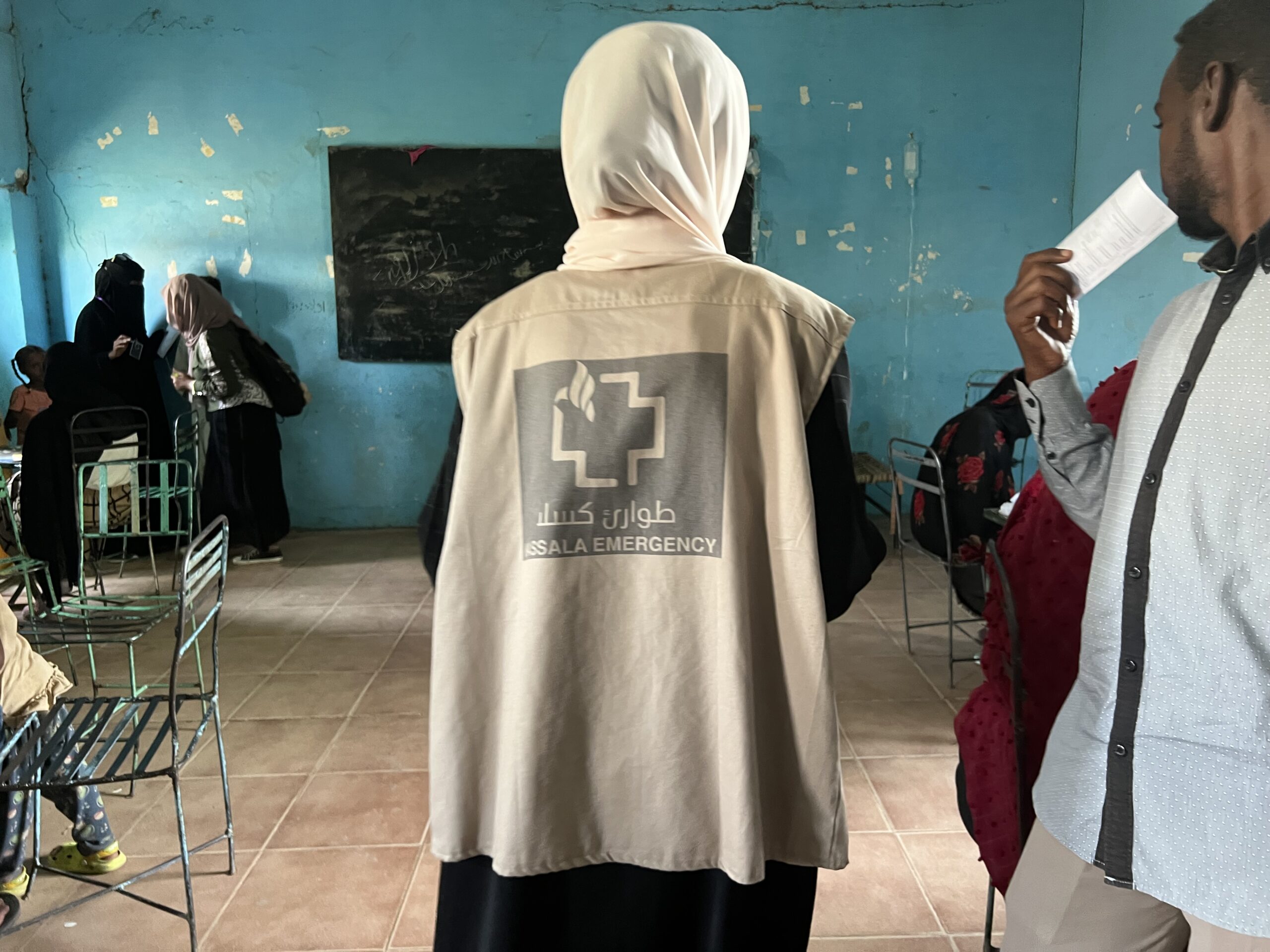
Emergency Response Room, Kassala, eastern Sudan. Photo credit: Faiz Abubakr.
The Emergency Response Rooms did not build a coordination structure because they wanted one. They built one because the scale of the crisis, and the growing demands of international donors, made it unavoidable. In November 2023, ERRs established the Localisation Coordination Council to manage coordination across state-level networks, engage with national and international humanitarian partners, and create a body that donors could recognise and fund. As one volunteer said: it was “a necessity born of the scale of the crisis, not our original intent.”
The LCC’s founding charter reveals a structural imbalance that has received almost no public attention. Khartoum is allocated seven seats on the Council, one for each of its localities. Every other state in Sudan receives one seat, regardless of population, displacement figures, or the scale of humanitarian need on the ground. Darfur, which has five states and is home to some of the most acute suffering of the entire conflict, has five votes in total. Khartoum has seven. This is not an emergent imbalance that developed over time. It is written into the founding document. It means that Khartoum-based ERRs have disproportionate influence over agenda-setting, donor engagement, and funding priority decisions from the very beginning.
The consequences are visible. Multiple volunteers I spoke to, from states outside Khartoum, described feeling that their priorities were not adequately represented in LCC discussions, and that the decisions most visible to international donors reflected Khartoum’s perspective more than the movement as a whole.
The situation of Women’s Response Rooms makes the problem more acute. These are groups that emerged specifically to address the needs of women and girls during the conflict, providing safe spaces, health services, and psychosocial support in communities where women could not safely access general ERR facilities. The LCC charter recognises Women’s Response Rooms as a designated category of funding support. Money can, in principle, flow to them. But they have no seat on the body that decides how funding priorities are set. They are a recipient category, not a decision-making actor. The result is that Women’s Response Rooms have received only minimal funding allocations, around five per cent, despite clearly articulated needs, while resources are directed toward more generalised priorities like food and water.
This brings us back to London, and to the question that the Chatham House Prize ceremony left unanswered. The four ERR members who accepted the award included volunteers working on gender-responsive support and a co-founder from South Kordofan, a diverse and symbolically significant group. But the LCC’s own charter states explicitly that members must not speak on behalf of the LCC publicly without prior authorisation. No public account has explained how that authorisation was granted, or through which internal process those specific representatives were selected to speak for a movement of more than 20,000 volunteers across thirteen states.
This is not a criticism of the individuals who travelled to London. It is a question about the system. About whether the people who speak for the ERR movement in international forums genuinely represent the full breadth of the movement they claim to represent, and whether the processes through which they are selected are visible, contested, and accountable.
The ERRs have achieved something extraordinary. They have sustained the primary humanitarian response in one of the world’s worst crises with minimal resources, extraordinary courage, and a community trust that no international organisation can replicate. One hundred and forty ERR volunteers have been killed during this conflict, people who crossed frontlines without security protocols, without evacuation plans, without the protections that formal aid workers take for granted. That sacrifice deserves the recognition it has received.
But recognition is not the same as accountability. As international funding and attention grow, the question of who governs the rooms becomes more urgent, not less. The LCC’s structural seat allocation advantages Khartoum. Women’s Response Rooms remain excluded from decision-making. And the processes through which the movement’s representatives are selected remain invisible to the outside world.
Sudan’s Emergency Response Rooms are not simply a humanitarian mechanism to be funded and celebrated. They are a political and civic movement navigating an extraordinarily difficult set of pressures: from warring parties, from international donors, and from within their own ranks. Understanding who speaks for that movement, and who does not, matters for everything that comes next. For how recovery resources are distributed. For whose priorities shape the post-war governance agenda. For whether the grassroots legitimacy that made the ERRs remarkable survives the process of formalisation that international engagement has required.
The rooms are listening. The question is whether the international community is listening to all of them.