
Hijra: Movement, Migration, and Islamic Thought
The question of why 70,000 Moroccans migrated to the Spanish-governed territories of Ceuta and Melilla within hours on 30 July – ‘Throne Day’, which is one of the most respectable celebrations of the Morocco Kingdom – still lingers in international media and haunts inquisitive minds. Commentators have talked extensively about the socio-economic and geopolitical incentives, but the underreported in coverage seems to lie within the subjective semantics of hijra itself, the Arabic word for migration, its connotation in the Arabo-Islamic context, and therefore in the collective perception of the Arabs and/or Muslims, including Moroccans.
The word hijra occurs twenty-four times in the Qur’an, the holy scripture of Muslims. All cases manifest in a positive, favourable context. Speaking about verbs in particular, the verb hājara (to migrate) occurs sixteen times, around fourteen of which denote a voluntary and lovable act. The Qur’an reads: “And whoever migrates for the cause of Allah will find on the earth many [alternative] locations and abundance” (4:100). The Qur’an is the primary representative of the standard Arabic language, so meanings of cognate words like hijra, vernacular usage included, are derived from it.
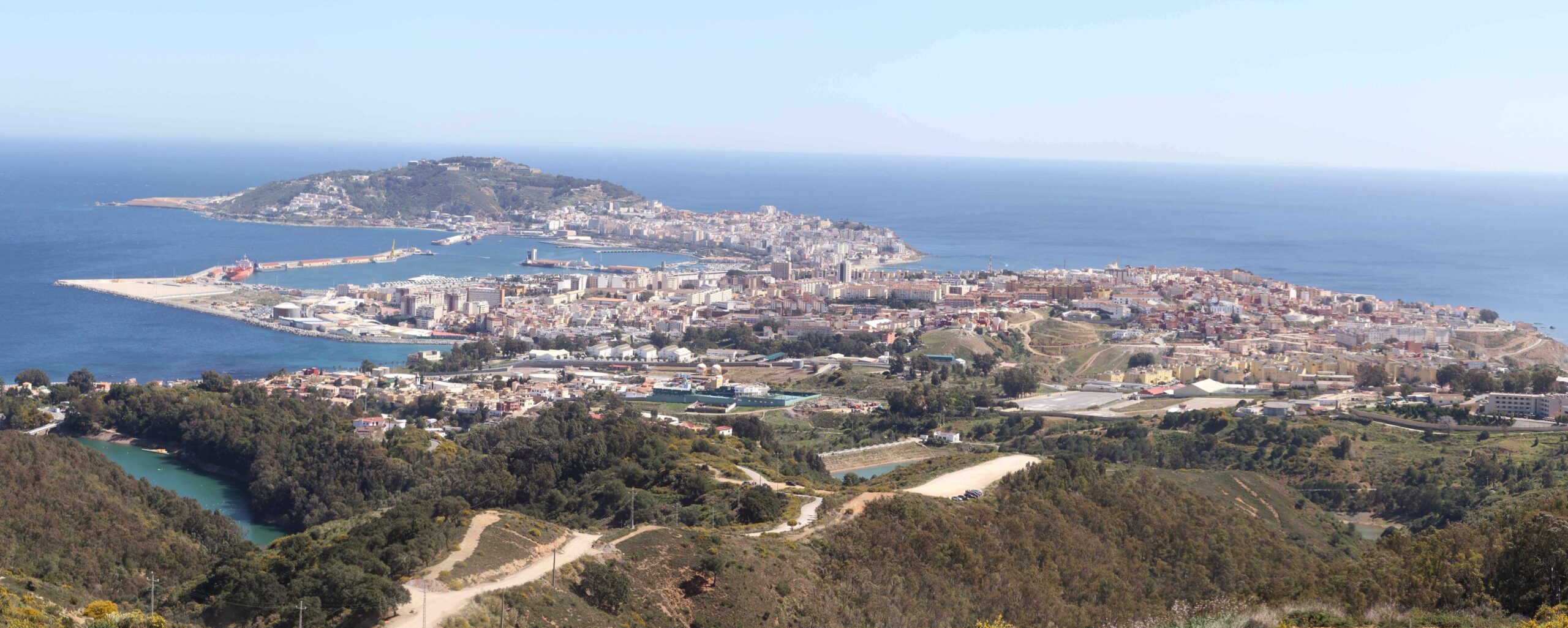
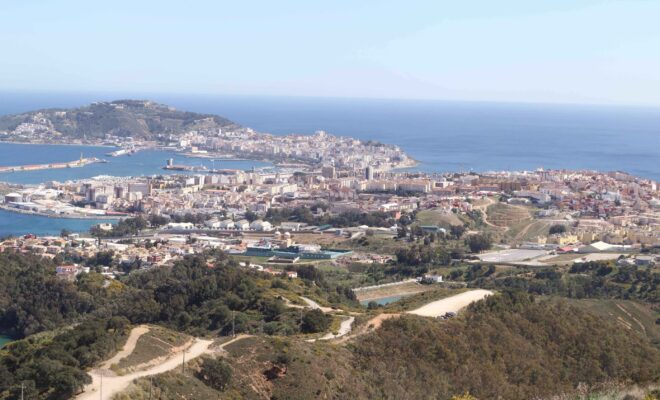
Ceuta is a Spanish exclave adjoining Moroccan territory.
Muslim countries follow the Hijri calendar for religious observance even though it is decreasingly used in everyday professional life. The calendar’s first date, approximately 16 July 622 AD, marks the Prophet Muhammad’s migration from Mecca, where he spent thirteen years spreading the faith of Islam, to Medina, where the Islamic civil society was instituted. al-muhājirūn, Mecca migrants (versus al-’ansār, the Helpers, or native Medinese, who had been themselves migrants from South Arabia), are identified as the companions of the Prophet who stood by him in the previous mission. In the early years of Islam, by the approval of the Prophet, two migrations took place from Mecca to Abyssinia, modern-day northern Ethiopia and Eritrea, and had impactful result on the spreading of Islam at the time. The Prophet Muhammad approved these movements due to the continuous persecution of his followers by his tribe the Quraysh in Mecca and his hope to find a just land that would consider his prophethood. The migrants in Abyssinia practiced and preached their religion freely; some of them were extremely impressed by the justice and freedom provided by the leader, even one of the migrants converted to Christianity and stayed there for the rest of his life.
Many years after the inception of the Hijri calendar, muhājirūn found new home and lived in Medina forever. One great success attributed to the Prophet by his biographers is the preeminent ability to tie a brothering bond between al-muhājirūn and al-’ansār – and a little while before, between al-’ansār tribal groups such as the Arab ’aws and khazraj– and thereby a foundation of an emerging powerful state was enabled. “The Hijra demolishes what preceded it”, said the Prophet Muhammad to a companion called Amr ibn al-As, which possibly means that a migrant has to promote a new living experience (seeking heaven) and cut ties with a previous (heathen) one if it proves to be deficient.
The overwhelming majority of Moroccans, about 98% of the population, are Muslims and Islam is the religion of the nation by constitution. The learnings they accumulate through schooling and self-navigation of knowledge combined render hijra a culturally-loaded act infused with positive signification. Numerous present-day aspirant migrants may not conjure up, in clear reminiscence, all these cultural thoughts, but such implications as highlighted earlier are rooted in the collective memory of Moroccans.
The number of Moroccan diaspora in Spain increased recently to a million. There is also currently another million in Italy, half a million in France, a million in Belgium and the Netherlands, even as far as the Middle East, there are about a million Moroccan-origin Israelis. By this measure, international Moroccan demographics help naturalise hijra by accentuating previous successes. From a chronological standpoint, the Moroccan identity is said to have been formed at the intersection of historic civilizations: Berber, Sahrawi, and Andalusian; with regard to the latter, Morocco was the nearest place in which the Arabs, Muslims, and Jews displaced from Andalusia found refuge. History thus deposits an infinity of migration traces inside the Moroccan common experience.
Simultaneous migration of the 70,000 Moroccans to Ceuta in a national celebration can’t find a valid account merely in dictionaries’ definition of the word ‘migration’, nor in material or strategic factors detailed by several outsiders. Hijra is key to fathoming the event, but not a forced action, nor a simple survival act for feeding and breeding; one looks carefully at viral videos of swimmers and marchers crossing the borders and would realise that they wear casual clothes, not really shabby, some flee a wedding ceremony where hundreds of thousands of dollars are usually spent, others extol the king but still leave the Throne Day; in speaking with them, one would realise that some paid for transportation up to hundreds of dollars to reach the Ceuta border, some rented consecutive nights in hotels, others bore fair amounts of money in their pockets but found no store inside Ceuta to serve them. Indeed, unemployment, low-wage jobs, food insecurity, poor health system, a paralysed educational system, limited freedom of expression, all play together part in the migration act, yet significantly, a spotlight should be placed on how rhythmically and symbolically hijra echoes in the psychology of Moroccans. Economic and geopolitical narratives may accurately frame the reasons for migration through migrants’ authentic accounts, but a fully-fledged analysis must also explore how such accounts are voiced: the latent positive meanings emerging from religious, historical, and inter-subjective remembrance of a shared migration culture which strongly inspires prospective migrants.