Türkiye’s Security Export: Why Africa’s New Air Force Costs Less Than a Fighter Jet’s Spare Parts
Drones have become a primary mechanism of warfare on many fronts around the world. Those fronts range from the war between Russia and Ukraine to the conflict between the United States and Iran. Drones are used to achieve air superiority, a reconnaissance advantage, and highly precise strategic strikes along the front lines. Those strikes range from the pinpoint targeting of individual objectives to larger-scale strikes against strategic targets and infrastructure.
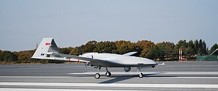
What makes drones a unique tool of warfare is that their low cost and ease of manufacture make them accessible to poorer nations as part of their military arsenals and more broadly to meet their needs for the modernization and development of their military industries. Türkiye has emerged as one of the leading countries in the international landscape of drone technology. The country has a history of drone manufacturing dating back to the 1990s through the drone trial using the UAV-X1 projects at the time. The technical breakthrough happened in the 2010s. An example is the Bayraktar TB2 drone system (three drones plus a ground unit) that was widely used in the war in Ukraine and which made its maiden flight in 2014.
An interesting topic of analysis is Türkiye’s role in transforming the military industries of African nations and in lowering the cost of air superiority. That enabled African states to have strike capabilities without relying on expensive fighter jets deals. This contributes to changing both internal power dynamics and regional conflicts in ways that no one yet fully understands. A three-drone system has provided Africa nations with a strike capability they could never previously afford. It costs the same price as a single used fighter jet. Africa is the first continent where this development can be seen most widely.
The Price of the Sky
Türkiye’s best-known and most widely used system is the Bayraktar TB2 and it costs approximately 6 million dollars. An individual TB2 unit costs 2-5 million dollars. It´s worth noting that a single new F-16 fighter jet costs approximately 80-150 million dollars. Even a used F-16 fighter jet costs tens of millions and this price can multiply when maintenance costs are factored in. The maintenance costs of a fighter jets include servicing, spare parts, runways and trained pilots. An F-35 fighter jet costs approximately 90 million per unit and that excludes the lifecycle costs. The maintenance costs of the TB2 are only a fraction of those of a fighter jet, because it doesn´t require expensive runways or years of pilot training. It also doesn´t involve complex logistical challenges. For example obsolescence of spare parts or long manufacturing lead times. It´s also a matter of the cost structure and not just the purchase price.
From Tripoli to Kyiv: How the TB2 Made Its Name
Türkiye’s TB2 has been used in numerous conflicts across different continents. Türkiye used the UN-recognized government of National Accord in Libya with Bayraktar TB2 drones against Marshal Khalifa Hafter, who used Chinese Wing Loong drones. TB2 drones were a major aid to the government of National Accord in the course of the war in 2020. This was the first time a Turkish drone showed its capabilities in a large-scale conflict against another drone system. Azerbaijan used Tb2 drones in the war against Armenia in mountainous Karabakh and the effects were clear. Azerbaijan destroyed Armenian tanks, artillery and air defense systems with great efficiently. The Azerbaijani air forces released videos that showed the TB2 drone attacks on Armenian military hardware. The videos spread worldwide and that turned the TB2 drone into a symbol of a sorts. Ukrainians succeeded in destroying Russian columns so effectively and visibly in the early stages of the war that these Turkish drones became a Ukrainian national symbol and later even a song was created to honor these drones. The war in Ukraine confirmed the reputation of the Turkish drone system as a combat-proven system or technology. The three wars that were fought on three different continents sent a message that a cheap drone can accomplish what previously required billions. It became clear to African states that they could potentially get military-industrial capabilities in the future or over the long term. These capabilities could shift the global balance of military power in their favor.
A Continent-Wide Customer List
Drones from the Turkish manufacturer Baykar have been exported to at least 35 countries worldwide. Africa is the company´s fastest growing market. Türkiye’s defense and aerospace exports as a whole in 2024 was a total value of 7.1 billion dollars. Exports to African countries grew by 103% during the same period. Countries that are customers for Turkish drones in Africa include Libya, Ethiopia, Tunisia, Morocco, Angola, Burkina Faso, Djibouti, Mali, Niger, Nigeria, Somalia, Togo, Kenya, Sudan, Rwanda, Chad and Algeria. The list is expected to continue growing in the near future. What makes this significant is that the list includes both poorer Sahelian military-led states (Mali, Burkina Faso) and more prosperous nations (Morocco, Rwanda). The buyers span the entire spectrum of wealth across Africa. That shows that this is not merely an emergency solution for nations in distress. Morocco purchased 13 TB2 drones in 2021 and is now transitioning from being just a buyer to a production partner. Baykar is building a factory in Morocco for TB2 and Akinci drones (construction began in 2024).
The State Behind the Sales
Turkiye’s defense exports rose to 7.15 billion dollars in 2024 (+29% year-on-year) and further to 10.05 billion dollars in 2025. Baykar alone generated nearly 2 billion dollars in export revenue in 2024. What makes this state policy rather than a coincidence is that Türkiye’s defense industry agency, the SSB (Savunma Sanayii Başkanlığı), actively supports exports through state incentives, government-to-government trade agreements and export promotion offices abroad. Turkish President Recep Tayyip Erdoğan has described Turkey as an “Afro-Eurasian” nation and has visited more African countries (30 out of 54) than any other non-African head of state. The number of Turkish embassies in Africa has grown from 12 to 43 since 2002. According to a recent SWP analysis (September 2026), Africa helps Turkiye maintain its production capacity and balance its increasingly export-dependent defense industry.
Turning the Tide at Home
The internal impact of drones can be considered major. Abiy Ahmed´s government in Ethiopia used Turkish drones as a key instrument of warfare to crush the insurgency of the Tigray People´s Liberation front during the Tigray War in 2020. The warring parties were evenly matched for a long time until the Tigray People´s Liberation Front advanced close to the capital Addis Ababa. The government then deployed Turkish combat drones, which massively changed the course of the war. The government of Somalia has used Turkish drones to launch precision strikes against the positions and bases of the Al-Shabaab organization. What is major here is that the Somali armed forces were not capable of such operations without external assistance (including from the United States). Turkish drones have helped the Sahelian countries region´s military governments to counter internal rebel attempts. These governments replaced the French troops to Turkish drone systems after driving the French troops out. Turkish drones have thus shifted the balance of power in Africa in favor of governments regardless of the structure of the central government. Rebel groups may have controlled remote areas for years in the past because national central governments lacked the means for continuous aerial surveillance and strikes.
Tipping the Regional Balance
This same mechanism repeats itself at the regional level. When Burkina Faso, Niger and Mali all get the same technology almost simultaneously, the entire region becomes a zone of parallel drone warfare between these countries. Every military government seeks to strengthen its position in front of the neighboring countries and internal rebels simultaneously. The security dynamics shift more rapidly than a mere arms race would suggest when they do so. A major point to note is that whenever an African state gets drone capabilities while a neighboring state (For example Ethiopia in relation to countries in the region) does not then the balance of power shifts rapidly, because the acquisition process takes months and not years.
Who’s Watching the Skies?
Buying these Turkish drones with a low barrier to entry gives rise to a new problem. These cheap, easy-to-use and attractive drone systems for small states are also appealing to poorly led armies or armed groups. It has been reported that armed groups like JNIM in the Sahel have also used armed drones themselves. The proliferation of drones does not follow a clear line of accountability. None of the purchasing states has published an open regulatory framework for the use of drones in civilian areas. Türkiye itself has not defined a mechanism regarding whom it sells to or who ultimately receives its technology. No one yet has also built a system to keep the aforementioned development in check.
A New Kind of Dependency
The era when air superiority was reserved for the few is coming to an end. What replaces it does not automatically mean that better things are in store for the smallest states. It could be part of a new kind of dependency, which is different from the old traditional dependency (political conditions, debt traps). Somalia does not fundamentally need the United States to bomb Al-Shabaab or Mali does not need France militarily anymore, but both need Türkiye. They need Turkish factories, spare parts and the Turkish decision on whom it will sell to next and whom it will not. A question that is worth asking now as the price tag of air superiority continues to fall is that will smaller states gain genuine agency and decision-making power or will the locus of dependency shift from Washington and Paris to Ankara?