Africa’s Position on the ICC
Yesterday’s meeting of the AU Peace and Security Council, held in New York, confirmed Africa’s push-back against the ICC. As feared by African human rights activists, one result of the indictment against President Omar al Bashir is that Africa has lost confidence in the ICC and is taking rapid steps to become a zone free of universal jurisdiction.
At the PSC meeting, Sudanese Vice President Ali Osman Taha made clear Khartoum’s position that an arrest warrant against Bashir would be a declaration of war against Sudan. He is increasing the stakes ahead of the General Assembly meeting in which the Sudanese are looking for enough support to table a motion opposing the ICC. (They are unlikely to get it.) Ali Osman said that the Sudan government was doing everything that the AU asked of it, including cooperating with UNAMID and taking steps to establish a judicial process under African supervision. (In accordance with PSC rules, Sudan was absent for the remainder of the debate.)
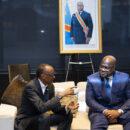
The positions taken at the PSC do not provide much solace to the supporters of the ICC and the advocates of universal jurisdiction. Not a single member state spoke in favor of the ICC indictment, though Nigeria paid lip service to the principle of no impunity and insisted that it was demanding a deferral only, not outright opposition to the Court. Algeria and Angola expressed satisfaction at not having ratified the Rome Statute, saying that they had heeded the warning of Rwandan President Paul Kagame that international justice followed double standards. (Kagame had observed that Rwandan genocidaires in France remain unpunished while European magistrates have issued arrest warrants against him.)
It is probably too early to expect African countries to withdraw from the ICC, but it is a safe bet that there will be no more accessions to the Rome Statute and a gradual freeze on existing cooperation.
Algeria noted with disappointment that Latin American countries had not joined the AU in opposing the ICC move. This indicates the difficulty that the supporters of an Article 16 deferral are facing in trying to get the necessary nine UN Security Council votes to pass a resolution for deferral, which would then challenge the U.S., U.K. and France to exercise a veto. However, no country that might have been expected to be more sympathetic to the ICC position spoke up, such as Senegal (not a PSC member but entitled to attend and speak). South Africa did not speak but is a prominent critic of the ICC arrest warrant.
The underlying logic of the African strategy was articulated: Africa believes that the stability of Sudan is too important to be jeopardized by an abrupt adoption of a regime change policy, and that justice should be pursued in the context of peace. The AU and its member states are unanimous about this and, having made their position clear to the UN and its member states, will hold them responsible for the consequences should their advice not be heeded.
The Chairperson of the AU Commission, Jean Ping, expressed Africa’s disappointment with the ICC. He noted that thirty African countries had ratified the Rome Statute, expecting that the ICC would aid them in the pursuit of justice. But rather than pursuing justice around the world””including in cases such as Columbia, Sri Lanka and Iraq””the ICC was focusing only on Africa and was undermining rather than assisting African efforts to solve its problems. Most importantly, Ping said that the UN had passed the responsibility for addressing the ICC issue in Sudan to the AU. He said that he had learned that the UN Secretary General had, before the July 14 ICC announcement, the opportunity to block the indictment but had said that the Court was wholly independent and it was none of his business.
AU leaders said that Sudan should continue to pursue peace, democracy and justice irrespective of whether the arrest warrant is issued or not. They pointed out that it is Africa that suffers if things go wrong. It is African soldiers who will die if Darfur goes up in flames.
It is evident that the AU leaders are angry at what they see as the UN’s abdication of its responsibility for balancing justice with peace and security. Africa’s leaders have given a clear vote of no confidence in the ICC and they are perilously close to no confidence in the UN as well.