Sudan’s Peace Process Is Negotiating a War That No Longer Exists
More than three years into Sudan’s war, the battlefield has changed more than the peace process. The Sudanese Armed Forces, or SAF, recovered Khartoum and consolidated its hold over much of the north, east and centre. Fighting shifted towards Darfur, Kordofan and Blue Nile, while drone attacks reached areas once considered secure. Khartoum illustrates the danger of confusing territorial recovery with political restoration: more than 2 million displaced people have returned, but electricity remains limited and public institutions struggle to function.
Diplomatic assumptions remain where they were in April 2023. Most initiatives approach Sudan as a two-sided conflict between a national army and a paramilitary rebellion. They expect Gen. Abdel Fattah al-Burhan and Rapid Support Forces, or RSF, leader Mohamed Hamdan Dagalo, known as Hemedti, to bargain and deliver the forces behind them.
That model no longer fits the war.
Neither leader fully embodies the coalition fighting in his name. Their camps contain armed movements, tribal formations, ideological brigades, local defence groups and commanders with their own constituencies and expectations of the postwar order. Battlefield coordination is not political unity, and a leader who can direct an offensive may still be unable to impose the sacrifices required by peace.
Coalitions That Can Fight but Cannot Make Peace
The SAF remains Sudan’s formal military institution, but the camp gathered under its banner extends beyond the regular army. It includes Darfuri movements associated with Minni Minawi and Jibril Ibrahim, armed networks linked to the former regime, tribal forces, popular mobilisation formations and local defence groups. The Africa Center for Strategic Studies estimates that roughly 150 armed groups and militias operate across the conflict, a landscape too fragmented for the image of two disciplined forces facing one another.
Burhan has tried to centralise this camp, including through a 2025 decree placing allied formations nominally under army command. But an administrative order cannot erase the interests that brought them into the war. Former rebel movements seek political leverage and state resources; local militias want security and territorial influence; networks associated with Omar al-Bashir’s former order see the army’s survival as a route back into power.
The RSF camp is also broader than Hemedti’s organisation. It relies on allied tribal and regional forces and has been joined by Abdelaziz al-Hilu’s Sudan People’s Liberation Movement-North, or SPLM-N. Al-Hilu was named deputy head of the presidential council in the RSF-backed parallel government, but his movement retains its own command, territory and political programme. Treating it as merely an RSF unit confuses alliance with subordination.
A shared enemy can postpone disputes over power, territory and resources. A settlement brings those disputes forward at once.
War can conceal these contradictions. Peace exposes them.
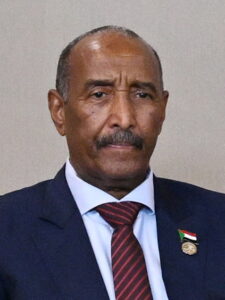
Abdel Fattah al-Burhan in Antalya, Türkiye, April 11, 2025
Why Burhan Can Sign but Not Deliver
Any serious agreement would have to rebuild a unified national army, integrate or demobilise allied formations, establish civilian oversight, exclude the National Congress Party and former-regime networks from controlling the transition, and confront wartime abuses. Each step threatens an important part of the coalition on which Burhan depends.
Civilian oversight would reduce military autonomy. Disarmament would weaken militia commanders. Accountability would threaten those implicated in abuses. Rebuilding one professional army would challenge movements accustomed to negotiating through their weapons.
Burhan can sign an agreement. The harder question is whether he can bind the armed actors fighting beside him when implementation begins to dismantle the bargain holding them together. This does not absolve him: he helped construct and empower this wartime order. But it means he cannot become Sudan’s peace president, whether he wants to or not, without first transforming the coalition that sustains his authority.
Military victories deepen that contradiction. Every battlefield gain raises expectations among allied groups that they will receive positions, resources or recognition in the future state. The stronger the coalition becomes militarily, the more costly compromise becomes politically. Military momentum can therefore narrow, rather than expand, the space for peace. Hemedti faces a parallel constraint: commitments made by the RSF leadership cannot automatically bind al-Hilu’s movement or every tribal and regional force within its wider alliance.
The Diplomatic Fiction of Two Parties
Bilateral diplomacy conceals this problem by granting Burhan a monopoly over the representation of armed power within the SAF coalition. Hemedti receives a similar monopoly on the other side. Mediators assume that an agreement between the two men will bind every force fighting in their names. It may not.
Excluded groups can frustrate implementation without publicly rejecting an agreement. They can delay withdrawals, conceal weapons, provoke local confrontations or insist that commitments made by coalition leaders do not apply to them. A ceasefire can collapse through supposedly local incidents before either principal party formally renounces it.
The answer is not to give every militia an equal political seat. That would reward armed power and turn fragmentation into a constitutional principle. But ignoring actors capable of spoiling a settlement merely postpones the problem until the agreement is weakest.
A Process Built for the War That Exists
The SAF and RSF leaderships must negotiate nationwide questions: a cessation of hostilities, humanitarian access, civilian protection, monitoring and the broad sequence of withdrawals. But a second security table should include major armed actors with identifiable commands, organized forces, territorial presence and the ability to uphold or undermine a ceasefire.
Direct participation would also limit Burhan’s ability to use his coalition’s complexity for his own negotiating advantage. Under the bilateral model, he can invoke allies’ presumed objections to resist compromise, then claim he cannot compel them to implement commitments made without their consent. At the security table, those formations would have to state their interests directly, accept defined obligations and bear responsibility for compliance. Mediators could distinguish genuine community-security concerns from demands used to preserve wartime privilege or strengthen Burhan’s bargaining position.
The same rule should apply across the conflict. Principal SAF-aligned formations should speak for themselves on security obligations. Al-Hilu and the SPLM-N should not be represented indirectly by Hemedti. Abdul Wahid al-Nur’s Sudan Liberation Movement-Army, which has joined neither camp but retains forces and territory in Jebel Marra, should participate in talks concerning humanitarian corridors, local ceasefires and security in Darfur.
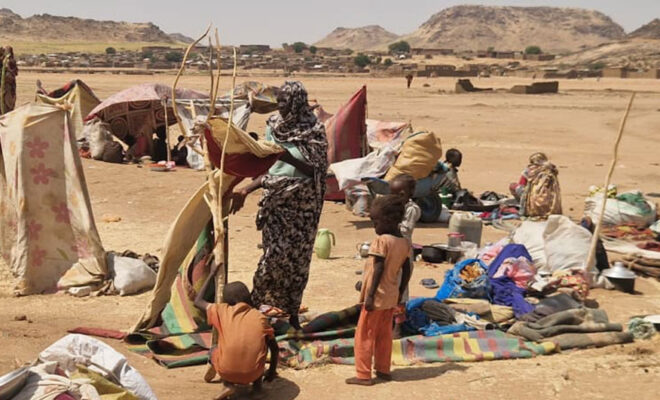
Internally displaced families setting up shelter at the Tawila displacement site in North Darfur, October 19, 2025
This would not be a parliament of militias. Its mandate would be narrow: declaring forces and weapons, accepting monitoring, observing ceasefire lines and negotiating verifiable routes towards integration, demobilisation or disarmament.
A seat to disarm is not a share of the state.
Armed actors can negotiate the mechanics of ending violence. They should not determine Sudan’s constitutional future, which must remain the work of democratic civilian forces.
The destination remains clear: one professional military, no parallel armed formations, civilian control of the state and the return of politics to unarmed citizens. But diplomacy cannot restore the state’s monopoly over legitimate force by pretending that monopoly already exists.
Peace must begin with the Sudan that exists, not the simpler country its mediators still imagine.