Libya’s Elite Pact
In mid-June of 2026, the two rival factions claiming to be Libya’s official government agreed to a power sharing deal. In it, Prime Minister Abdul Dbeibah, the leader of the internationally recognised Government of National Unity (GNU) based in Triopli in western Libya, and Field Marshal Khalifa Haftar, the power behind of the unrecognised Government of National Stability (GNS) based in eastern Libya agreed to what is functionally a dual executive system for the new transitional government. Under the deal, Dbeibah would retain his current post as prime minister of the GNU, while Haftar would be given substantial sway over a new three-person executive presidency, likely to headed by his son Saddam. This deal comes in the aftermath of both an agreement establishing a joint budget as well as joint military exercises in Sirte between April and June of 2026, with Western partners like the US, Germany, and the UK also participating.
While critics have rightly labeled this recent deal as an ‘elite bargain,’ essentially empowering the two rival leaders instead of the average Libyan, this power sharing agreement as well as the prior two agreements before it are necessary but insufficient steps if Libya is ever to emerge as a government with at least some semblance of stability or democracy.
Power mechanics
The joint exercises in Sirte mark a significant step towards bridging the two competing military forces into a new, professional army. Integrating former militias into a unifying security structure is generally considered an important step in ensuring lasting peace, provided such integration is successful. As in Liberia and Sierra Leone, integrating rival factions into a national framework provides a sense of credibility to negotiated transitions, though in both cases, reintegration was largely focused on demobilisation and disarmament.
The new joint budget is meaningful because it indicates that both sides are currently putting their money where their mouths are. Agreeing to a joint budget is a significant surrendering of autonomy for both sides. This directly influences security sector integration as whoever controls the budget exerts significant control over the military. This is one of the key ways in which democratic governments maintain control over their own militaries.
Expected outcomes
The agreed-to transitional government, expected to last until February of 2027 when new elections are scheduled, resembles a semi-presidential system, where executive power is split between a President and a Prime Minister. In theory, this allows for a compromise between elites who may have an easier time winning the Presidency by consolidating national votes as opposed to an opposition, which could have an easier time running in a multiparty, parliamentary election. In parliamentary elections, even a small share of the seats associated with the opposition could be meaningful in electing a prime minister. This particular constitutional system is often implemented after periods of conflict and used in countries like Namibia, Mozambique, and the DRC.
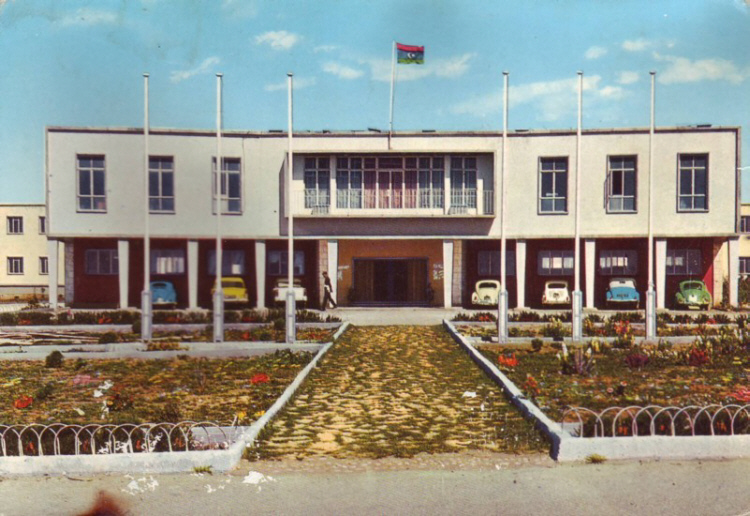
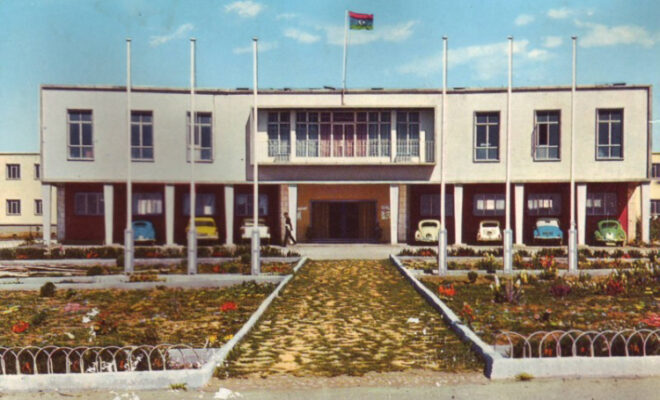
The office of the Prime Minister. Photo from the period of the Kingdom of Libya (1965).
Both election systems are likely to follow both historical and regional patterns. Like most African states, Libya will likely use a two-round runoff system for its presidential election, ensuring at least a symbolic commitment to democracy while also making sure that elite cohesion is not negatively affected by running multiple elite-aligned candidates. This system is frequently used throughout the continent in ethnically or politically fragmented countries.
The 2012 parliamentary elections were held using a mixed system. 120 seats were elected in single member districts while 80 were elected on proportional party lists, where a party’s vote share is directly proportional to the seats won. Unlike in most democracies with such a system, like Japan, South Korea, etc., however, candidates for these single member districts officially all ran as independents rather than on party lists in 2012. While this particular system cannot be ruled out, it would be more in line with global standards to allow single member constituency candidates to run as members of political parties.
A mixed system may have initially been introduced to balance out fragmented local and national power brokers. Individual candidacies preserve local networks and influence while the party list system, using nationwide lists, would help the development of institutional political parties as part of Libyan politics in the long term.
Limitations
There are, of course, limitations. These institutions themselves are not enough; they must be accompanied by an independent judiciary, an independent election body, functioning local government, and strong anti-corruption bodies, among others.
A unified budget, while a step in the right direction, is unlikely to fix fundamental economic problems that ordinary Libyans face, such as the high cost of essential goods. A unified military likewise will not help if its mission becomes the preservation of the ensuing elite structure instead of serving the people. Grand institutional designs are meaningless if an autocrat like Tunisia’s Kais Saied can emerge and exploit polarization and economic grievances to roll back hard wonhard-won democratic freedoms.
Conclusion
Ultimately, a thriving Libya is a long-term project. Strengthening institutions and norms associated with democracy takes years, if not decades, to accomplish. Institutional backsliding and reversals are likely, if the cases of Liberia and Sierra Leone, are looked at as examples. In both cases, however, international support was dedicated and committed to ensuring a post-civil war democracy. Libya will likely need similar support if it is to emerge as a stable and governable country.