
Delayed Rains and Broken Routes: War and Climate Crisis in North Darfur’s Jebel Issa
All names of individuals interviewed for this article have been changed their safety and privacy.
The Fatal Rain of Wadi Saleh
In mid-September 2026, when rain finally touched the parched soil of Jebel Issa in North Darfur’s Al-Malha locality, it did not bring life, but rather severe ecological and economic devastation.
Under normal conditions along this fragile Sahelian belt, the rainy season begins in mid-June or early July and extends through late September This predictable precipitation serves as the ultimate lifeline for rainfed millet and sorghum farming, as well as the primary water source for livestock grazing across the northern Darfur plains. This year, however, unprecedented climate variability left the skies dry until 12 September.
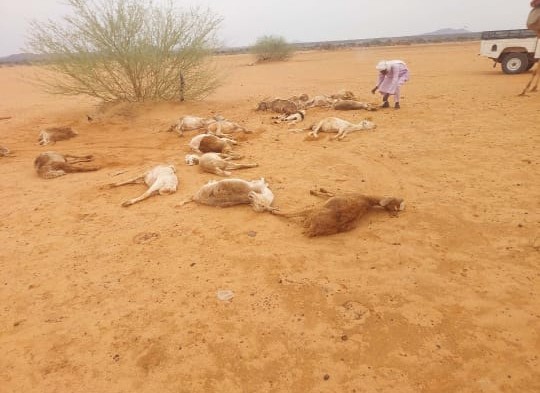
When a sudden isolated downpour finally struck the western sectors of Jebel Issa livestock already severely weakened by months of starvation, scorching heat, and gruelling treks between depleted pastures and distant wells suffered immediate thermal and physical shock. Over three consecutive days, from 12 to 14 September, more than 420 head of sheep perished in Wadi Saleh alone, with additional unrecorded livestock deaths reported across neighbouring valleys.
Local livestock that have died from thermal shock after delayed rain. Photo credit: Albashir Dahab / Local Reporting Network.
‘The animals had been walking exhausting multi-kilometer distances every day searching for withered pasture left over from the previous year just to reach the few functional water points,’ explains Hassan Ahmed (name changed), representative of the Jebel Issa Emergency Response Room. ‘They arrived at the wells severely malnourished and dehydrated When the sudden downpour hit, accompanied by an abrupt steep temperature drop their weakened bodies simply could not endure the extreme climatic shock.’
In rural Darfur, livestock ownership carries a deeply collective social weight. ‘These 420 sheep were managed collectively by 16 caretakers, but under our traditional social structure, each caretaker manages a combined herd belonging to extended families brothers and kin’ Ahmed adds: ‘Wiping out these herds means destroying the entire financial safety net and accumulated wealth for dozens of vulnerable households in a single weekend’.
Regional Climate Anomalies and Sahelian Pressure
The crisis in Jebel Issa is not an isolated weather anomaly. It reflects a broader accelerating climate shift across the northern Sahelian belt. According to regional climate assessments and data from international bodies like the Intergovernmental Panel on Climate Change (IPCC), this zone is experiencing extreme rainfall variability characterised by shorter highly erratic rainy windows interspersed with prolonged, intense dry spells.
In Jebel Issa where subsistence farming relies strictly on rainfall without irrigation machinery or artificial reservoirs these delayed rains have disrupted the delicate ecological balance. According to estimates from the Food and Agriculture Organization (FAO), regional cereal production across vulnerable belts in Darfur has plummeted sharply due to the convergence of delayed rainfall and conflict. Furthermore, the localised nature of the recent rainfall left the northern and eastern sectors of Jebel Issa completely dry, creating stark disparities where some farming councils received a single downpour while adjacent areas received not a single drop.
Weaponised Geography: Blocked Routes and Economic Siege
Jebel Issa sits roughly 35 kilometers from the administrative centre of Al-Malha. Jebel Issa serves as the central economic agricultural and water hub for a vast cluster of surrounding village councils including Wadi Hora, Jabra, Wadi Bisha, Wadi Tandis, and Del Sari. Neighboring areas such as Wadi Akhdar, Al-Har, Um Saro, Aito, Ashar, and Abkran face identical climatic conditions and rely entirely on Jebel Issa’s central infrastructure.
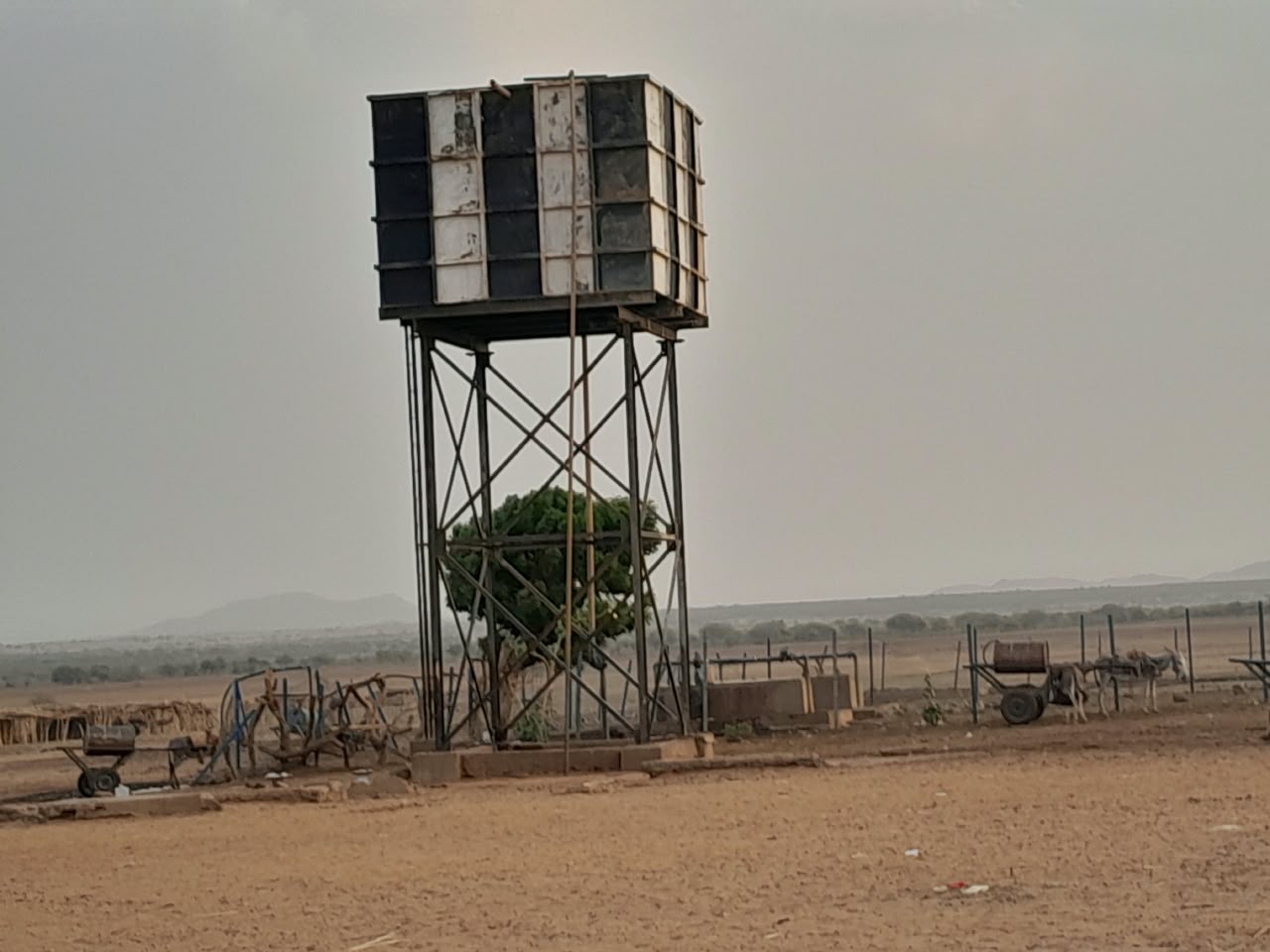
Wells in Jebel Issa are a source of water for a much wider region. Some currently stand empty. Photo credit: Albashir Dahab / Local Reporting Network.
Historically, communities in North Darfur weathered severe dry spells through vibrant cross-border trade and commercial supply lines moving along three major trade arteries: the Al-Dabbah route connecting to Northern Sudan, the Mellit route leading deeper into Darfur, and the northern Triangle (Al-Muthalath) border highway linking Sudan to Libya and Egypt.
However, the ongoing armed conflict between the Sudanese Armed Forces (SAF) and the Rapid Support Forces (RSF) has transformed these trade routes into active battlelines and militarised checkpoints. The total closure of these three commercial arteries has effectively placed Jebel Issa under an economic siege As noted by food security monitoring networks like FEWS NET, supply blockades have crippled regional markets, causing staple grain and fuel prices to surge far beyond the financial reach of rural families living below the poverty line.
Collapse of the Groundwater Network
The destruction of state infrastructure, public services, and municipal funding due to the war has turned the daily retrieval of drinking water into a desperate struggle for survival.
The water supply grid across Jebel Issa relies on nine deep groundwater wells powered by diesel generators or solar energy systems. Today, the network is in a state of advanced collapse: out of the nine deep groundwater wells supplying the region, only four remain operational. Three solar-powered wells have completely shut down due to damaged inverters, broken solar panels, and electrical component failures. Due to the total blockade of commercial routes, replacement spare parts cannot be imported or transported into North Darfur. Two government-owned diesel wells sit idle due to a total lack of fuel supplies.
The remaining two government wells are operated solely through voluntary community pooling where impoverished residents contribute their remaining cash to buy overpriced fuel on the black market. The only other functional points are two privately owned solar wells operating at maximum capacity.
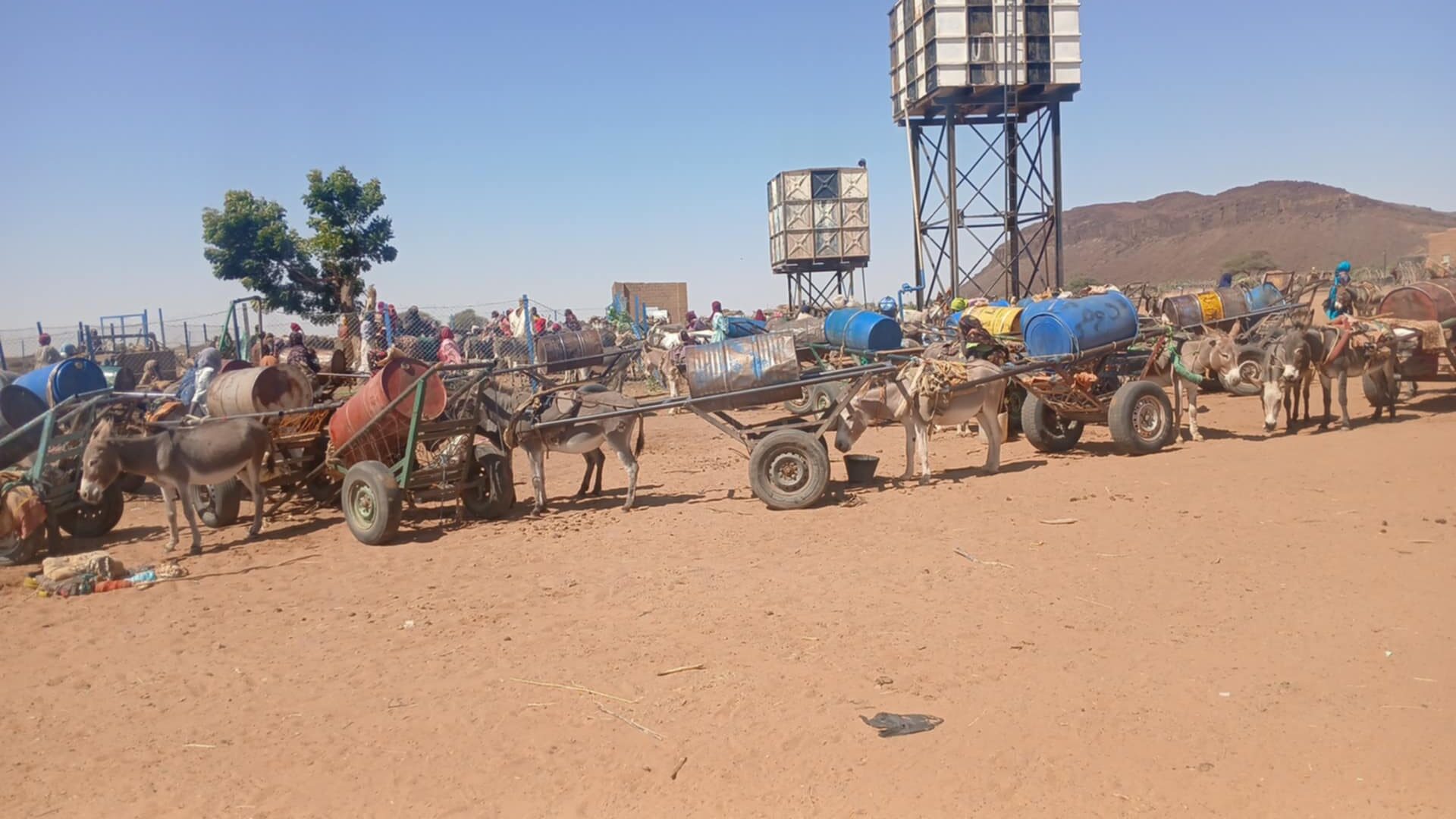
Queues outside some of the few function wells in the region. Photo credit: Albashir Dahab / Local Reporting Network.
This severe contraction from nine operational wells down to four has created dangerous chokepoint conditions Thousands of residents and tens of thousands of livestock are forced to congregate around fewer water points, drastically increasing the physical distance herders must travel and intensifying the physical exhaustion that proved fatal during the September rains.
With international and national humanitarian organisations entirely absent from this remote zone, the Jebel Issa Emergency Response Rooms voluntary body organised by local youth remains the sole entity managing water distribution, emergency maintenance, and limited relief efforts.
Voices from the Ground: Farmers on the Brink of Famine
Communities across Jebel Issa practice traditional, low-input rainfed agriculture using hand tools. Without tractors, modern fertilizers or commercial reserves, any single crop failure translates directly into immediate widespread food insecurity.
‘In previous years, by mid-September, we would have finished clearing weeds from our fields and begun preparing for the early harvest’ says Mona Khalid (name changed for security reasons) a 28-year-old mother of three who cultivates a 2.5-acre plot
‘Last year, seeing someone ask for grain in the street was an unusual sight. Today with hundreds of displaced families fleeing active conflict zones into our villages mothers begging for a small bowl of millet or sorghum has become an everyday reality’.
Mohamed Omer , a 35-year-old father of five who planted his 3-acre plot before the rains arrived shares a similar story of loss. ‘Nothing I planted has germinated or survived’ Omer says ‘Half the agricultural season has already slipped away. Even if late rains fall now, the crops will not have enough time to mature before the heat dries them out. My heart sinks knowing our harvest has completely failed’.
For rural households in North Darfur, food security is tied directly to millet, the primary grain used to make Aseeda (a traditional thick porridge) ‘We do not rely on wheat bread here; millet porridge is our daily life’ explains Yousif Issa a 37-year-old father of four ‘Today, millet is completely absent from the markets. Neighbors frequently come to my door asking if I have anything left to feed their starving children. Even though my own family has almost nothing left, I divide whatever small portion of grain we have remaining’.
A Race Against Time
As the dry pasture left over from the previous year is rapidly consumed, livestock face an inevitable starvation crisis long before the arrival of the next rainy season. The threat is further amplified by the total collapse of public veterinary services. Without vaccines antibiotics or veterinary personnel, minor treatable livestock diseases are turning into fatal outbreaks across North Darfur
Historically, families survived failed agricultural seasons by selling a portion of their livestock to purchase grain or through mutual community aid. Today both safety nets have dissolved: livestock are dying or too emaciated to sell at market, grain is unavailable for purchase, and the entire population has been reduced to equal levels of poverty.
The crisis in Jebel Issa illustrates a stark reality across the Sahelian belt climate shocks do not occur in a vacuum In North Darfur, extreme weather variability has collided with an escalating war and severe supply blockades, stripping vulnerable communities of their traditional coping strategies and pushing an entire region toward an unprecedented compound human and ecological catastrophe.


