
The Winter Circus: A Memoir
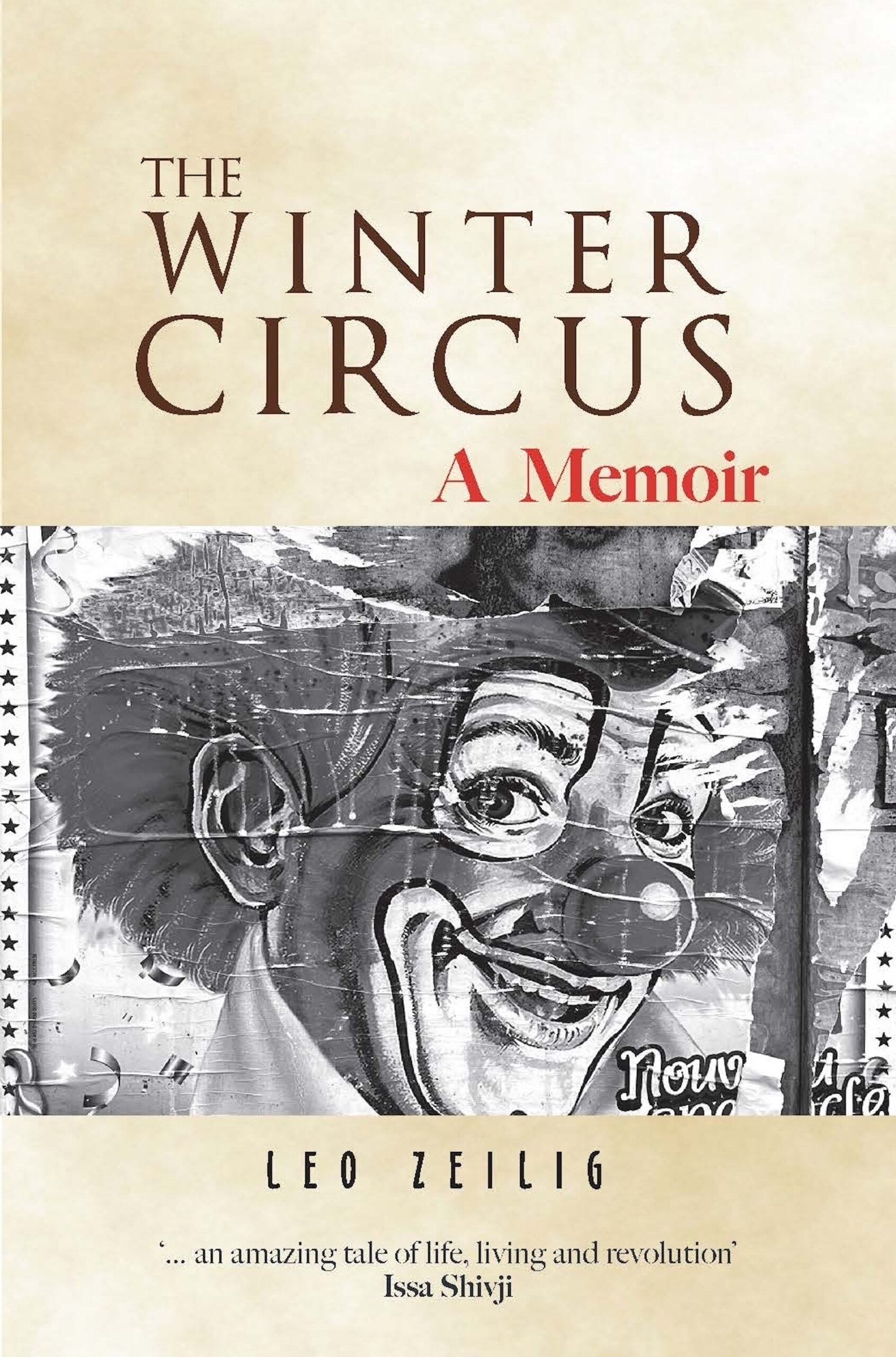
The Winter Circus: A Memoir (2026) by Leo Zeilig is published by the Uganda-based Editor House Facility (EHF). A genre-defying work blending memoir, fiction, and political reflection, it explores what it means to live through personal and global crisis. Moving between intimate experience and wider social forces, it captures a world of deep contradiction: extreme wealth alongside poverty, rising global movements alongside fragmentation. Set across Europe and Africa, it tells of a world on the cusp of radical change.
The story takes place over a weekend in Paris. Four friends, Ivan, Louis, Patrice and Bhaskar travel to the French capital to celebrate a Louis’ 50th birthday. They encounter a strange political movement gripping the city, with its centre in The Winter Circus, a 19th century venue in the heart of the city. From here the friends discover a world being transformed by a new politics, led by a woman, Bianca Ndour, from her base in Senegal.
“I let my guard down, nothing to worry me – no fifth sense eyeing the exit; I wormed himself into the scrum holding Ivan aloft, and stretching, raising myself on my toes, searching for my friend’s hand. We locked eyes and laughed, finding something in each other’s face, or in the room, in the circus – inexplicable and glorious. Alive.
Finally, after a few seconds I pulled away and someone else took my place. I left the room, my heart surging, full, convinced. I wanted nothing and let the crowd take me. I felt someone tug on my trousers, a man sitting on the floor in a small group, ‘Join us, brother.’
Automatically I sat down and was handed a paper cup filled to the brim with red wine.
Thoughts started to swirl back into my mind: it was one thing holding a protest, this I understood; but this, this, I thought, was the answer to the old problem. How to maintain engagement, momentum, commitment, after the first spasm of activity. We generate great initiatives in a flurry of involvement, but the central problem, the vital task, is how to sustain action into an entire life-giving revolutionary movement? How do we maintain the inspired frenzy of history when mass energy is being extinguished?
This was the central issue, I thought, looking around, hearing the low simmer of conversation and activity. The group near me had widened their circle to let me in; I was left to my thoughts: How do you prevent a world-changing revolution from collapsing back into inertia?
Bianca knew this better than anyone – ever bigger and better demonstrations until a moment would come with enough people on strike, so the old regime would crumble, and the ruling class would declare the game over. But more was needed.
‘It’s simply not going to happen like that,’ she explained repeatedly to her supporters in the weekly dispatches from Ziguinchor. ‘The rich don’t roll over, accept defeat and then emigrate. They don’t sip whisky, mop their foreheads with purple silk handkerchiefs, button up their Savile Row suits as they contemplate defeat in the morning papers, uttering to themselves, “Sorry, old chap, but the game’s up . . . I’m moving to Monaco.” The game is never up. They must be destroyed, in all of their hideouts.’
‘Friends, it is our movements that crumble,’ Bianca had said, ‘and it is because of this that we must continue to fight even when we think we have won and then on and on until we have cleared every remnant of their side. Everything must fall. Everything must change.’
I nodded to myself; this is what she was doing in Ziguinchor – planning, mapping, organizing, making, sustaining. The point was to drag this thing out.
West Africa the incubator to the new world. Senegal was stretching the canvas of a new social order across the region, and soon the entire continent and world. There were tremendous convulsions of self-organization, village, town and city communes, and new and ingenious industries creating goods to democratically agreed plans without any central authority.
Though there was also the challenge of invasion, the systematic effort to disperse the revolutionary order. I was now deep in thought, running through the plan, as I saw it.
Bianca’s incubator in the Casamance region operated like an old telephone exchange, organizing the supply of goods to Bissau (using the old channels created in the liberation wars in the 1970s), sourcing weapons for Happy Life fighters in Kano, distributing anti-tank weapons to forces in Ouagadougou, and running guns up and down the coast through Conakry, Freetown, Monrovia, and Abidjan, then through Ghana to Lomé.
Then the campaigning, spreading the word of the neighbourhood committees, workers’ control, and the popular movement which was the centre of the entire enterprise.
I had read about the routes, the new trades, the sheer breath-taking organization along the western seaboard, and to the landlocked movements inland.
Taking a big sip of my wine which had just been topped up, I nodded thanks.
The movement had already gone beyond the storming of cities, parliaments and palaces – the work of the first hour. The first conquests, and the forces that led them, were unified, but with victory they could become the instruments of demobilization. Only with sustained and coordinated pressure from below could the real victory in the second, third, and fourth hour be achieved.
I felt the pleasing surge of my thoughts. Only with constant and conscious action, and ruthless execution would the steam of revolution be channelled into the complex system of pistons, pipes, boilers and machines. There was no single battle, no one victory; the popular movement and transformation had to be constantly hardened.
Satisfied with my thinking, with the clarity of what I had become, I put my hand on the shoulder of the woman next to me. ‘Sister, do you have any more wine?’
*
I let my mind wander through the events that had inspired me years before and were now sending me on an entirely new path. I knew now that, while there were low-level insurrections in parts of Southern and Central Europe, many areas in the Global South – especially in Africa – were under new control now: being run by community groups and worker cooperatives, alongside a radical affiliate to Go on or Die known as Happy Life.
There were the normal slogans you’d expect, rejoicing in the newfound hope – wanting to find words to scratch on walls, and posters that would express what was happening:
“The slave who cannot organize her own revolution deserves no pity, or freedom. She alone is responsible for her hardship if she believes her master’s lies.”
Then there were more instructive, educational slogans – less rhetoric, more utility:
“On our land we wear our own shoes, made by us, from leather from our cows reared by our people, tanned and processed in our conquered domains. We eat bread and rice grown on our fields and harvested by us.”
Lines from activists new and old covered buildings, hung from banners and were chanted by children – sung, shouted, altered.
*
No exports to Europe or North America of oil, cotton, cacao, gold, diamonds. The textile industry shattered by years of cheap imports was now producing clothing and materials for regional use.
The levers of economic control had been seized by the poor, or working people – as Happy Life described them – and was now constantly expanding south and north through a combination of war (guns, bullets and death), against mercenaries and northern armies on one side, and popular struggles and a people’s movement on the other. Struggles in workplaces and communities were central, occupations led to self-management, and soon to popular assemblies.
To start with the focus was on defence. This was the first stage. The government and the police were hostile, picking groups off, one by one. The Go on or Die activists had to be in contact with each neighbourhood and know when the police were moving against them, and to know this in advance, to know when the police would come in from one side or another.
This was how it started – from strict necessity, until it grew and germinated into other activities, no longer strictly defensive but more creative. These neighbourhood committees and work groups began to manage the entire initiative of production and distribution, eventually even providing homes, lodgings and food to the homeless, and to street children.
West Africa’s Happy Life, and the liberated zones, led the world and there was reliable evidence that Bianca Ndour – one of the earliest leaders of Go on and Die – was operating out of the region’s HQ in Ziguinchor, the southernmost city of Senegal.
To purchase Leo Zeilig’s The Winter Circus please click here.