Walking with the Herd – Why Africa Must Rethink Its Oldest Economy
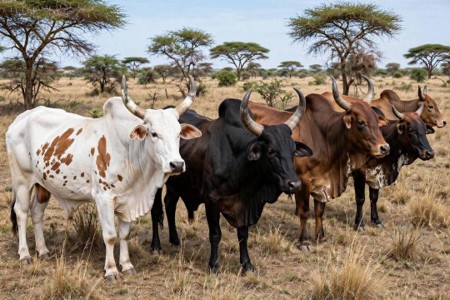
When pastoralists, researchers, policymakers and development practitioners gathered in Marsabit this year to mark the International Year of Rangelands and Pastoralists (IYRP-2026), the conversations went far beyond livestock, drought or humanitarian aid. Convened by the Centre for Research and Development in Drylands (CRDD), the dialogue challenged a deeply rooted assumption that has shaped development policy for decades: that pastoralism is an outdated livelihood gradually being overtaken by modernity.
It is an assumption that has endured despite mounting evidence to the contrary.
For generations, pastoralism has been portrayed as a temporary stage in development—a way of life expected to give way to settled agriculture, urban employment and industrial economies. Consequently, public investment has overwhelmingly favored crop farming, mining and infrastructure while pastoral regions have often received attention only during periods of drought, livestock disease or conflict.
Yet climate change is forcing the world to reconsider what resilience actually means.
As rainfall becomes increasingly erratic and extreme weather events grow more frequent, scientists and development agencies are promoting flexibility, mobility, ecosystem restoration and adaptive resource management as essential responses to a warming planet. Ironically, these are the very principles upon which pastoralism has been built for centuries.
The Food and Agriculture Organisation (FAO), through the International Year of Rangelands and Pastoralists, has recognised that healthy rangelands support biodiversity, store carbon, strengthen food security and sustain the livelihoods of hundreds of millions of people worldwide. Rather than viewing drylands as empty or unproductive landscapes, the initiative calls for renewed investment in pastoral systems as part of global climate resilience.
For Kenya, this conversation could not be more timely. Nearly 80 per cent of the country’s landmass consists of arid and semi-arid lands where livestock production remains the most viable economic activity. The livestock sector contributes significantly to national income, supports millions of livelihoods and underpins regional trade across the Horn of Africa. Yet pastoralism continues to be discussed more as a humanitarian challenge than as a strategic economic sector deserving sustained public investment.
The recent Marsabit dialogue highlighted a different perspective. Participants did not simply discuss surviving the next drought. They asked how pastoralism could become more productive, more resilient and more attractive to young people without losing the indigenous knowledge that has sustained dryland communities for generations.
The greatest challenge facing pastoralism today is not simply climate change. It is the persistence of policies and public attitudes that continue to treat one of Africa’s oldest and most climate-adapted economies as though it belongs to the past.
The Quiet Crisis beyond Climate Change
Climate change is undoubtedly reshaping pastoral life. Prolonged droughts, shrinking grazing lands, invasive plant species, conflict over natural resources and unpredictable rainfall have made livestock production increasingly difficult across northern Kenya. These realities dominate headlines, attract humanitarian funding and rightly concern governments.
Yet another crisis is unfolding almost unnoticed. For centuries, pastoralism flourished because knowledge moved with the herds. Children learned by accompanying their parents and elders across the rangelands, identifying pasture species, reading weather patterns, recognising livestock diseases, locating water sources and negotiating grazing access with neighboring communities. This was not informal learning in the casual sense of the word; it was a sophisticated system of environmental education developed over generations and refined through lived experience.
Today, that classroom is changing. The greatest threat to pastoralism may not be drought alone. It may be the gradual disappearance of the knowledge, labour and institutions that have sustained it for centuries.
The expansion of formal education across Kenya’s arid and semi-arid lands is one of the country’s greatest development achievements. Thousands of children from pastoral communities now complete primary school, secondary school and university, opening doors to careers that were unimaginable only a generation ago. This progress should be celebrated, not questioned.
However, an uncomfortable policy question deserves attention. As more children spend most of the year in classrooms and boarding schools, who is inheriting the ecological knowledge that once passed naturally from one generation to the next?
education systems have largely been designed around sedentary societies, and success is often measured by how many young people leave pastoral livelihoods rather than by how many return with new skills capable of transforming them. The result is a growing disconnect between formal education and pastoral production.
Imagine instead an education system that prepares young people to become climate-smart pastoral entrepreneurs. A graduate trained in veterinary medicine, data science or environmental management could combine scientific knowledge with indigenous pastoral wisdom to improve herd health, interpret satellite weather forecasts, monitor grazing conditions using geographic information systems (GIS) and access regional livestock markets through digital platforms. Organisations such as the International Livestock Research Institute (ILRI) and the Food, Agriculture Organization’s Pastoralist Knowledge Hub increasingly highlight the value of integrating traditional knowledge with modern science to strengthen climate resilience.
This shift in thinking is long overdue.
Pastoralism should no longer be viewed as a livelihood from which education liberates young people. It should be recognised as a knowledge-intensive profession that increasingly requires expertise in climate science, livestock genetics, digital technology, entrepreneurship and sustainable rangeland management.
The same applies to public investment. Governments routinely allocate billions to crop agriculture, manufacturing and extractive industries because these sectors are recognized as engines of economic growth. Yet pastoralism, despite contributing substantially to livelihoods and national economies, often receives investment only after disaster strikes. Roads to livestock markets remain inadequate, veterinary services are uneven, livestock insurance reaches only a fraction of producers and value-addition industries such as leather processing, meat packaging and camel milk production remain underdeveloped.
If Africa is serious about building climate-resilient economies, this imbalance can no longer be justified. The real question is not whether pastoralism deserves investment. It is why one of the continent’s most climate-adapted production systems continues to receive less strategic attention than sectors far less suited to the realities of the drylands.
Walking With the Herd, Towards the Future
Perhaps the greatest misconception about pastoralism is that it belongs to history.
In reality, it may be one of the few production systems already adapted to the kind of world climate scientists predict lies ahead. For centuries, pastoralists have responded to uncertainty through mobility, flexibility, herd diversification and communal management of natural resources—principles that today underpin many global conversations on climate resilience.
The challenge, therefore, is not to preserve pastoralism unchanged but to modernise it without stripping away the knowledge that has sustained it for generations. That begins with a fundamental shift in public policy.
Governments should protect livestock migration corridors with the same determination with which they protect transport corridors. County and national governments should invest in veterinary services, water infrastructure, livestock markets, value addition, drought insurance and digital technologies that enable pastoralists to access weather forecasts, market information and animal health services in real time. Emerging innovations such as satellite monitoring, artificial intelligence, electronic livestock identification and mobile financial services are no longer distant possibilities—they are practical tools capable of transforming pastoral economies when combined with indigenous knowledge.
Equally important is changing how society talks about pastoralism.
For too long, pastoral communities have entered national conversations mainly during drought emergencies, conflict or humanitarian appeals. Rarely are they recognized as entrepreneurs, environmental stewards and contributors to national development. Yet healthy rangelands support biodiversity, store carbon, sustain livestock production and contribute significantly to food security. As the world searches for climate-smart development pathways, pastoralists should be viewed not merely as beneficiaries of aid but as partners in building resilient landscapes.
This change also requires rethinking education. The measure of success should not be how many young pastoralists abandon livestock for urban employment, but how many return with new knowledge capable of transforming pastoral production. Universities, technical institutions and research organisations should invest in dryland innovation, climate-smart livestock systems, indigenous knowledge documentation and pastoral entrepreneurship. Education should strengthen pastoralism, not inadvertently disconnect future generations from it.
The conversations held in Marsabit during the International Year of Rangelands and Pastoralists offered an important reminder: the future of pastoralism cannot be left to pastoralists alone. It demands political leadership, long-term investment, research, innovation and a willingness to replace outdated assumptions with evidence.