
The Politics of Jobless Growth Under Tinubu
On 29 May 2023, moments after taking the oath of office, President Bola Ahmed Tinubu declared: “Fuel subsidy is gone.” The announcement marked the beginning of one of the most consequential economic reform cycles in Nigeria’s recent history. Over the following months, the administration moved to remove fuel subsidies, unify exchange rates through the Central Bank of Nigeria (CBN), and implement a series of fiscal and monetary adjustments designed to restore macroeconomic stability.
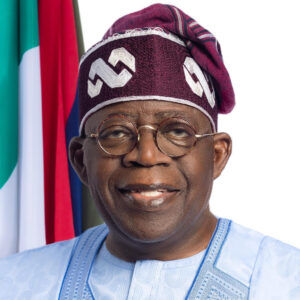
President of Nigeria, Bola Ahmed Tinubu
Just over three years on, the reforms have produced measurable results. According to the World Bank’s Nigeria Development Update (April 2026) and the IMF’s 2025 Article IV Consultation, Nigeria has made significant progress in restoring macroeconomic stability. The World Bank reports that the fiscal deficit narrowed from 5.4 percent of GDP in 2023 to approximately 3 percent in 2024, while revenue mobilization improved following subsidy removal and exchange-rate reforms. External balances have strengthened; investors’ confidence has improved relative to the period of uncertainty that preceded the reforms, and economic growth has remained positive. Yet inflationary pressures have remained persistent, and food prices continue to erode household purchasing power.
The central political question, however, is no longer whether reform was necessary. It is whether Nigeria’s economic restructuring can produce what previous reform cycles have consistently failed to deliver: employment-intensive growth.
According to World Bank estimates, approximately 3.5 million Nigerians enter the labour force each year, making Nigeria one of the fastest-growing labour markets in the world. For a country already struggling with widespread informality, underemployment, and poverty, this represents one of the largest employment challenges on the African continent.
For Nigeria, jobs are not merely an economic outcome. They are political imperatives.
The logic behind the reform programme was straightforward. Fuel subsidies have become fiscally unsustainable, consuming trillions of naira annually while disproportionately benefiting wealthier households and creating opportunities for rent-seeking and smuggling. Multiple exchange-rate windows distorted investment decisions, encouraged arbitrage, and undermined transparency in the foreign exchange market. For years, institutions such as the International Monetary Fund and the World Bank had argued that these distortions weakened economic competitiveness and constrained growth.
There is evidence that some of the reforms’ objectives are being achieved. The World Bank has noted improvements in fiscal discipline, revenue mobilisation, and external balances, while the IMF has acknowledged stronger investors’ confidence and improved macroeconomic resilience following the reforms. Economic growth has remained positive, driven largely by services and non-oil activities. Yet stabilisation should not be confused with transformation.
A growing tension now sits at the heart of Nigeria’s reform agenda: policies designed to restore macroeconomic stability may also be reinforcing the very structure of jobless growth they were meant to overcome.
Nigeria’s deeper structural challenge is not a lack of economic activity but a persistent inability to convert growth into broad-based employment. This pattern has defined much of the country’s development trajectory. The oil sector illustrates the contradiction clearly. Petroleum remains the backbone of export earnings and government revenue, yet it directly employs only a tiny fraction of the labour force. Economic growth can therefore coexist with widespread unemployment and income insecurity.
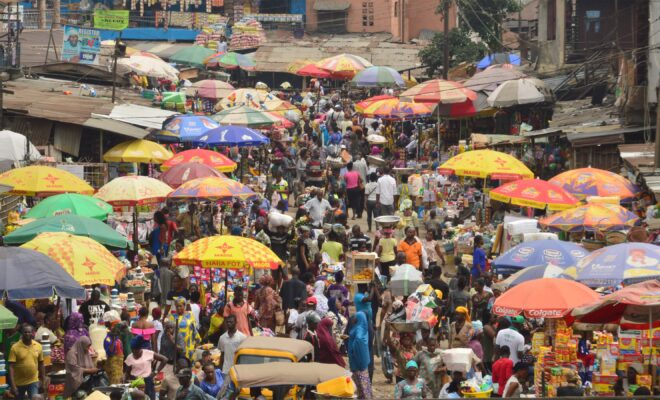
The consequences of adjustment are increasingly visible in the real economy. A small business owner in Abuja’s informal sector recently described spending nearly ₦500,000 each month on generator fuel simply to keep operations running amid unreliable electricity supply. For small and medium-sized enterprises, energy costs are not merely a business expense; they shape decisions about hiring, investment, and survival.
The Manufacturers Association of Nigeria’s MAN CEO’s Confidence Index (MCCI) Q2 2024 paints a similarly troubling picture. Business confidence weakened as manufacturers grappled with rising electricity tariffs, foreign exchange scarcity, high borrowing costs, and persistent inflation. The survey found that production and distribution costs increased by 24.4 percent in the second quarter of 2024, while capacity utilisation fell by 14.1 percent, production volume declined by 11.9 percent, sales volume dropped by 9.3 percent, investment fell by 5 percent, and employment contracted by 4.9 percent. These trends suggest that many firms are responding to economic pressures not by expanding production and hiring, but by scaling back operations and investment. The report further found that only 19.7 percent of manufacturing CEOs reported improvements in access to foreign exchange, while 70.2 percent said prevailing lending rates did not support productivity. More than 90 percent identified multiple taxation and regulatory burdens as major constraints on business operations.
Exchange-rate liberalisation has simultaneously increased the cost of imported machinery, raw materials, and intermediate inputs. In response, many firms have postponed expansion plans, reduced production, or frozen recruitment.
These pressures are particularly significant in a labour market where more than four out of every five workers are employed in the informal economy. According to the National Bureau of Statistics’ Nigeria Labour Force Survey Q2 2024, informal employment continues to dominate the labour market. Income insecurity remains widespread; productivity growth is weak, and access to social protection is limited.
The employment challenge is especially acute among young Nigerians. Millions enter the labour market each year, but formal-sector job creation remains insufficient to absorb them. Many find themselves in vulnerable self-employment or informal work not because of entrepreneurial ambition but because alternatives are scarce. Youth unemployment and underemployment remain persistent features of the Nigerian economy, reflecting structural weaknesses that extend far beyond the business cycle.
To its credit, the Tinubu administration has introduced several programmes intended to address these pressures. These include the Nigerian Education Loan Fund (NELFUND), the 3 Million Technical Talent (3MTT) programme, the Presidential Compressed Natural Gas (CNG) Initiative, and a range of MSME financing schemes designed to improve access to capital and support entrepreneurship.
These initiatives reflect recognition within government that human capital development and entrepreneurship must complement macroeconomic reform. Yet their limitations are increasingly evident. Skills programmes can improve employability, but they cannot generate jobs in an economy constrained by unreliable electricity, persistent insecurity, high logistics costs, weak industrial capacity, and limited access to affordable credit. Businesses are less likely to invest, expand, or hire when production costs are high and economic activity is disrupted by security challenges. Entrepreneurship programmes may help individuals survive, but they cannot substitute for a productive economy capable of absorbing millions of new workers each year.
This brings the discussion to a deeper structural issue: the nature of Nigeria’s growth itself.
Despite repeated reform cycles, industrial policy has remained relatively weak in national economic conversation. Yet international experience suggests that successful economic transformations rarely emerge from macroeconomic stabilisation alone. They typically combine fiscal discipline and market reforms with deliberate efforts to expand labour-intensive sectors such as manufacturing, agro-processing, construction, and value-added agriculture.
Nigeria’s recent growth pattern raises important questions in this regard. Much of the expansion has been driven by services, particularly telecommunications, finance, and digital activities. These sectors are dynamic and increasingly important, but they are not sufficiently labour-absorbing to match the scale of Nigeria’s demographic pressures. Without stronger growth in manufacturing and agricultural value chains, the country risks reproducing a familiar pattern: macroeconomic stability without broad-based employment creation.
This is where the politics of reform becomes decisive.
Support for the administration’s reforms has come from international financial institutions, many investors, and government officials who argue that subsidy removal and exchange-rate liberalisation were unavoidable. Opposition, however, has emerged from organised labour, civil society groups, opposition politicians, and sections of the private sector concerned about the pace and distributional consequences of adjustment. The Nigeria Labour Congress (NLC) and the Trade Union Congress (TUC) have repeatedly highlighted the social costs of rising inflation, declining real wages, and worsening living conditions for workers.
The debate therefore extends beyond economics. It concerns who bears the costs of adjustment, who benefits from reform, and how long citizens are willing to wait for promised gains to materialise.
While macroeconomic indicators have improved in several respects, many Nigerians continue to experience reform through rising transport costs, higher food prices, elevated housing expenses, and declining purchasing power. The World Bank itself has acknowledged that although macroeconomic stability is improving, poverty and vulnerability remain high. In other words, stabilisation is visible in economic data, but not yet fully visible in everyday life.
The emerging political challenge is not whether reform creates winners and losers. Most major reforms do. The challenge is whether the number of visible winners expands quickly enough to sustain public support. Economic patience is finite. Citizens evaluate reforms not only through fiscal balances, foreign reserves, or investors’ sentiment, but through employment opportunities, household incomes, and living standards.
The next major test of the reform programme may therefore arrive not in economic reports but at the ballot box.
As Nigeria moves toward the 2027 general elections, the administration’s ability to demonstrate tangible improvements in employment and living standards will likely shape public perceptions of the reform agenda. If stabilisation translates into visible job creation, stronger industrial activity, and rising incomes, the government may successfully argue that short-term sacrifices produced long-term gains. If not, opposition parties, labour groups, and critics of the reforms will have a powerful political narrative: that ordinary Nigerians bore the costs of adjustment without receiving its benefits.
Ultimately, the success of Nigeria’s reform programme will depend on whether it can break the country’s long-standing cycle of jobless growth. This requires more than fiscal consolidation or exchange-rate alignment. It demands coordinated action across the Central Bank of Nigeria, the Ministry of Industry, Trade and Investment, state governments, and development institutions to reduce energy and logistics costs, strengthen industrial capacity, expand access to credit, and support labour-intensive sectors capable of generating employment at scale.
Three years after fuel subsidy removal, Nigeria’s reform debate has moved beyond questions of necessity. It now rests on a more uncomfortable reality: that macroeconomic stabilisation is beginning to produce identifiable winners, even as many of the costs are being absorbed by workers, small businesses, and households.
For investors, stronger fiscal discipline, improved external balances, and a more flexible exchange-rate regime signal greater predictability. For manufacturers and small firms, however, the same adjustment has translated into higher production costs, volatile input prices, and constrained hiring. For workers, particularly young Nigerians entering an already crowded labour market, the promise of reform remains largely expressed as adjustment rather than opportunity.
This uneven distribution is not incidental to the reform process; it is its political core. The durability of Nigeria’s economic transformation will depend on whether the state can convert today’s stabilisation gains into visible employment creation for those bearing its immediate costs. If it succeeds, the reforms may become the foundation of a more productive and inclusive economy. If it fails, the widening gap between macroeconomic success and lived experience could become the most politically consequential outcome of all.

