Tigray’s Lost Classrooms: Why Education Must Be at the Centre of Recovery
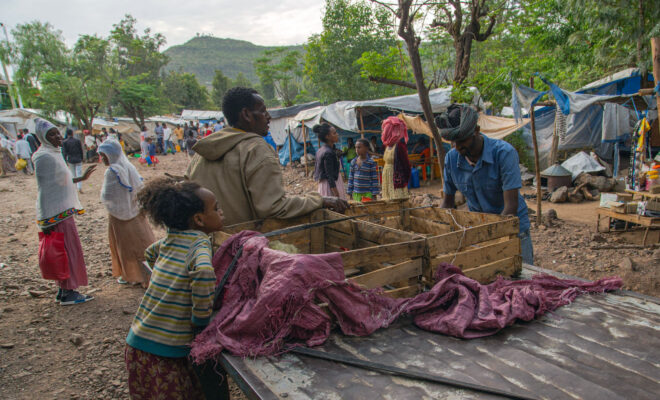
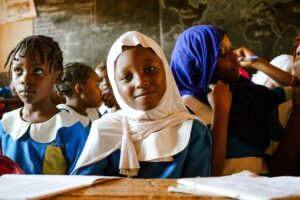
The war in Tigray did not only destroy lives, homes, hospitals and livelihoods. It also attacked the foundations of the region’s future by depriving an entire generation of children of education.
In January 2025, the European Commission’s Directorate-General for European Civil Protection and Humanitarian Aid Operations reported that approximately 2.4 million school-aged children in Tigray had been denied education for three academic years. It also reported that 88 per cent of the region’s school infrastructure had been damaged. These figures describe more than an interruption to schooling. They reveal a generational emergency whose consequences may shape Tigray for decades.
The scale of the destruction is difficult to comprehend. Before the conflict, Tigray had more than 2,200 primary schools and approximately 270 secondary schools. A World Bank-supported Damage and Needs Assessment recorded severe disruption across the education system and noted that, in areas assessed in December 2021, only about 40 per cent of previously enrolled primary school pupils had returned.
Many school buildings were damaged, looted, occupied or rendered unusable. Classrooms lost desks, books, laboratory equipment and teaching materials. Water and sanitation facilities were destroyed. Teachers were displaced, unpaid, traumatised or separated from their communities. In some locations, children returned to learning in temporary shelters or beneath trees because suitable classrooms were unavailable.
Yet rebuilding education in Tigray cannot be reduced to repairing buildings. The deeper challenge is restoring children’s ability to learn after years of violence, displacement, hunger and psychological distress.
Three lost years cannot simply be recovered
A child who misses three years of education does not merely return to the classroom three years older. That child may return having experienced bereavement, displacement, food insecurity, family separation or violence. Some children have been required to work or support their households. Others may have entered early marriage, migrated or assumed adult responsibilities.
The educational needs of such children cannot be addressed by placing them back in their former grades and continuing as though nothing happened.
Many will have forgotten previously acquired literacy and numeracy skills. Others will be expected to learn alongside younger children, creating embarrassment and discouragement. Students who were approaching examinations before the war may now feel too old to return. Children with disabilities and those living in displaced communities face even greater obstacles.
The risk is that temporary exclusion from education becomes permanent abandonment.
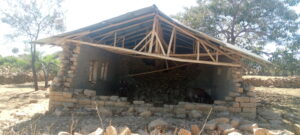
Addilal school, destroyed by bombardment by the Ethiopian Air Force.
This is particularly dangerous for adolescent girls. In conflict-affected societies, girls who leave education are often less likely than boys to return. Poverty, domestic responsibilities, safety concerns, early marriage and gender-based violence can all become barriers. Without targeted support, Tigray may experience a significant widening of gender inequality in education and employment.
Education is also protection
Education is often discussed as though it were separate from humanitarian protection. In reality, schools can provide children with structure, trusted adults, social contact, meals, health information and a degree of safety.
When schools disappear, children become more vulnerable to exploitation, trafficking, hazardous labour, forced migration, early marriage and recruitment by armed groups. A young person who is displaced, hungry, unemployed and without access to education has fewer choices and less protection.
Tigray displacement camps are often overcrowded with new displaced families arriving regularly, June 11, 2021. (Yan Boechat/VOA)
The European Commission warned that the interruption to education in Tigray had been accompanied by increased child-protection risks and exposure to trauma.
This connection is essential. Concern about the militarisation or political exploitation of young Tigrayans must include serious concern about education. Condemning the recruitment of young people while failing to rebuild their schools addresses the consequence while neglecting one of its causes.
A classroom cannot solve every political or social problem, but it can offer a credible alternative to hopelessness.
Trauma is now part of the learning crisis
Many children in Tigray are attempting to learn while carrying experiences that would overwhelm most adults. Some witnessed killings or violence. Some lost parents, siblings, teachers and friends. Others endured siege, hunger, displacement or prolonged uncertainty.
Trauma affects concentration, memory, behaviour, sleep and relationships. A child may appear inattentive or disruptive when the underlying problem is fear, grief or anxiety. Teachers who have survived the same conflict may also be struggling psychologically.
Tigray therefore needs more than a conventional educational reconstruction programme. Schools must become part of a broader system of psychosocial recovery.
Teachers need training to recognise trauma and support distressed pupils. Schools require referral links to mental-health and child-protection services. Safe spaces should be established where children can speak, play and rebuild trust. Psychological support must also be available to teachers, many of whom are expected to care for children while coping with their own losses.
Treating traumatised children as though they have simply fallen behind academically will not produce meaningful recovery.
The economic consequences will extend beyond schools
The collapse of education is also an economic crisis. Today’s students are Tigray’s future teachers, health workers, engineers, farmers, entrepreneurs, civil servants and community leaders.
When millions lose years of learning, the long-term effects can include lower productivity, reduced earnings, increased unemployment and greater dependence on humanitarian assistance. Tigray’s reconstruction will require skilled workers, yet the war has disrupted the system responsible for producing them.
Families already impoverished by conflict may struggle to pay for uniforms, transport, books or food. Children may remain outside school because their labour is needed at home. Hunger itself affects attendance and concentration.
School-feeding programmes should therefore be treated as both educational and humanitarian interventions. Providing meals can encourage attendance, reduce pressure on families and help children learn more effectively.
Recovery must also include vocational and technical education for older students who cannot easily return to conventional schooling. Young people who missed several years require flexible opportunities to acquire practical skills and enter employment. Without such pathways, frustration and social exclusion will deepen.
What recovery should look like
The first priority is a comprehensive and transparent assessment of schools, teachers and pupils across Tigray, including areas affected by continuing displacement or contested administration. Recovery plans cannot be credible without reliable information about which schools are operating, how many children remain excluded and what resources are required.
Second, reconstruction must prioritise safe classrooms, water, sanitation, electricity, textbooks and learning materials. Schools should be rebuilt to higher standards rather than merely restored to their previous condition.
Third, Tigray needs accelerated learning programmes that help children recover missed material without forcing them through an unrealistic curriculum. Students should be assessed according to their actual learning level rather than age alone.
Fourth, teachers must be paid regularly and supported professionally. No education system can recover while its teachers are impoverished, displaced or demoralised.
Fifth, special measures are necessary for displaced children, girls, children with disabilities, rural communities and those who have lost parents. Equal treatment is not enough when children have experienced profoundly unequal levels of harm.
Finally, education funding must be protected from political disputes. Children should not lose access to classrooms because of disagreements between federal and regional authorities. The right to education cannot depend on political loyalty or negotiations over power.
A test of the peace
The Pretoria Agreement ended large-scale hostilities in November 2022, but peace must be measured by more than the silence of weapons. It must also be measured by whether children can return to safe schools, families can rebuild their lives and public institutions can function.
A region in which millions of children have lost years of education cannot be described as fully recovering.
The international community has often treated education as a secondary concern, to be addressed after food, shelter and security. In Tigray, that approach is no longer adequate. Education is directly connected to protection, economic recovery, social stability and peace.
Rebuilding Tigray’s schools will require substantial resources, but the cost of inaction will be far greater. A generation denied education will carry the effects into employment, family life, public health and political stability.
Tigray’s children have already lost years that cannot be returned to them. What can still be restored is their opportunity to learn, recover and build a future.
That responsibility belongs to the Ethiopian federal government, Tigray’s authorities, international donors, humanitarian organisations and all those who claim to support lasting peace.
The recovery of Tigray will not begin only with reconstructed roads or government buildings. It will begin when its children are once again seated safely in classrooms, supported by trained teachers and allowed to imagine a life beyond war.