Whilst the World Debates Somaliland’s Recognition, Its Girls Remain Invisible
As international debate surrounding Somaliland’s recognition has returned to global headlines in recent months, questions of sovereignty and diplomacy have dominated the conversation. Reports of Israel’s recognition of Somaliland in December and Somaliland’s opening of an embassy in Jerusalem on 16 June have placed the territory’s political future firmly back in the international spotlight. Yet amid discussions of geopolitics and statehood, another story remains largely absent: almost every girl in Somaliland is expected to undergo female genital mutilation (FGM).
“When a girl is born here, many people already know what will happen to her,” says Haboon Feysal, a student midwife at Edna Adan Hospital. Her words capture how deeply expectations surrounding FGM shape the lives of girls in Somaliland.
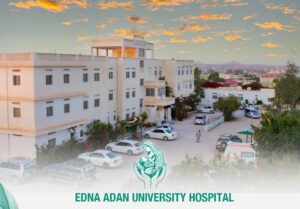
Edna Adan University Hospital, Hargeisa, Somaliland
This contrast raises an uncomfortable question: why has renewed international interest in Somaliland’s political future not been matched by greater attention to one of its most serious human rights challenges? The answer lies partly in the politics of visibility.
When global organisations mark the International Day of Zero Tolerance for Female Genital Mutilation, attention often turns to countries such as Egypt, Sudan and Kenya. Somaliland is rarely at the centre of that conversation.
In Somaliland, almost every girl is expected to undergo female genital mutilation (FGM). According to the 2020 Somali Demographic Health Survey, around 99.6% of women in Somaliland have experienced the practice, with the most severe form, infibulation, remaining widespread. Yet despite these extraordinary figures, Somaliland is seldom discussed as a distinct case in international debates on ending FGM.
FGM is already a hidden form of violence. It usually takes place in childhood, behind closed doors, and within communities where it is often understood not as abuse but as a social expectation linked to marriage, family honour and respectability. In Somaliland, however, that silence is compounded by another form of invisibility. For more than three decades, the territory has governed itself with its own institutions and relative stability, yet it remains internationally unrecognised. As a result, many of its social and humanitarian challenges struggle to attract sustained international attention in their own right.
FGM is hidden behind closed doors while Somaliland remains politically marginal, helping explain why one of the world’s highest FGM rates rarely occupies the centre of global debate. If human rights are meant to be universal, this raises an uncomfortable question: how much does political visibility influence whose suffering the world chooses to notice?
Hidden in Plain Sight
Somaliland’s high rates of FGM cannot simply be explained by tradition.
The practice persists because it is woven into powerful social expectations. In many families, FGM is associated with ideas of purity, respectability and marriageability. Parents who arrange the procedure often do so believing they are protecting their daughters’ futures in a society where remaining uncut can carry significant social consequences.
Survivors face long-term complications including severe bleeding, infection, lifelong childbirth complications, chronic pain and psychological trauma, consequences that healthcare professionals in Somaliland continue to manage.
Yet understanding FGM only through its medical impact misses a deeper reality. The practice persists because it is reinforced by social pressure rather than individual choice. Mothers who underwent FGM themselves may feel compelled to continue the tradition, not because they wish to inflict harm, but because they fear their daughters will face stigma, exclusion or reduced prospects for marriage.
Research also points to education. Support for FGM falls as educational opportunities expand, particularly for women and girls. Misunderstandings about religion, alongside entrenched social norms, continue to sustain the practice in some communities, suggesting lasting change depends on education, community dialogue and legal reform.
This is why portraying FGM as evidence of an inherently ‘backward’ society is both inaccurate and counterproductive. Such narratives flatten complex social realities and ignore the fact that resistance to FGM is already coming from within Somaliland itself. Across the territory, women’s organisations, health professionals, educators and religious leaders have spent years challenging the misconception that FGM is a religious obligation and working with communities to reduce its prevalence.
These local efforts rarely receive the same international attention as the practice they seek to end. Yet they demonstrate that the story of FGM in Somaliland is not simply one of victimhood. It is also a story of local leadership, gradual social change and communities grappling with deeply rooted norms from within.
The Politics of Attention
Human rights are often described as universal, yet international attention is rarely distributed evenly. Political crises tend to attract greater media coverage and advocacy than equally serious human rights challenges elsewhere.
Somaliland illustrates this tension. Since declaring independence from Somalia in 1991, it has maintained its own government, held multiple elections and developed institutions that operate separately from those in Mogadishu. Yet because no state formally recognises Somaliland as sovereign, it is frequently viewed through the broader lens of Somalia in international diplomacy, humanitarian reporting and media coverage.
When Somaliland is treated primarily as part of another political story, many of its own social challenges receive less sustained attention as issues in their own right. FGM is one example.
This does not mean international organisations have ignored Somaliland. UN agencies, researchers and local civil society organisations have documented the prevalence of FGM and supported programmes aimed at reducing it. But compared with the global visibility given to FGM campaigns elsewhere, Somaliland rarely occupies the same place in international debate despite having one of the highest prevalence rates recorded anywhere in the world. This is because its experiences are often folded into broader narratives about Somalia rather than examined on their own terms.
This reinforces Somaliland’s double invisibility: FGM remains hidden within communities while Somaliland itself occupies a politically marginal position in the international system, leaving the experiences of its women and girls on the periphery of global human rights conversations.
Visibility influences research priorities, advocacy campaigns and donor attention. The reality is that some crises become defining global causes while others remain comparatively overlooked.
The experience of Somaliland raises an uncomfortable question for the international human rights community. If the promise of universality depends, even in part, on political visibility, can the global system truly claim that every life is afforded equal attention?
Who Gets Seen?
International recognition is often viewed as a question of diplomacy. But recognition also shapes which stories are told, whose voices are amplified and which injustices command sustained international attention.
The girls of Somaliland are living through one of the world’s most severe FGM crises. Their experiences have been documented by researchers, challenged by courageous local activists and addressed by healthcare professionals working to care for survivors. Yet their stories rarely shape the global conversation on FGM.
Somaliland does not deserve attention at the expense of other countries affected by FGM. Nor is it to suggest that international recognition alone would end the practice. FGM is a deeply rooted social issue that requires long-term change driven by communities themselves. Somaliland’s own women’s organisations, religious leaders, educators and healthcare workers have repeatedly shown that the most credible and sustainable reforms come from within.
But acknowledging local leadership does not absolve the international community of responsibility. If global human rights advocacy is to live up to its own principles, it must be willing to look beyond the places that already dominate headlines and diplomatic agendas. It must ask whether political realities are quietly shaping whose suffering is seen and whose is allowed to remain in the background.
Human rights violations do not become less serious because they occur in politically contested places. Girls subjected to FGM experience the same pain, the same lifelong consequences and the same loss of bodily autonomy as girls anywhere else. Somaliland offers an important reminder that invisibility can itself become a form of inequality.