Living and Losing the ECOWAS Dream: Borders, Belonging, and Betrayal
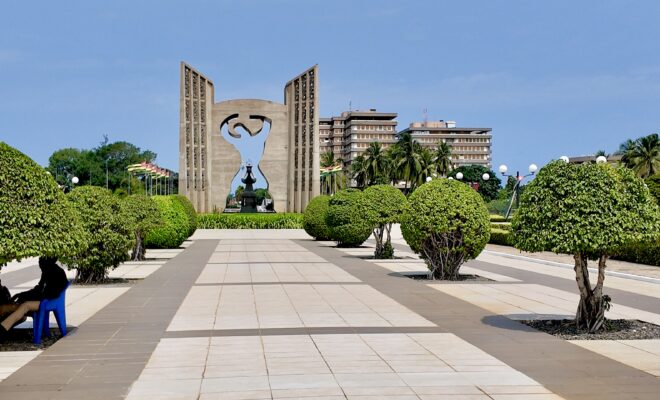
As I entered Benin, I waited for the air to change. I stood at that threshold with the quiet anticipation of someone expecting a revelation, for the people to look far apart from me, for some element of differentiation, something to confirm I was no longer in Nigeria. I was searching, almost desperately, for the feeling of foreignness. Instead, what greeted me was the mandatory walk on foot across a stretch of dusty no-man’s-land, the heat sitting on my shoulders like a familiar relative. There was the service charge for entry, slipped across a counter with the practiced nonchalance of a transaction that exists in no official ledger. And there were the sweaty hands that stamped my passport, unhurried, unbothered, as though the act of dividing one people from another was simply another Tuesday. Beyond that, not much. Only the invisible lines drawn by chubby hands across a colonial round table, lines that speak more to the boundaries of colonial reach than to any real difference in identity or people. The same okadas weaved through traffic on both sides. The same smell of fried plantain hung in the air. The same sun.
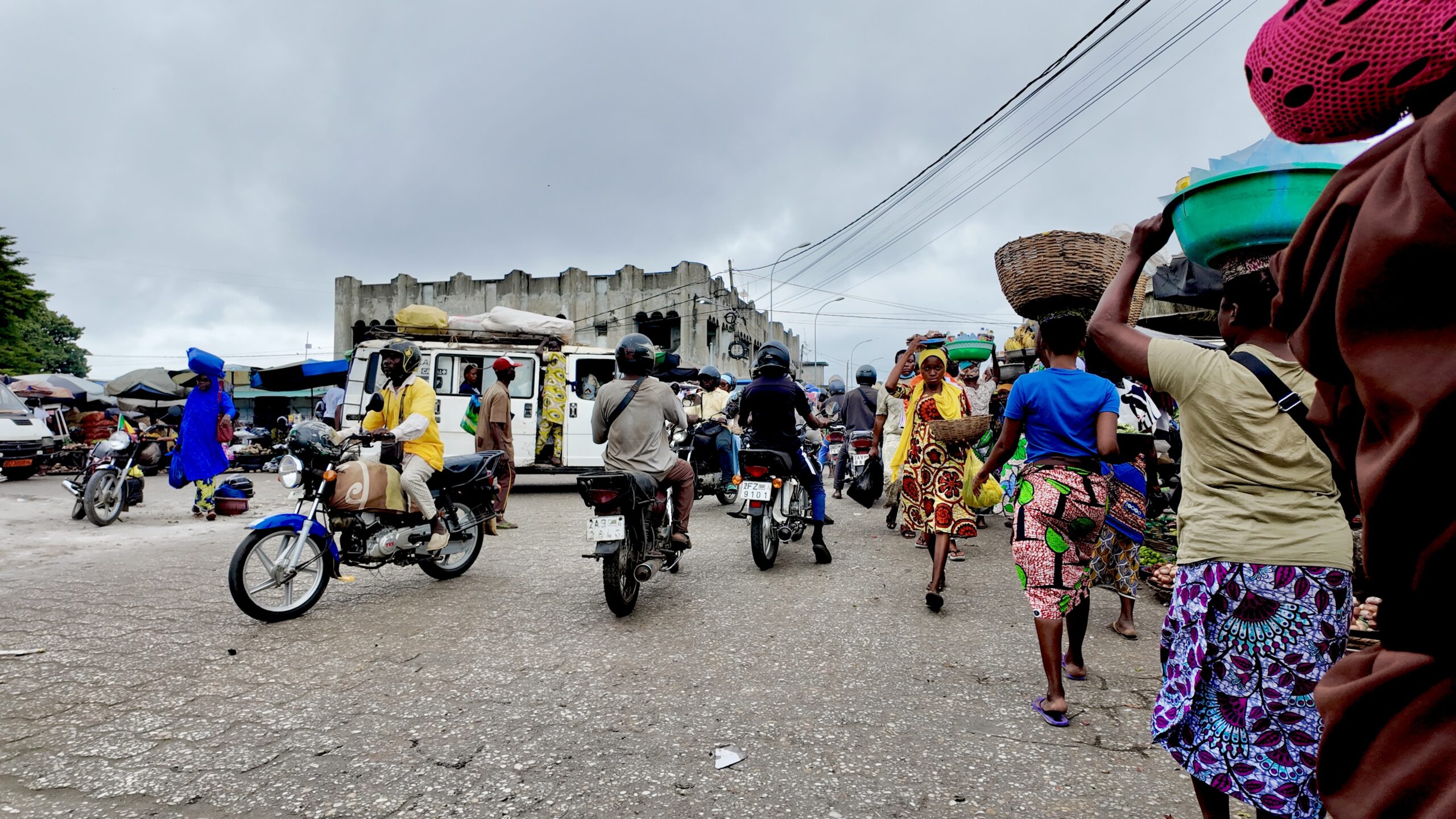
Benin
My first thought: why is there no train across this coast? A coast declared a unified body by ECOWAS long before Europe had anything resembling the Schengen region. A single rail line from Lagos to Accra, threading through Cotonou and Lomé, would do more for West African integration than a thousand protocols signed in air-conditioned conference rooms. The European Union did not become real to its people through treaties, it became real the moment a German student could board a train in Berlin and wake up in Paris without once showing a passport. We have the treaties. We have the protocols. We have been a free movement zone, on paper, since 1979. What we do not have is the infrastructure that turns a political agreement into a lived experience. Instead, we walk. We sweat. We pay.
My first real differentiation came through language. The local I approached spoke differently, but even that gap traced back to an interrupted history. His was a colonial tongue, French shaped by Beninese breath and rhythm, as much as the English I rushed to speak in return, hoping he would understand: ‘I’d like to book a ride to Ouidah.’ He looked at me with the patient amusement of someone who had translated themselves their entire life, and we found each other somewhere in the middle, two Africans borrowing the languages of our respective colonisers to speak to one another on African soil. There is something quietly absurd about that, and something quietly devastating. We were not foreign to each other. Only our inherited tongues were.
We stopped in Ouidah for a day and a half, and the city unfolded like a quiet invitation, an adventure of discovery that immediately planted the intention to return. There is a particular kind of place that refuses to be consumed in a single visit, that withholds just enough of itself to ensure you come back. Ouidah is that place. The best trips end on an unfinished note, like cutlery rested neatly across a plate, signalling: I am not done tasting this.
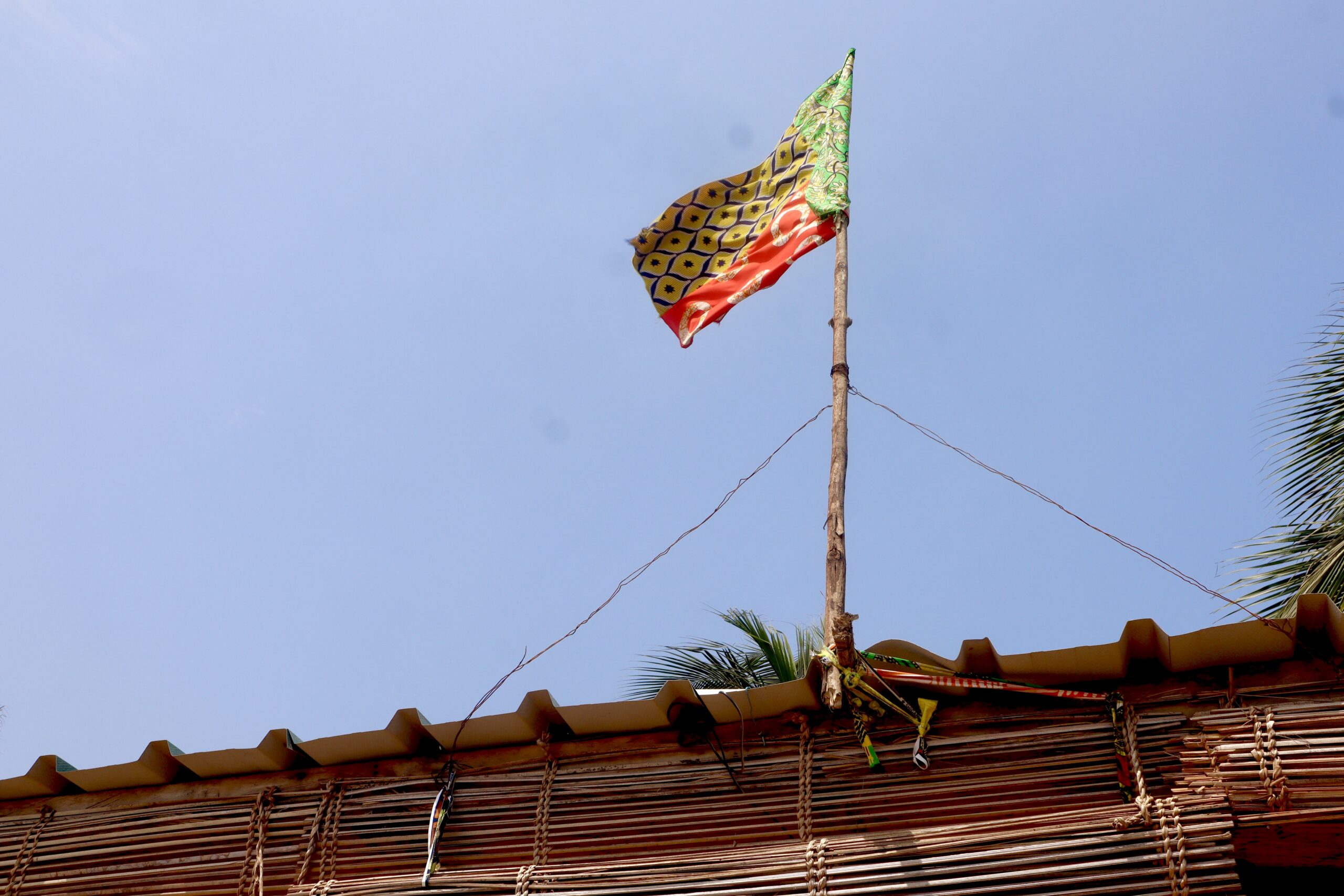
Ouidah
But Ouidah was painful to explore. Not the loud, declarative pain of a wound freshly opened, but the dull, persistent ache of something that has never properly healed. I could not stop my mind from wandering, what would this city’s reality look like without the colonial interruption? What identity would it have assumed, what architecture, what cuisine, what music, without the chaos of its exploitation? The Python Temple – a local devotional site hosting live snakes – still stands, its sacred serpents moving slowly across the cool floor, carrying in their bodies a spirituality that survived everything. The Zomachi market still hums. But underneath it all, Ouidah carries the weight of what was taken from it.
Standing at the Door of No Return, I felt the ground shift slightly beneath me, not physically, but in the way that certain places demand a recalibration of the self. The monument stands at the edge of the Atlantic, facing the ocean that swallowed so many. The same ocean that connects Lagos to the Americas, that carried away millions and brought back almost nothing. A line from a Christmas carol I had sung thoughtlessly for years suddenly split open with new meaning: for slave is our brother. I had sung it as a child in church, in the rote way of someone reciting words without weight. Standing there, the words gained bodies. I thought again about the train, about how the same coast that once funnelled human beings onto ships now funnels them onto hot tarmac roads, through border posts staffed by men with rubber stamps and open palms. The mode of extraction has changed. The infrastructure of indignity has not.
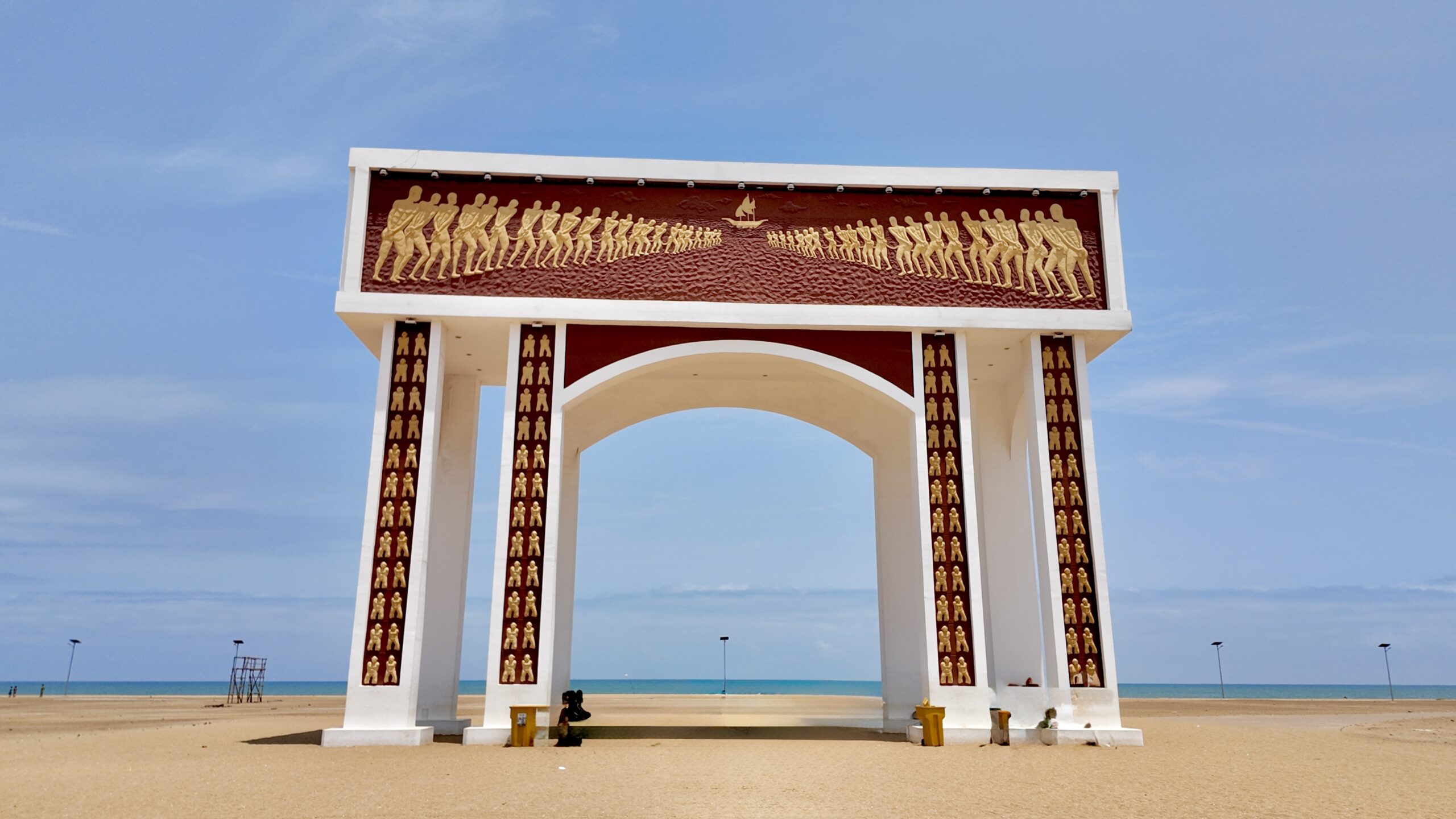
The Door of No Return
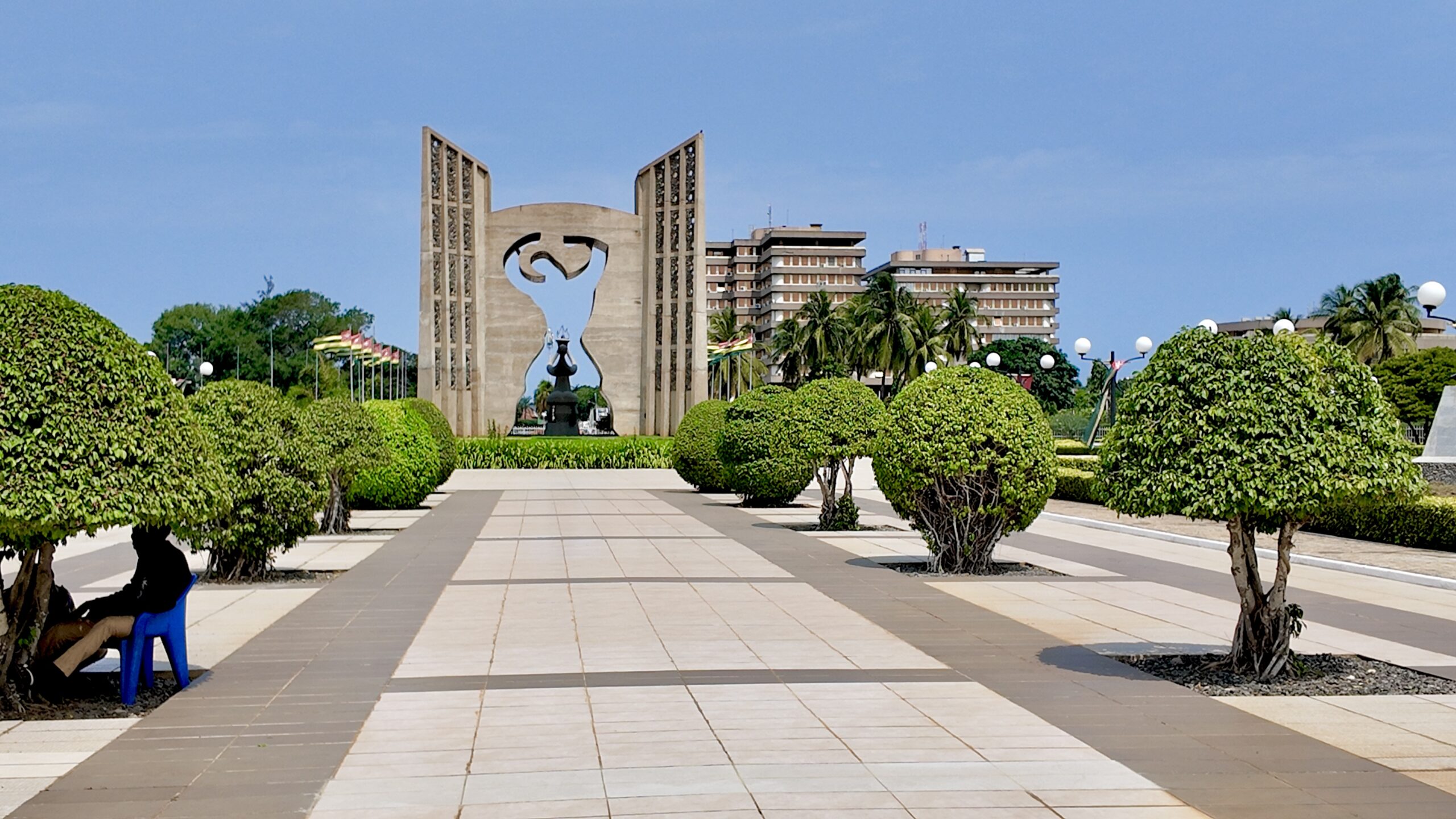
Our onward journey into Togo unfolded in relative luxury, a private car arranged by a contact, smooth seats and cool air, a resort that opened into a restful night before we pressed on the next day. Lomé received us gently. But sometimes comfort robs us of human experience. Wrapped in the privilege of a private car, we glided past the negotiations happening at roadsides, past the traders balancing improbable loads on their heads, past the border energy, that particular human electricity that crackles when people from different sides of an invisible line meet and must find a way to transact, to communicate, to coexist. The border haggle that had marked our entry into Benin, that theatre of small corruptions and smaller dignities, was sorted for us this time. We simply strutted across, unbothered and, in our ease, slightly diminished.
This is what the absence of a coastal rail does. It does not inconvenience everyone equally. Those with money move by private car or fly. Those without negotiate their dignity at every border post, budget for the unofficial fees, arrange their bodies into shared taxis for journeys that should take hours and which take days. A railway democratises the journey. It says: the trader with fabric bolts and the writer with a notebook leave the same station, board the same carriage, and look out at the same passing landscape. That is not a small thing. That is what integration actually feels like in the body.
Our journey into Ghana obliterated the privilege of Togo. We returned to buses and shared taxis, to the democracy of public transport where your neighbour’s life presses against yours and conversation is unavoidable. With that return to ordinariness came a richer dialogue, not just with the people around us, but within myself, between differentiation and sameness, between the texture of real life and the blankness of luxury travel that moves you between places without ever truly placing you in them.
The road into Ghana was lined with displayed goods, no seller in sight. Fabrics folded with geometric precision. Wooden stools. Clay pots. Beaded jewellery catching the afternoon light. It reminded me of stories my grandmother told about trade in her time: a seller displays, a buyer with intention sets the worth, leaving behind either a barter of equal value or cowries. No receipt, no transaction fee, no platform taking its percentage. Just trust, laid out in the open air. The capitalist hates to see that coming, hates the economy that does not need him, the exchange that predates his entire vocabulary of value.
What struck me most was recognising things I had seen families ship in from abroad, including mine. The same wooden serving bowls my aunt received from London in a padded box, carefully imported, expensively freighted. The same hand-carved headrests, the same woven kitchen baskets, the same deep-dyed fabrics that get described in foreign shops as ‘Afrocentric’ and sold at prices that would make a Ghanaian roadside trader weep with laughter. Here they were, simply present, available, priced for people who actually use them. And I thought: a train. A train running this coast would carry these goods between our cities the way they once moved along footpaths and river routes, before borders were invented to interrupt commerce that had always been regional. The trader in Cotonou could reach Accra’s markets without a two-day ordeal. The artisan in Lomé could find customers in Lagos without surrendering half her profit to transport brokers and border fees. We are joined by trade routes and shared history, by shared bloodlines and borrowed words. And yet the distance between us feels wider than the Atlantic, because somehow shipping a package across an ocean looks more appealing than a day’s journey to find what has always been here, made by hands that understand the climate these objects were born into.
In Ghana I wanted something lighter, a conscious decision to set down the weight of the Door of No Return, if only for a night. I found it at Labadi Beach Hotel, where the evening arrived with the generosity of a place that knows how to hold people. A live band played highlife that moved through your chest before it reached your ears. The interiors were old African in the truest sense, not the curated Afro-aesthetic of boutique hotels in European capitals, but the real thing: wood that had aged honestly, fabrics that had been chosen by someone who grew up with them. Women moved through the warm air in afros and Ghana weaving, carrying themselves with the particular ease of people who are entirely at home. It felt like a photograph had slipped out of my grandmother’s photobook, that specific shade of black joy, unperformed, undocumented, simply lived. Not a recreation of Africa, not a performance of it, a continuation. This was simply an African experience, uninterrupted.
I have always been one to declare: Africa is not a country. I have even enjoyed writing about Dipo Falayin’s book of the same name, nodding along as global narratives continue to flatten the African reality into a single, convenient story, a story that erases the difference between a Tuareg elder in the Sahel and a Yoruba market woman in Lagos, between Kigali’s clean ambition and Kinshasa’s beautiful chaos. The continent is not one thing. I have argued this with conviction at dinner tables and in essays.
But after a week along this coast, Benin, Togo, Ghana, I am less certain. Or perhaps more certain of something different. Maybe Africa is a country. West Africa, at least, for now, until my pen carries me further into this continent and forces me to revise the thesis again. Because what I found along this coast was not the exotic otherness that borders are supposed to produce. I found my grandmother’s stories walking around in other people’s bodies. I found my family’s kitchen in a Ghanaian roadside display. I found my own face in the faces of people the colonial map insists are foreign to me.
What I did not find, what remains stubbornly, painfully absent, is the infrastructure to honour that sameness. The ECOWAS protocol has existed since 1979. It predates Schengen. It predates the European single market. We were visionary before vision was fashionable. And yet here we are, nearly five decades later, still walking across no-man’s-land in the heat, still pressing worn notes into waiting palms, still borrowing the coloniser’s tongue to speak to our neighbours. The coastal rail is not a dream, it is a debt we owe ourselves. Lagos to Cotonou to Lomé to Accra: the route already exists in the feet of every trader who has walked it, in the worn paths between our markets, in the shared recipes and shared rhythms that no border has managed to fully interrupt. All that is missing is the track.
I came looking for differentiation. I found sameness. Recognition. A journey into a richness of African reality I had been missing at home, raised in a city that had already quietly abandoned its own memory, that had decided the future was elsewhere and began shipping itself there, one padded box at a time. The future is not elsewhere. It is here, along this coast, waiting for someone to lay the rails.