Ethiopia’s volatile politics: the June 2026 parliamentary elections, the National Dialogue, and violent conflict
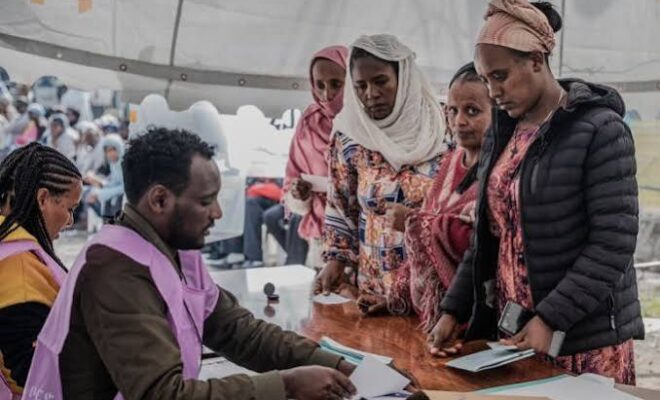
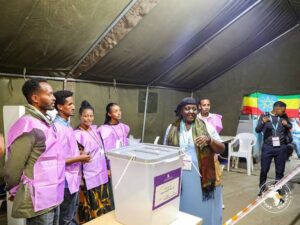
In a surprise to absolutely no one, Ethiopia’s ruling Prosperity Party (PP) led by PM Abiy Ahmed won the 1 June 2026 parliamentary elections in a landslide. The outcome has evoked few commentaries in the global media or even in Ethiopia itself. There was a c. 90% win of parliamentary seats for the PP. This is, like in previous elections (2021, or 2015), a kind of Communist country result. It indeed was a well-organised operation, a classic case of what in Ethiopia since the Derg-regime (1974-1991) is called an “organisational operation” (Amharic: dirigitawi sera). That may be regretted or lauded but reflects political reality. Ethiopia still has no deep-rooted democratic political culture, certainly not on the national level: there was always violent competition for power and lack of freedoms, and people mostly went to the polls because of a mixture of duty, pride, and fear.
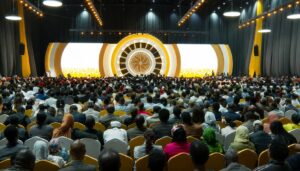
At around the same time, in August, some results of the ‘National Dialogue’ process were announced – a nation-wide ambitious consultation initiated in 2022 and closed off after a conference (15 July-22 August), and they may prove to be more important than the elections as such. The yet unpublished full recommendations of this unique although not perfectDialogue were offered to the federal government on 3 October and will have to be addressed by the newly elected parliament. Interesting in the discussions and the recommendations was a growing ambivalence about ‘ethnic politics’.
First about the June elections. What did they show? Technically efficient, they were a repeat of the process of elite consolidation: the incumbent can continue as usual. The security situation also prevented voting in at least 143 polling stations in 46 constituencies. Since early September we also saw an escalation of violent strife, especially in Tigray, Amhara, and Oromia Regions, and the national political arena seems to further fragment: clearly, the elections did not have a stabilising effect.
What few people talk about is the electoral system that facilitates the return of the incumbent party, time and again. Ethiopia does not have proportional representation but a district system, with a ‘first past the post’ mechanism (created by the previous, EPRDF regime). It means that the more parties participate (there were 48 registered parties..), the more the chances are that the most powerful and influential party – of course the one in power, i.e., the PP – will reach the threshold first, even if it has, say, only 15% of the votes in the voting district. In addition, there is a, to many analysts, unhealthy preponderance of ethnic-based parties: a divisive element in any election system, leading to uncritical, loyalty block-voting rather than a focus on issue politics and coalitions or on evaluating the concrete results and human impact of policies. My argument is that this ‘district system’ and the ethno-federal formula mean that the incumbent cannot lose. This hinders effective democratic representation. In an alternative system, however, ‘ethnic’ parties should be discouraged, because that would, under current conditions of elite politics’, de facto continue the ethnic block voting. Realistically, however, this will not happen soon, and thus, political quagmire and conflicts will continue.
With PP hegemony in parliament confirmed and only a marginal role for opposition parties or civil-society forces, the question is if pressing national concerns will be tackled in a new way. These include the (effects of) ongoing armed conflicts, the large number of IDPs, regionally unbalanced developmental policies, the weak justice system, and the perpetual economic problems. This is not to deny the achievements: the completion of the Blue Nile dam for hydro-electric power generation, the new initiatives in infrastructure expansion, digitalisation of the economy and services, agrarian expansion and agro-industry plans, tourism facility investments, etc. Political elites and the people connected to them are doing well; most of the population not yet. Many citizens are proud of the achievements. But the sorry state of human rights, everyday corruption, the high poverty rate, hundreds of victims of armed violence, and lack of equal access to justice in the courts (for instance, for political detainees and the urban or rural displaced) produce gloom and despondency among the public.
In general, elections are indeed only one of the elements of democracy. In the Freedom House Index score of 2025, Ethiopia ranks as ‘not free’, indicating a further decline since the previous year. Such scores do not tell the whole story, but they confirm the impression that elections and civic-political rights in Ethiopia are not in good shape. In addition, we should not idealize the democratic attitudes or feelings of the voting public: we cannot assume it does consist only of committed democrats. Talking to Ethiopian politicians and administrators, one often hears the remark that Ethiopia is a notoriously difficult, fractious country to rule and that much of the population is just unreliable: opportunistic, not always patriotic, not deeply committed to the values of accountability, neutrality and fairness. They are focused on improving their own chances to survive, get access to ‘resources’, jobs, etc. This understandable ‘opportunism’ frequently showed in the past eight years since the ’clean start’ made by PM Abiy Ahmed. When he emerged from within the then ruling party EPRDF and took over in April 2018, he opened up political space by, e.g., announcing a stop to repression, declaring liberalisation, and inviting all opposition parties (even the armed ones) back into the political fold. But it did not turn out well: partly because of the growing opposition of spoilers like the TPLF (attacking federal forces on 3-4 November 2020), and partly because of durable economic inequalities, and scepticism of an ethnically/religiously divided public. Notable also is the regular subversion of state economic policy and market regulation initiatives by the Ethiopian trader class their tactics of avoiding import-export regulations and hoarding essential goods to create ‘scarcities’ to raise prices is a phenomenon disliked by the public.
We see continuity in Ethiopia’s political system over the past four decades, with the PP now following routines and procedures well-established in EPRDF times since 1991 and even with traits from the Derg period (1974-1991), e.g., the overlap of state machinery and ruling party. It shows the limits of an entrenched system of governance that also a good-willing PM cannot radically alter; and it is certainly not a solution to make the current PM the ‘scapegoat’ for all that goes wrong in the country. The fundamental flaw that political science analysts have warned about from the beginning (since 1991), is that ‘ethnic identity’ was made the constitutional-administrative basis of statecraft. This formula never worked well anywhere, as it entrenches antagonisms on an emotively invested basis of identity politics. Ethiopia will likely not make decisive headway if this formula is not seriously adjusted. At the same time, this is now difficult: ethnic rivalry currently defines the political game.
So, elections, well-organised and dutifully observed with citizens faithfully going to the polls, are not the exclusive measure of the soundness of the Ethiopian polity. The challenges of insecurity, large numbers of IDPs, economics, social inequality, religious clashes, violent conflict, and a justice system in which ordinary people hesitate to lodge complaints, are serious, and it stands to be seen if the new mandate for the PP regime will lead to tackling them and to rethinking policies. Especially the ongoing violence is worrying. After the elections, the flare-up of fighting in the Amhara Region (between ‘Fanno’ militias and federal army), recent spates of killings in Oromia, and continuing tensions in the disputed Wolqait area and in Tigray, were unpleasant wake-up calls. These conflicts – with a new insurgents’ alliance going on the offensive – are a great challenge to the re-elected PP-government. Apart from a military response, new post-election policy to deal with them is not yet seen.
To reiterate: the district voting system and the competitive ethnicization of politics in Ethiopia since 1991 may be blocking further democratic progress and institutional reform. These two features are reasons that the incumbent in Ethiopia will never lose, and a better representative democratic system cannot emerge. Perhaps this is inevitable in a country so diverse, divided and insecure about what ‘democracy’ means and that can only be ruled with great difficulty, despite its holding eternal promise. Hopefully the results of the ‘National Dialogue’ in Ethiopia as submitted to Parliament will provide input for novel approaches and re-engaging with the desires for representation and justice. If democracy and popular consultation are to take deep root, its recommendations cannot be ignored.