The Congo and Rwanda Peace Agreement: The Accountability Clause That Cannot Be Applied
The peace agreement between Congo and Rwanda contains one promise about justice: that no fighter will be taken into the Congolese army until someone has checked whether they committed atrocities. The last time Congo skipped that check, the soldiers it absorbed went on to start the war now being negotiated. The check is not happening this time either.
Two meetings in Geneva, seventeen days apart, show why. On 29 June 2026, Arnauld Akodjenou, who chairs the United Nations commission set up to establish who committed which atrocities in eastern Congo, told the Human Rights Council that his investigators had finished their first mission without reaching Goma, and that United Nations budget constraints had cut into their investigative capacity and their ability to stay in the field. On 16 July, at the United States Mission across the city, officials from Congo and Rwanda agreed to explore ways of verifying that troops were pulling back. Both meetings used the word accountability. Only one is being equipped.
A Peace That Made a War
The fighting escalated in January 2025, when the March 23 Movement, an armed group backed by the Rwanda Defence Force, captured Goma, the main city in Congo’s east. The response split in two. The Human Rights Council established a commission of inquiry; the United States brought the two governments together and brokered a peace agreement, signed on 27 June 2025 and later packaged as the Washington Accords.
That agreement says nothing about prosecutions, victims or reparations. It contains one sentence that attaches any consequence to having committed atrocities. Section 2. iii says that any reintegration of fighters into the Congolese army or police ‘shall be carried out in a rigorous, individualized, and conditional manner, on a case-by-case basis’, on criteria including ‘respect for and absence of serious violations of international humanitarian law’.
That sentence matters because of what came before. On 23 March 2009, Congo signed a peace agreement at Goma with the National Congress for the Defence of the People, an earlier Rwandan-backed rebel group. Article 1.1 folded its fighters into the army and police. Article 12.8 let them keep the ranks they had held as rebels. Article 3.1 promised an amnesty. Nothing in it required anyone to find out what any individual had done. Bosco Ntaganda, publicly wanted by the International Criminal Court since the year before, was taken into the army and made a general. In April 2012, several hundred of those soldiers mutinied and named their new movement after the date of the agreement they said had been broken: the March 23 Movement.
The war now being negotiated grew out of an army intake that nobody screened. Section 2. iii reverses every one of the 2009 choices.
Nobody to Do the Checking
Section 2. iii is a vetting clause, and vetting is not a loose word. The United Nations’ own operational framework describes it as a formal process for identifying and removing individuals responsible for abuses, in three stages: registering those to be assessed, screening them against the criteria, and certifying those who pass. Registration is easy and produces a list roughly equivalent to that of 2009. Screening is the hard part: it needs a record that can tell one fighter from another, and that means investigators, witnesses, archives and time.
Nothing in the peace process produces such a record. The only body charged with naming individuals is the commission of inquiry created in February 2025, which the Council told to preserve evidence for future legal proceedings and to identify those responsible. An earlier United Nations mission had already found reasonable grounds to believe that members of the March 23 Movement committed murder, torture, rape and sexual slavery, and that Congolese forces and allied militia committed grave violations too. Those findings name a movement. Screening needs findings that name people.
The commission is in no position to supply them. Resolution 60/22 pushed its full report back to early 2027, citing the United Nations’ financial situation. Its first mission got no further than Kinshasa, kept out of Goma by insecurity and an Ebola outbreak. The taking in of fighters, meanwhile, is being arranged now. A condition that cannot be assessed is not broken; it is met by default. On the available record, every candidate for the army is someone against whom no finding exists.
Harder to Fight Than an Amnesty
This is why a promise quietly dropped will outlast an amnesty. International law has tools for peace deals that trade away justice, but each needs a text to work on. The High Commissioner’s guidance on amnesties tells United Nations staff what to do when handed a draft amnesty, which presupposes a draft. When judges at the Special Court for Sierra Leone ruled in Kallon and Kamara that the country’s Lomé amnesty was no bar to prosecution, they struck down a particular clause. Even Congo’s 2009 amnesty could be argued over: Article 3.3 records the rebels complaining it had been drawn too narrowly.
A condition quietly met by default offers nothing to argue with. No immunity is granted. No prosecution is blocked. Congo’s duty to punish grave breaches of the Geneva Conventions is untouched, because the agreement never touches it. There is nothing for a court or a United Nations official to object to. Impunity here is the product of a drafting choice and a budget decision, and neither can be challenged on its own.
The gap reaches the United Nations’ own operations. Its human rights due diligence policy requires every United Nations body to assess, before supporting non-United Nations security forces, whether they pose a real risk of grave violations. In December 2025, Security Council resolution 2808 tasked the peacekeeping mission with supporting a ceasefire it had no part in negotiating, in a country whose army may shortly absorb unscreened fighters. The mission will face a risk assessment that it cannot conduct because vetting cannot proceed.
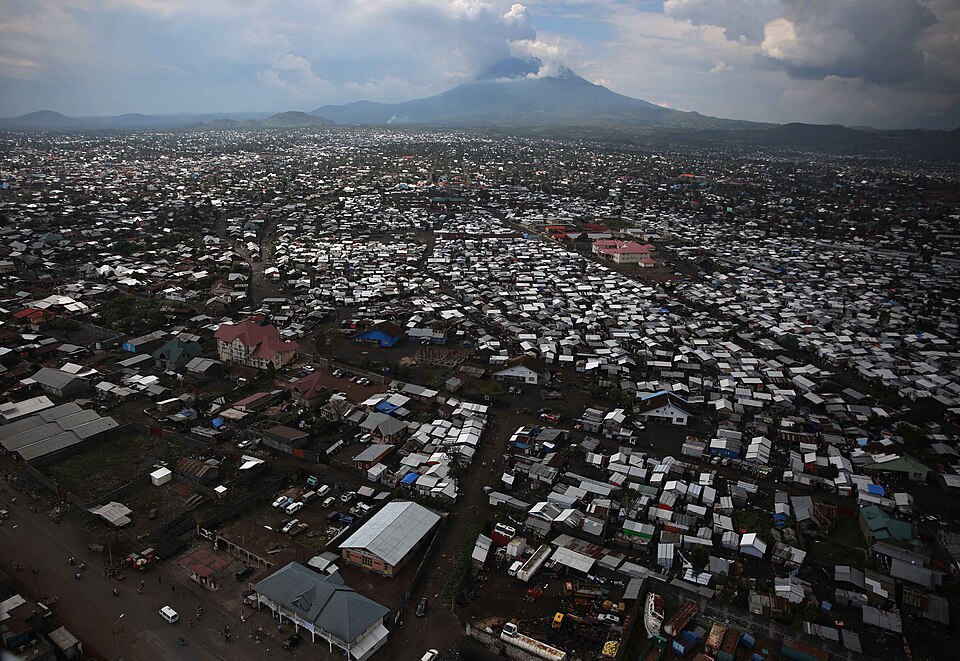
Goma, Eastern Congo.
The Verification That Already Exists
Two defences are available, and neither holds. The first is that justice has been moved elsewhere, to the Doha Framework of November 2025, which promises a national commission on truth, reconciliation and accountability. But that document leaves its implementation to protocols nobody has negotiated, and a truth commission is not a screening body: one created after the fighters are in the army cannot inform decisions already taken. The second is that justice can wait until the fighting stops. That is not available to these governments, because Section 2. iii did not postpone the question. It made entry conditional. A state asking for a delay is arguing against the clause it signed, and doing so silently, by letting the condition lapse rather than renegotiating it.
The remedy is in the parties’ own hands: in July, they agreed to explore ways to verify their security commitments. The same verification should attach to the one commitment they made conditional. Investigators with access to the Kivus and a filing system that can produce findings about individuals are not an extra demand on the agreement. They are what its own words require. The machinery exists and has been used: when the March 23 Movement took the town of Uvira days after the Accords were consolidated, the United States Treasury sanctioned the Rwanda Defence Force and four senior officers.
Breaking a promise about troop withdrawals brings consequences within weeks. Breaking the promise to check who joins the army has brought none: no sanction, no public statement, no deadline. Unless that changes, the drafters will have learned the lesson of 2009, written it into their agreement, and then abandoned it. The next rebellion out of eastern Congo will take its name from a more recent date.