
Beyond SAF and RSF: Why Sudan’s War Cannot Be Understood Through Two Actors Alone
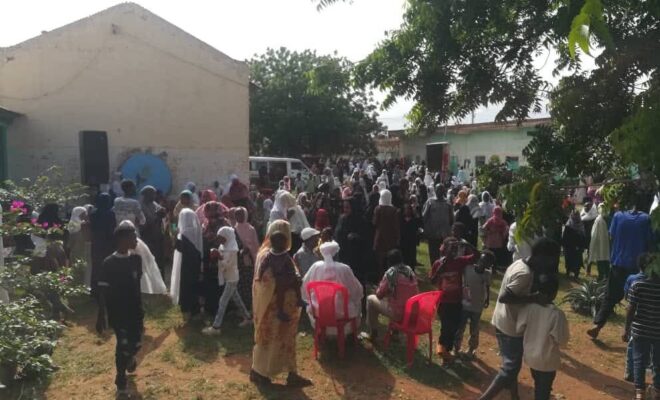
Throughout Sudan’s war, most diplomatic efforts have treated the conflict as a struggle between two actors: the Sudanese Armed Forces (SAF) and the Rapid Support Forces (RSF). Discussions about the country’s future continue to revolve around ceasefires, negotiations, and possible power-sharing arrangements between these two military rivals. Yet this framing misses an important reality. Across much of Sudan, governance did not disappear when state institutions collapsed. It moved elsewhere.
As discussions about post-war arrangements gradually return, this omission becomes increasingly significant. The central question is no longer only who controls the state. It is also who manages everyday life in its absence. In reality, a shifting spectrum of sub-state and non-state actors—ranging from local chambers of commerce and town councils to popular civil defense militias operating with their own command structures—are shaping how communities survive and function. As state institutions have lost the ability to perform many of their ordinary functions, authority has not disappeared. Instead, it has been redistributed across a diverse range of local actors who now perform roles once associated with the state, but who rarely appear in diplomatic negotiations and are largely absent from prevailing visions of political settlement.
One of the clearest examples can be found in the sphere of basic services. Across many parts of Sudan, Emergency Response Rooms (ERRs) emerged as one of the most important civilian responses to the war. As government institutions withdrew or collapsed, these local networks helped organise food distribution, community kitchens, medical referrals, and, where possible, the maintenance of essential infrastructure.
In several neighborhoods of Khartoum, where municipal services ceased to function altogether, Emergency Response Rooms helped coordinate communal kitchens, facilitate access to healthcare, and support local water provision. According to reports by the Sudan Transparency and Policy Tracker (STPT), similar networks expanded across Khartoum, Gezira, and Darfur, taking on responsibilities that went well beyond emergency relief.
Their significance goes beyond humanitarian relief. This is easy to miss because these networks were created as emergency responses rather than political institutions. Yet in practice they assumed responsibilities that many citizens would normally associate with local government. The actors who helped sustain everyday life during the war occupy little or no place in most diplomatic discussions about Sudan’s future, yet their role raises important questions about who has been governing in practice.
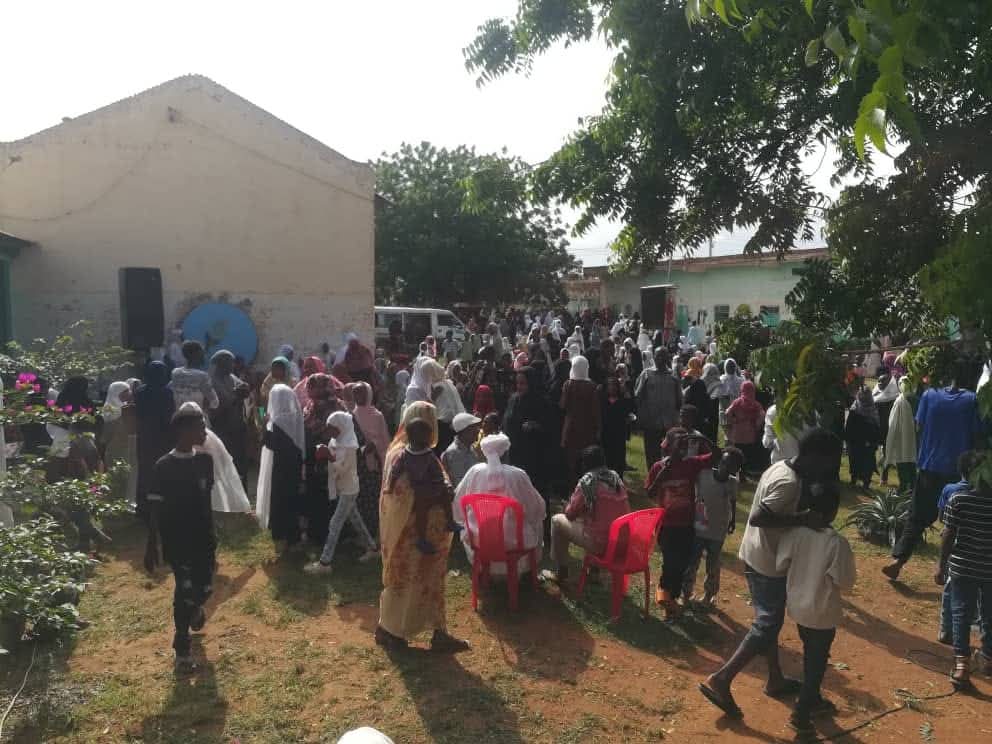
A community school opening.
But sustaining communities requires more than services alone. Any system of governance also depends on mechanisms for managing disputes and regulating social relations, particularly when formal institutions are weakened or absent.
Here, traditional authorities and community mediation structures have played a critical role. Research by the Small Arms Survey and the Rift Valley Institute suggests that local leaders and customary mediation bodies have helped negotiate access for humanitarian assistance, facilitate commercial movement, mediate local tensions, and preserve a degree of stability in conflict-affected areas.
In parts of Darfur and Kordofan, these arrangements have contributed to keeping markets functioning, enabling the movement of traders and aid convoys, regulating access to resources, and facilitating negotiations with armed actors. In many cases, they have helped preserve a minimum level of social and economic order despite continuing violence and the disruption of state institutions.
Nor have these arrangements been limited to civilian or traditional actors alone. In some areas, local commanders and armed groups allied with larger conflict parties have assumed responsibilities extending beyond direct military operations. These have included negotiating access to markets, regulating movement between territories, and mediating local arrangements necessary for daily life.
The nature of these roles varies significantly across regions, and they should not be romanticised. Yet they point to an important reality: governance during war increasingly depends on a broader range of actors than military maps alone can capture.
What links these diverse experiences is a common pattern. Authority is no longer derived solely from formal legal status or position within state institutions. It is increasingly tied to the ability to provide services, resolve disputes, regulate access to resources, and sometimes ensure enough local security for daily life to continue. In this sense, governance during war becomes less about formal authority and more about practical capacity.
The same pattern is visible in the economic sphere. The war has not only disrupted Sudan’s national economy; it has also reshaped it through new commercial networks, taxation systems, and cross-border flows.
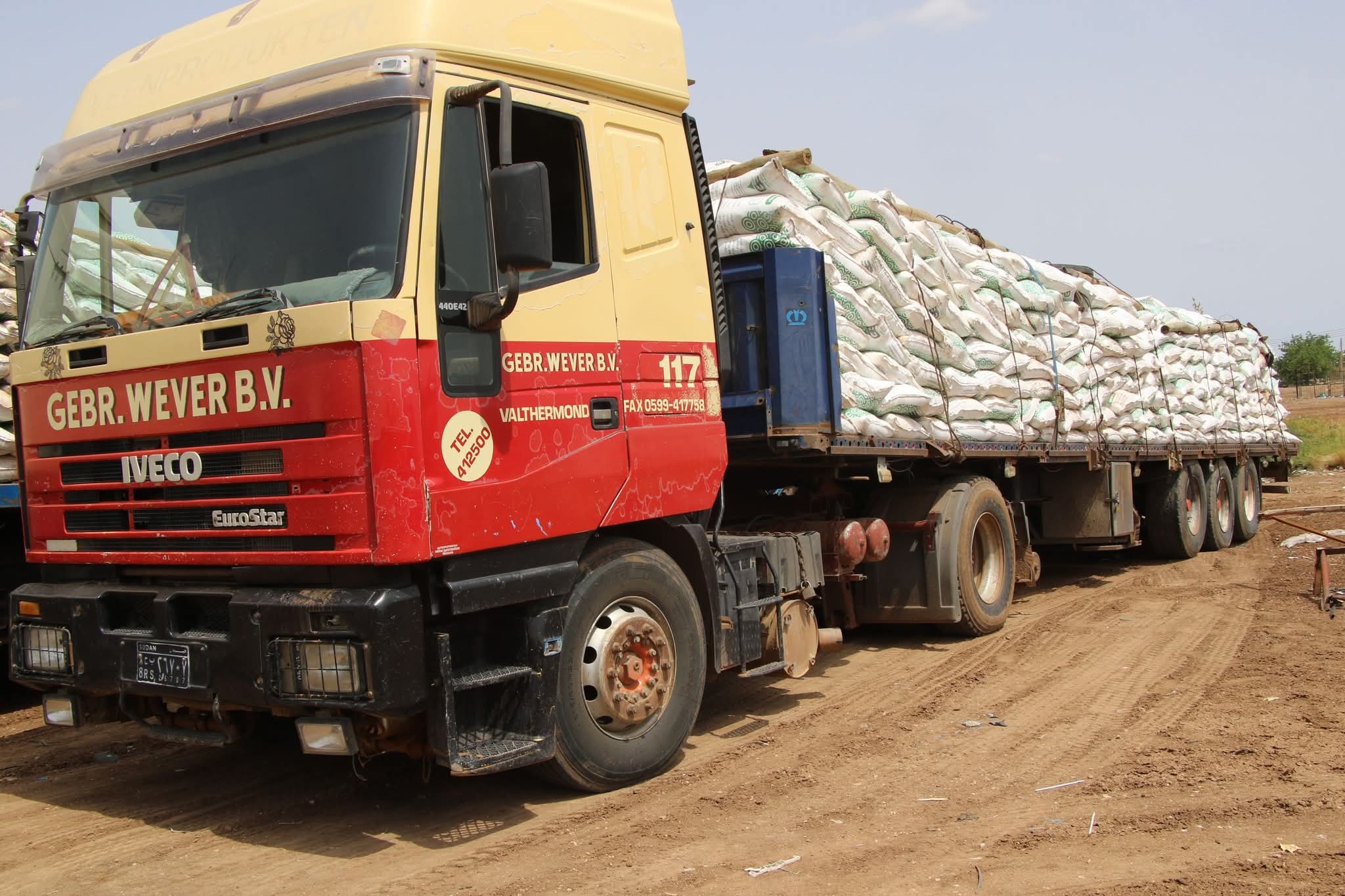
Fertiliser trucks secured by local actors.
Research by the Clingendael Institute and the Conflict Sensitivity Facility shows that the conflict has transformed Sudan’s economic geography. As Khartoum’s position as the country’s primary economic centre weakened, new trade routes connecting Sudan to Chad, Libya, and South Sudan gained increasing importance.
While some of these economic networks and local commanders maintain nominal or opportunistic alignments with either the SAF or the RSF, they largely operate with a high degree of practical autonomy, driven more by local market survival and resource control than central military command.
These routes now play a growing role in the movement of livestock, fuel, and consumer goods. As a result, actors who control access to them have acquired significant influence over the distribution and cost of resources.
In some cases, local authorities, commanders, or armed groups have become important not only because of their military strength but because they regulate movement and facilitate trade within areas under their influence. Their authority increasingly rests on the ability to manage circulation and exchange rather than force alone.
Across many regions, checkpoints, transit fees, and informal systems of regulation now perform functions once associated with the central state. It would be easy to dismiss these arrangements as signs of economic disorder. In practice, however, they have become mechanisms through which access to resources is governed, movement is regulated, and economic life continues under wartime conditions.
If Emergency Response Rooms illustrate the redistribution of service provision, and traditional authorities demonstrate the persistence of local dispute management, then some parts of Sudan reveal an even more developed form of wartime governance. This is particularly visible in territories controlled by the Sudan People’s Liberation Movement-North (SPLM-N) under Abdelaziz al-Hilu.
In parts of South Kordofan and Blue Nile controlled by this group, governance extends beyond the management of specific services or disputes. Various administrative structures, local courts, mechanisms for humanitarian access, and systems for regulating aspects of economic and agricultural activity continue to operate. According to reporting by ACAPS, ACLED, and other specialist sources, these institutions perform several functions associated with local governance outside both the central state and the SAF–RSF framework.
Taken together, these examples do not suggest either that the Sudanese state has disappeared or that a coherent alternative state has emerged. Rather, they reveal a widening gap between the state as a formal institution and governance as a set of practical functions.
Much of the international response to Sudan continues to assume that meaningful political change will occur primarily through an agreement between SAF and RSF. Yet significant aspects of governance are already taking place through other actors and structures that remain largely absent from formal negotiation processes.
This matters even more as international discussions gradually shift from managing the war toward imagining post-war arrangements. Many current proposals still rely on a political map inherited from the early stages of the conflict, when Sudan was primarily viewed through the lens of two competing military actors. After years of war, however, governance functions have become dispersed across a far more complex landscape of civilian networks, traditional authorities, local administrations, commanders, and armed groups.
This creates a fundamental political challenge. A settlement focused exclusively on national military actors may succeed in redistributing power at the centre. But it risks remaining disconnected from the structures through which everyday life is already being managed across much of the country.
Sudan’s future therefore depends not only on who signs an agreement, but also on how any future political order engages with the networks of governance that have emerged during the war itself. For many Sudanese communities, these structures are not abstract political arrangements. They are the mechanisms through which people access food, settle disputes, move goods, and navigate daily life.
What Sudan’s war reveals is not the disappearance of governance, but its transformation. While much international attention has focused on which military actor might ultimately control the state, governance functions have been quietly reorganized on the ground by a wider range of actors.
The war has done more than redraw military frontlines. It has redistributed authority beyond the state’s traditional centre. Any peace process that treats Sudan as a problem to be solved solely through negotiations between SAF and RSF risks overlooking how the country has actually functioned during the war. The question is no longer only who will govern Sudan after the conflict. It is also whether a future political settlement can recognize the actors who have already been governing parts of it throughout the war.