Somalia Pushes Ahead with Controversial Regional Elections Despite Opponent Boycott.
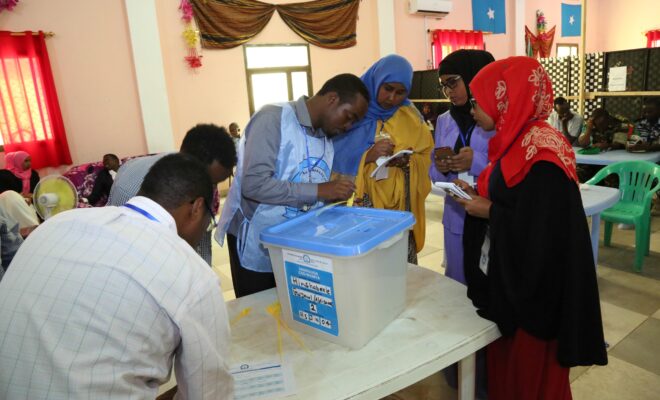
Somalia’s transition to one-person,one-vote elections is increasingly becoming a struggle not only over democratic reform,but also over who controls political power.
The Federal government has stepped into South-West and Galmudug not merely to maintain order or oversees voting,but,critics argue, to shape political outcomes.
Across the states, opponents says Mogadishu is using electoral reform to strengthen its influence,sideline rivals and consolidate presidential authority ahead of the national elections.
This challenges the government’s portrayal of the transition as a neutral, technical process and raises a consequential question: is Somalia’s push for direct elections truly about democratic renewal, or is it becoming a vehicle for centralizing power?
For readers less familiar with Somalia,today’s controversy requires historical context.
Since the collapse of the central government in 1991, Somalia has relied on an indirect 4.5 clan-based system. Under that arrangement, powerful clan elders select members of parliament, who then elect the president. Designed to manage a deeply divided society, the system has long been criticized as unrepresentative, corrupt and unaccountable.
The Federal government now says, its reform will lead to universal suffrage and direct citizen participation. But political differences have widened into boycotts, allegations of electoral malpractice and fears that the country could descend further into confrontation. Beyond the voting itself, the stakes are the nature of Somalia’s political system, the inclusiveness of its democracy, the balance between Mogadishu and federal member states and the integrity of national unity.
Opposition and the question of electoral Legitimacy.
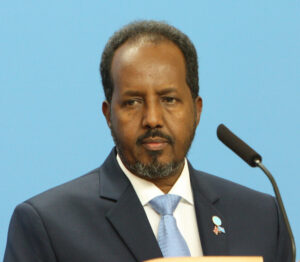
President Hassan Sheikh Mohamud
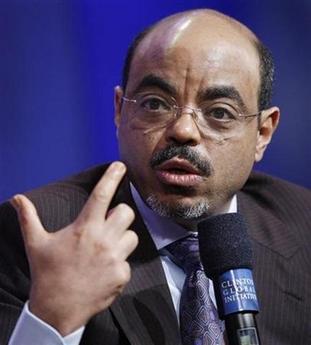
President Hassan Sheikh Mohamud’s government has faced strong opposition from the Somali Future Council, a coalition of former national and regional political leaders. The opposition rejects unilateral changes to electoral boundaries and rules without broad political consensus. It argues that electoral stabilization and should occur through an inclusive, negotiated process involving federal states, political leaders, political parties and civil society.
The national Electoral Commission has also faced questions about its independence, with opponents arguing that federal influence over its appointment undermines confidence in the process. The Heritage Institute for Policy Studies has examined the dispute, noting tensions between federal electoral authority and the constitutional role of member states.(heritageinstitute.org
South-West State sets a precedent for Federal Intervention.
South-west State illustrates the stakes and dangers of federal intervention. Former regional president Abdiaziz Hassan Mohamed, known as Lafta-Gareen, organised a disputed election in March 2026 that the federal government rejected as unconstitutional.
Tensions escalated into armed confrontation in Baidoa . Federal forces subsequently took control of the city, while Lafta-Gareen resigned after his administration had broken down with Mogadishu.
Reuters reported on the March crises that the dispute centered on elections, constitutional changes and the balance of power between the federal government and regional authorities. (reuters.com)
Somalia government described its intervention as a lawful restoration of order but critics accused the government of overreach and interference in a constitutionally recognized member state.
Political analyst Mohamed Ahmed captured the dilemma by arguing that Lafta-Gareen was wrong organize an election that appeared intended to extend his rule but that direct federal intervention was equally problematic. Both actions, he said, contributed to the crises.
The recent fighting in Baidoa has indeed highlights the risks of electoral dispute as that still remain unresolved .
On August 17, Reuters reported heavy fighting in Baidoa between federal forces and forces loyal to Lafta-Gareen. Residents reported multiple deaths, while the Associated Press reported reported dozens of combatants deaths atleast four civilian death and scores of wounded. The fighting demonstrated how political disagreements over electoral authority can rapidly become armed conflict, while also creating opportunities for Al-Shabaab to exploit instability.(reuters.com)
Disputed Galmudug Vote Tests Somalia’s Democratic Transition.
A vote took place in Galmudug three weeks ago, but concerns over alleged irregularities and limited civic education and unclear voting procedures have raised questions about the credibility of Somalia’s wider transition to one-person, one-vote elections. Some locals have questioned whether the reforms represent genuine democratic change or merely a formal change to an existing political system. Others have raised concerns that some voters may not have been adequately informed about how to vote.
The concerns also extend to political representation. Some tribes, including the Sixawle Karanle, argue that they have previously held parliamentary representation and now they have a fear of being excluded under the system.
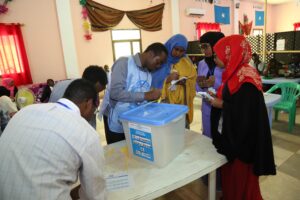
Politician Khalid Ahmed Yusuf, who is seeking restoration of the seat, said his tribe would not accept its removal. “This is something that we cannot accept, and we call upon them to reconsider the consequence this will have,” Yusuf said. “We, as Sixawle, are seeking the restoration of our position, as this violation of denial is committed by the electoral commission that has no right to do so.” The electoral commission’s lack of response to the claim has added to concerns among those challenging the decision.
What Is Really at Stake?.
The stakes go beyond technical electoral reform. The transition is fundamentally about legitimacy, democratic renewal and who wields political power.
Supporters argue that direct elections can empower ordinary citizens and move Somalia beyond its long-standing elite- and clan-based political system. Somalia’s December 2025 Mogadishu municipal elections were widely described as a historic step because they were the first direct local elections in more than five decades. . Al Jazeera reported that the vote nevertheless faced opposition boycotts and wider political disputes.
Critics, however, warn that without political consensus, a new electoral system could reproduce existing divisions or create new grievances.
This concern has also been highlighted by the International Crisis Group, which has warned that Somalia faces significant challenges in moving from the 4.5 clan-based system towards universal suffrage, including weak institutions, insecurity and concerns over electoral transparency. Its 2024 analysis similarly noted opposition to the government’s proposed universal-suffrage model and concerns about relations between Mogadishu and the federal member states.
According to analyst Omar Mahmood from the International Crisis Group‚ many Somalis still view one-person‚ one-vote elections as a departure from previous forms of governance‚ but “the track record of state elections thus far has left much to be desired”‚ with evidence of fixed outcomes and lack of competition․ Former prime minister Hassan Ali Kheyre, who is also a presidential candidate for the upcoming elections, has also argued that bypassing political consensus risks weakening the confidence of Somalia’s International partners. “The trust and confidence of our international partners‚ built over many years‚ cannot be taken for granted”‚ he argues․
In Galmudug, the Justice and Solidarity Party (JSP), associated with President Hassan Sheikh Mohamud’s political camp, has emerged as the dominant political force.
Opposition figures, including Abdirahman Abdishakur have questioned the credibility of the process and alleged that political loyalty has been favoured.
These concerns echo earlier disputes over Somalia’s elections. The Heritage Foundation has examined Somalia’s electoral system and the difficulties of implementing one-person, one-vote elections in a country where political power remains heavily influenced by clan structures and insecurity.
International Concerns and Elusive Consensus.
Somalia’s International partners have repeatedly stressed the importance of an inclusive electoral process. The wider disagreement between the federal government and opposition groups and federal member states has made the electoral roadmap increasingly contentious. Al Jazeera reported that Somalia faced rival claims over constitutional legitimacy and lacked an agreed political path towards elections.
The disagreement has intensified concerns that electoral reform could become another source of political confrontation in Mogadishu. This is between forces loyal to the former prime minister and current presidential candidate, who deems the president’s term in office expired, and forces loyal to the government, especially after government forces attacked Kheyre’s residential house. Al Jazeera has also reported on the wider political crisis surrounding Somalia’s electoral process,
Al-Shabaab’s impact on Somalia’s democratic transition․
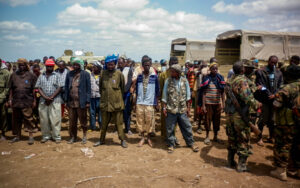
Al Shabaab fighters
Any analysis of Somali elections must address the role of al-Shabaab. The militant group controls large rural areas and has a formidable history of targeting government officials, candidates, and voters. Its campaign of violence and intimidation disrupts voting, deters participation, and skews representation often making polling impossible in entire regions. Because of the ongoing threat from Al Shabaab many Somalis see voting as not only a political right but also a personal safety risk. The Heritage Foundation has previously identified al-Shabaab’s territorial influence and Somalia’s security challenges as major obstacles to establishing effective governance and nationwide democratic institutions.
According to Said Omar, a security and governance expert who spoke to African Arguments, the threat from Al Shabaab affects how politicians and communities approach elections. He said that, leaders must balance the pursuit of political legitimacy with the need to protect public safety, while in may areas, the group can distrupt geunine political competition.
At the heart of Somalia’s electoral dispute is the management structure. The Federal Government favors a single national electoral commission, while the Somali Future Council, including Puntland and Jubbaland, rejects it, citing concerns over its political independence under federal control. They instead support federal and state commisions to give regions a greater voice and restore public trust.
In the absence of agreement on a common framework, regional electoral process introduced in preparation for national elections risk deepening the divisions they were intended to overcome.