
Mineral Beneficiation: A Pipedream of Prosperity in an Unequal Financial Architecture
Since 2023, 14 African countries have introduced export restrictions on unprocessed critical minerals, requiring “local beneficiation” – or in-country processing and manufacturing – prior to export, and demanding technology and financing.
Wealthier countries are also supporting the idea of local beneficiation and stepping up investments in resource-rich countries, promising this will help to lift them out of poverty. Behind these promises, however, they are perpetuating a top-down, economic model that only serves their own interests, and are reducing long-standing equity-based claims for climate justice and reparations from the Global South to a business opportunity.
Promoted by Western governments and executed through their development banks and corporations, this model pushes African countries further into debt, allows wealth to flow out through tax avoidance, and imposes policy changes that undermine environmental and human rights, while diverting scarce public resources away from hospitals, schools and social protection.
Geopolitical interests at stake
Currently, China is one of the world’s largest producers and suppliers of critical minerals, controlling over 80 % of the rare earth element supply. In response, Western nations in the G7 and their allies – who need to secure access to minerals for their growing energy, digital and military industries – are trying to reduce their dependency on China and stepping up investments in the mining sector across the Global South.
Amidst these geopolitical tensions, multilateral development banks (MDBs) are increasingly being used as a tool to advance Western government interests. In May 2026, the World Bank Group announced it “will quintuple support to the sector in the next five years”, while the African Development Bank is working to make critical minerals beneficiation central to Africa’s industrialisation.
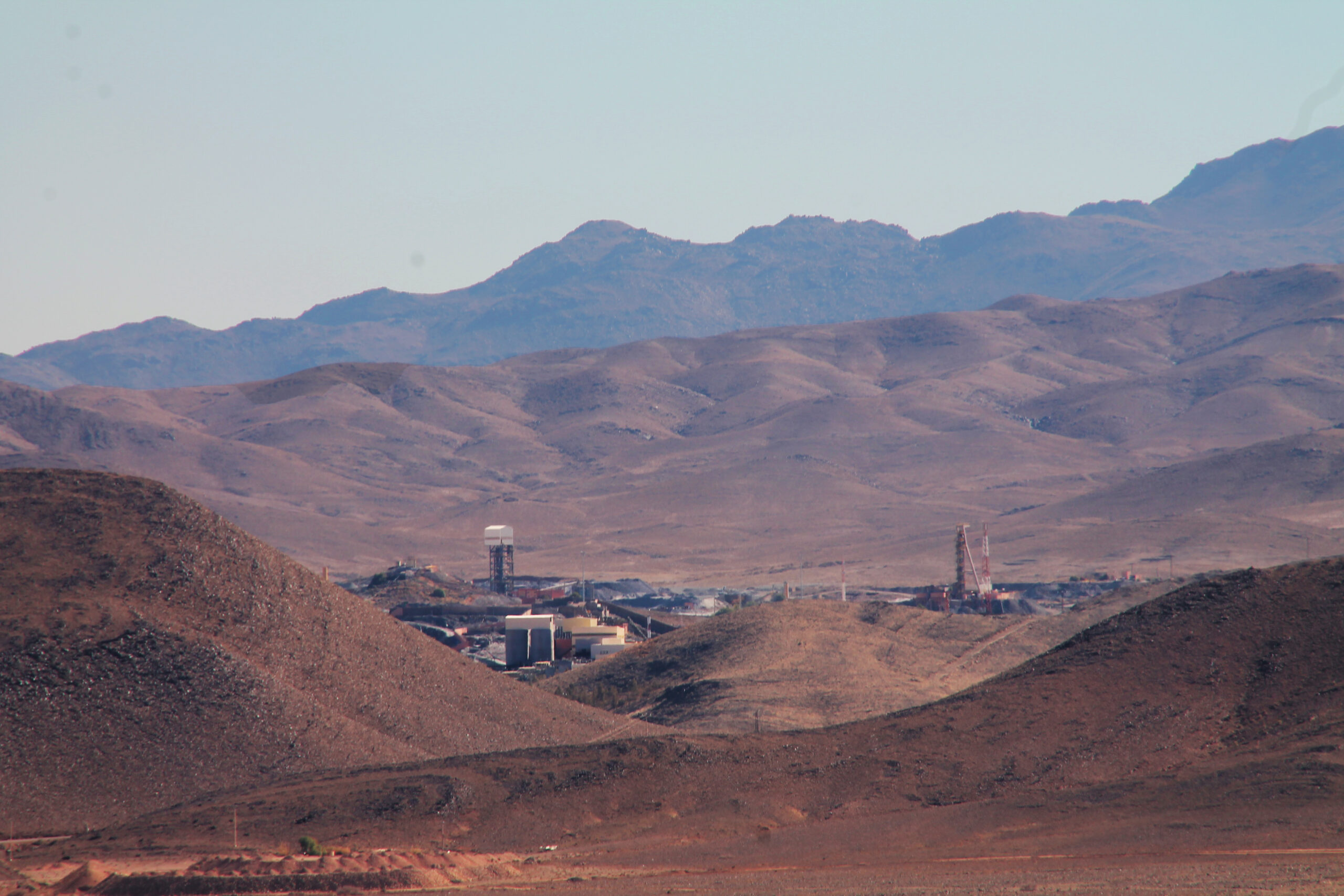
Imider silver mine in Morocco. Credit Lorena Cotza
Development banks are mobilising support for mining and beneficiation in three main ways. Firstly, identifying and designing projects that can fit into global supply chains and are profitable for the private sector. Secondly, providing host governments loans to absorb risks from the private sector through public private partnerships, and set up the associated energy and transportation infrastructure. Thirdly, under the guise of providing “technical assistance” as well as the conditionalities attached to loans, MDBs end up acting as shadow governments and pressure African governments to make industry-friendly reforms, including measures to fast-track projects.
A promise based on false assumptions
MDBs are opportunistically presenting critical minerals as a golden development opportunity for Africa. Their promises of prosperity, however, are built on two faulty assumptions.
The first is that there is infinite demand for critical minerals. In reality, projected demand has been overblown, leading to overinvestment in production capacity. For example, global manufacturing capacity for lithium-ion batteries is about two to five times greater than current demand, resulting in waste, overextraction, overproduction and lower prices. This suggests that mineral-rich countries will need to increase demand domestically, factoring in higher competition and reduced income for their products.
The second is that mineral-rich countries will be able to fund their essential social services and infrastructure through income from mining and beneficiation. However, debt servicing and the global tax framework (with business structures channelling profits to offshore investors) will likely suck up any economic value before reaching the marginalized communities who are facing poverty.
Unfair global tax and debt systems undermine public financing for development
MDBs have historically pushed for extractive industries to be private sector-led, leaving governments at the mercy of mega mining-corporations whose capital far exceeds the gross domestic product of many African countries. These corporations are pushing mining host governments to compete with each other for more investments by reducing resource royalties, weakening environmental and social safeguards, and giving tax breaks to resource companies.
Significant portions of mining value continue to flow out as companies shift their profits to tax havens. Meanwhile the G7 and other wealthy countries have resisted efforts by Global South countries to increase their public revenues and tackle illicit financial flows through an inclusive, centralised UN tax convention, which would enable resource-rich countries to tax economic activities and profits generated inside their borders.
Additionally, key proposals for financing green industrial policy are further adding to African countries’ debt burdens. Even when projects are implemented by private companies, governments are still expected to take on loans to develop the supporting transportation and energy infrastructure. These debts are usually denominated in U.S. dollars, making it harder for countries to pay back the loans: the more debt they take on, the more their currency devalues against the U.S. dollar. Often the original creditors, who tend to be long-term institutional investors or governments, sell the debt at deep discounts for pennies on the dollar, leaving countries at the mercy of vulture funds who doggedly litigate to claim their full pound of flesh.
The focus on debt financing also means that only those projects that are profitable get financed; while others, including essential services like health and education, get left by the wayside. Cases such as Mozambique show that public services end up being cut when the promised income from resource extraction does not materialise. And in the absence of a functioning sovereign debt restructuring mechanism, countries need to pay back their debts before directing any increased income to public services.
More meaningful community participation is needed for beneficiation to benefit people
Within this deeply unfair economic system, the biggest hypocrisy is that local communities and indigenous peoples – who are being promised prosperity in exchange for giving up their lands, ecological resources and livelihoods – are being actively excluded from decision-making processes around critical minerals and beneficiation projects.
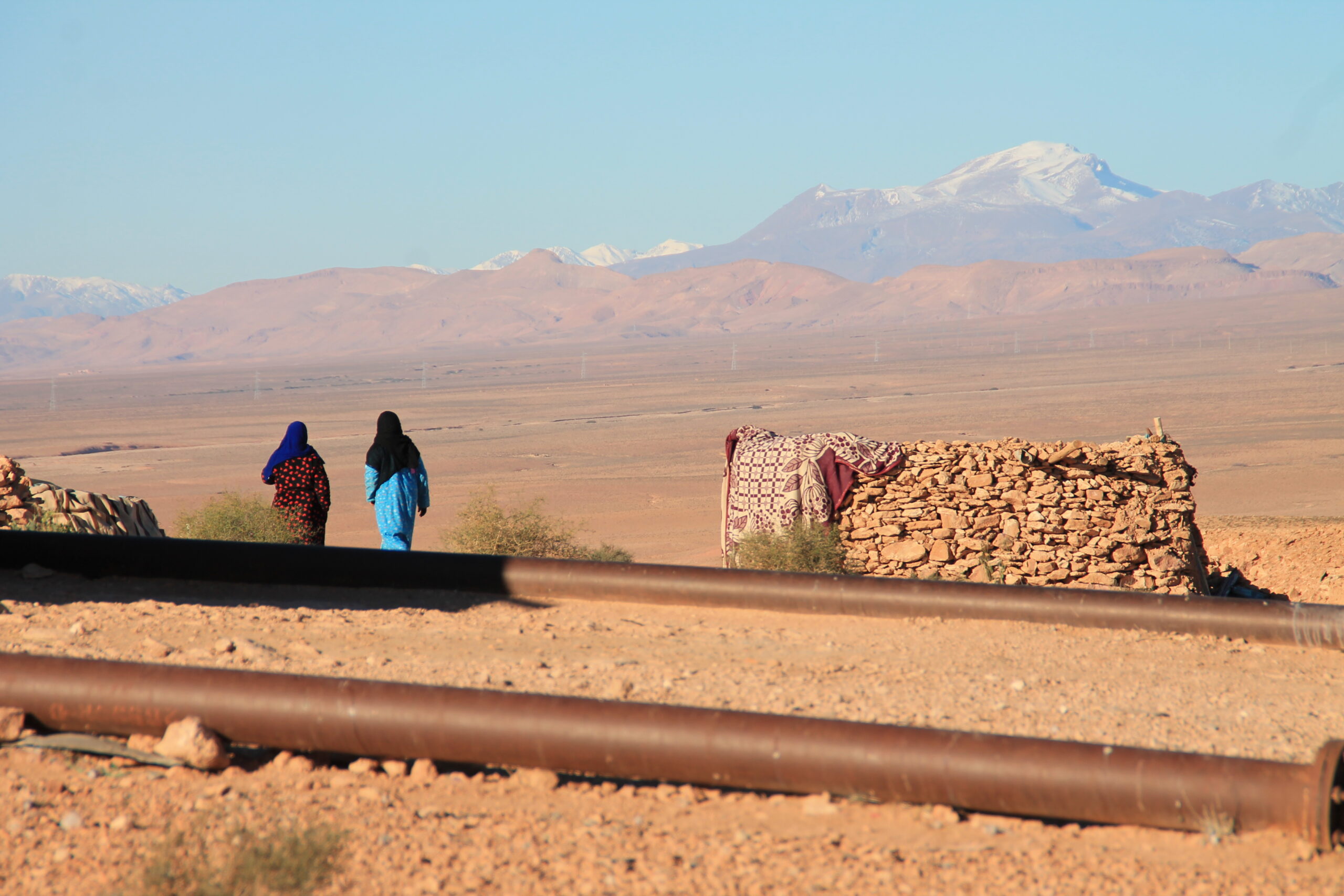
Imider women at the top of Mount Albban. Credit: Lorena Cotza
MDBs pay lip service to improving environmental and safeguards, but then advise countries to reduce opportunities for public participation and access to information, citing the urgency of the climate crisis or the business case for streamlining environmental approval. As a result, those who are bearing the cost of projects on their land do not have opportunities to share their knowledge, present their concerns and meaningfully participate.
Secondly, environmental and human rights defenders are being stigmatised, accused of being “anti-development”, criminalized and attacked, for simply asking questions or suggesting how to improve green industrial projects. Governments are also pushing forward laws that improperly regulate civil society organisations in ways that limit their autonomy and independence and threaten their existence.
This silencing of communities and movements is restricting their ability to have a say in their own survival. It also breaks down trust and accountability required to ensure green industrialisation generates real prosperity for all.
Resource rich countries must use their leverage to push for systemic reform and transformation
Local beneficiation is high up on the international agenda, from the declarations at the latest G7 and G20 meetings, to the more progressive stances in the African Union (AU)’s “Green Mineral Strategy” and the UN’s High Level Meeting on Critical Energy Transition Minerals.
But none of these fora are centering the need for systematic reform of the current financial architecture. There are parallel conversations around increasing public resources through debt and tax reform, but these are decoupled from conversations on beneficiation. Meanwhile, it is noteworthy that in these parallel conversations, China is supporting a UN debt workout mechanism and UN tax convention, while the G7 countries are opposing these reforms. Given that China is already the market leader in critical minerals, African countries could pressure the G7 to change their position in exchange for greater critical mineral access.
One thing is clear: export bans are not enough.Without transformational reforms of this system, the promised wealth supposed to trickle down from critical minerals is not going to lift communities and countries out of poverty.
African countries and communities should demand three main systemic changes as a prerequisite to contributing to critical minerals supply chains. Firstly, they must push for an equitable global tax framework, to force resource-hungry billionaires and their companies to pay their fair share of taxes. Secondly, they should demand a sovereign debt workout mechanism, to free up sufficient public resources and guarantee universal social protection. Finally, governments and public financiers should take a more community-led approach to transform development, and provide direct, grant-based funding for communities’ self-determined priorities. Local communities and Indigenous Peoples want information, meaningful decision-making power, and safe opportunities to shape their own development pathways. The goal should shift from how many tons of minerals are processed locally, to whether local communities in resource-rich territories can access food, water, energy, hospitals and schools.