
DRC: The INGA Dam Paradox
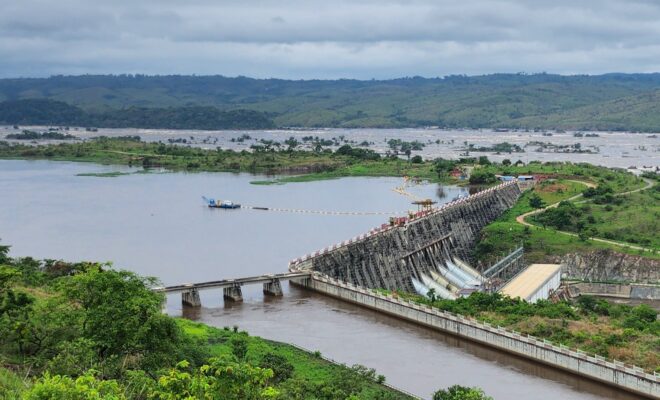
Congo already has electricity it cannot deliver. Inga’s problem is not the dam. Everyone is arguing about who will finance 44 gigawatts. Almost nobody is asking why the 1,775 megawatts already built runs at half output and reaches almost no one. One refurbished turbine explains it.
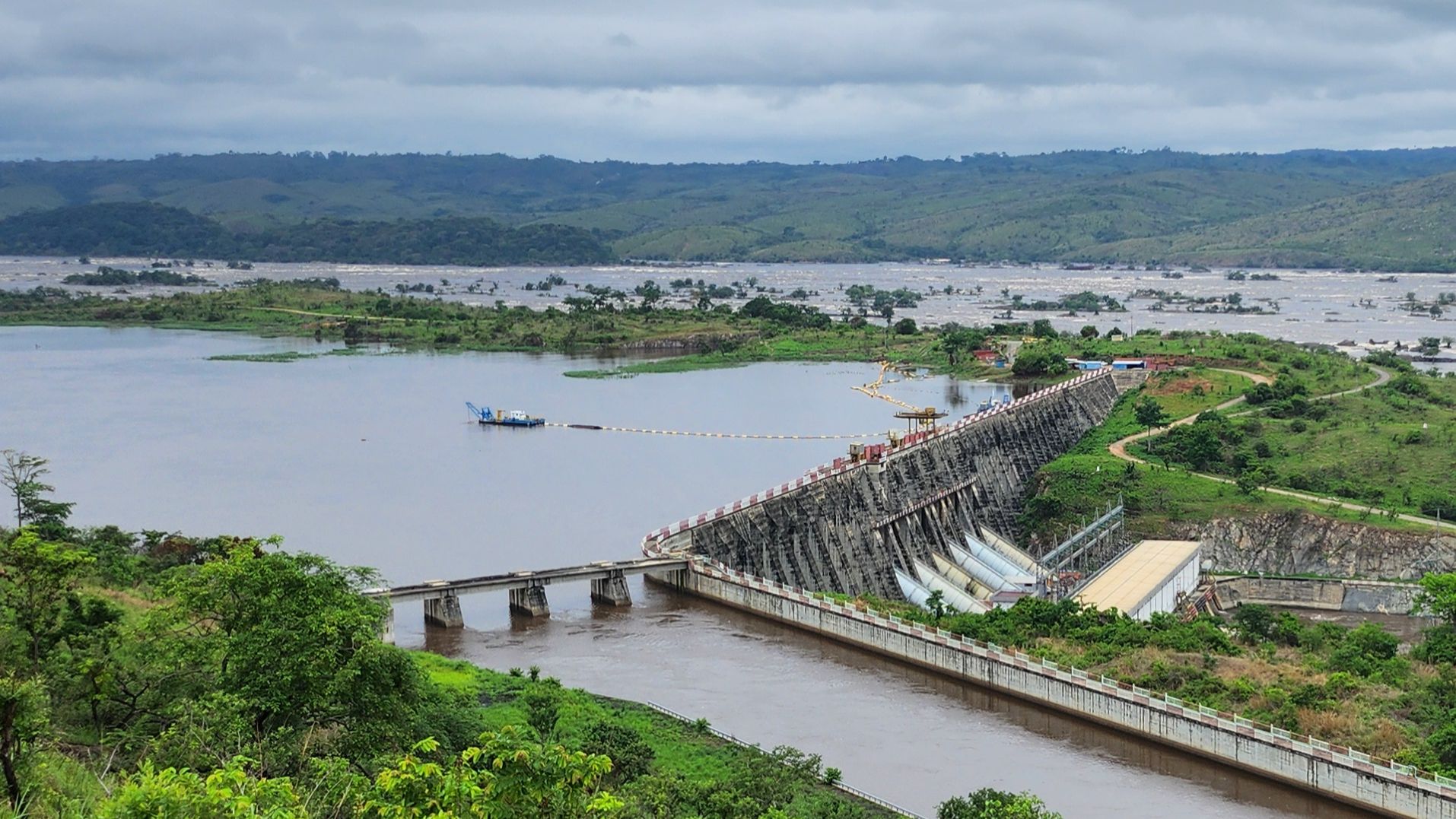
Inga I was commissioned in 1972 with six turbines and 351 megawatts of installed capacity. Inga II followed in 1982 with eight turbines and 1,424 megawatts. Between them, the two dams have long operated at roughly half of what they were built to produce, after decades in which maintenance was deferred and the intake canal to the shared reservoir silted up. The Inga complex today puts out less than two gigawatts against a site potential the Congolese government itself places at 44.
Around one Congolese in five has an electricity connection, and almost every one of them lives in a town. The urban access rate is about 45 per cent; the rural rate is barely 1 per cent. Close to 80 million Congolese have no connection at all — the second-largest access deficit of any country in the world, behind only Nigeria’s.
That is the fact that should reorganise the argument about Inga. The scarce good on the Congo River is not water, and it is not turbines. It is the ability to move a megawatt from the falls to a customer who will pay for it, as African Arguments has also explored recently in the case of Cameroon. Whatever is stopping Congolese hydropower from financing Congolese industry, it is not the geology. Which means that the intervention most often demanded — a financing package for the next phase of dam construction — would change less than its advocates believe.
The question matters more this year than last. The International Energy Agency puts global data centre electricity consumption at 415 terawatt-hours in 2024, rising to roughly 945 terawatt-hours by 2030, with consumption at AI-optimised facilities more than quadrupling over the same period. In the United States, data centres are projected to consume more electricity by the end of the decade than the production of aluminium, steel, cement and chemicals combined. Africa’s per capita data centre consumption in 2024 was under one kilowatt-hour.
The gap is not only one of demand. What keeps most African grids standing when the utility fails is imported diesel, and since the closure of the Strait of Hormuz in early 2026 — the largest supply disruption in the history of the oil market, on the IEA’s own assessment — that backup has become ruinously expensive. African importers have absorbed record fuel bills, currency pressure and collapsing fertiliser supply, and even oil exporters without refining capacity have paid world prices to buy their own product back. Electricity generated on the Congo River, from water, inside the country’s own borders, is worth more today than at any point in the site’s history — for reasons that have nothing to do with the dam.
Congo has read this correctly. At the U.S.–Congo Investment Forum in Washington in October 2025, the head of the Inga Development Agency pitched the site to global technology firms on exactly these grounds — abundant hydropower, fibre nearby, cooling water on site — and the government began drafting an ‘Inga Law’ to set the fiscal and regulatory terms for private investment. The World Bank, which had suspended support for Inga III in 2016 over governance and procurement concerns, has re-engaged with a commitment of roughly $1 billion and an initial $250 million tranche, plus political risk cover through its Multilateral Investment Guarantee Agency.
The reflex has been to treat this as the financing problem solved at last. It is the wrong comfort.
One turbine, two years
Consider what happened when a buyer with money, urgency and no patience for ministerial timelines actually tried to get power out of Inga.
Ivanhoe Mines needed electricity for Kamoa-Kakula in Lualaba, roughly 1,770 kilometres from the falls along the transmission line built in the 1980s for the Katanga copper mines. It paid to refurbish a single unit — Turbine #5 at Inga II, nameplate 178 megawatts. Installation was completed in the third quarter of 2025 and the unit was synchronised early in the fourth, delivering about 180 megawatts into the national grid.
Kamoa-Kakula initially received 50 of those megawatts. Delivery was scheduled to rise to 100 megawatts in the first quarter of 2026 once a static compensator at the Kolwezi substation was installed, and to 150 megawatts during the first half of 2027, after filter bank upgrades at the Inga and Kolwezi substations were completed in phases.
One turbine. A creditworthy sponsor financing the work itself. Roughly two years from commissioning to full delivery, gated at every step not by generation but by substations, voltage stability and line capacity.
Now multiply by two hundred turbines and add a customer who has been promised power in 2032.
The lesson is not that Inga is hopeless. It is that generation is the cheap part and the least binding. Evacuation, distribution and billing are where Congolese electricity is actually lost, and none of them are solved by announcing a new phase.
A buyer, at last
What is genuinely new is not the dam. It is the buyer.
A dam of this size is not financed against a river. It is financed against a signature: somebody has to promise, in writing and for twenty-five years, to buy the electricity, or no lender will advance the capital to build the thing. Inga has never lacked water, engineers or ambition. It has lacked that signature, four times over — and each time the project has failed on the demand side, not the supply side.
Inga I and Inga II were built in the 1970s for a single class of customer: the state-owned copper mines of Katanga, some 1,770 kilometres away. The line built to carry the power ran over nearly every town and village in between without stopping. When Katanga’s output collapsed, the country was left with a transmission line it could not fill, two dams running at half capacity, and a debt it is still carrying.
The Grand Inga scheme repeated the bet at continental scale. This time the anchor customer was to be Eskom, South Africa’s state-owned electricity utility, whose government signed a treaty with Kinshasa in 2013 pledging to buy 2,500 megawatts from a future Inga III. Eskom then fell into a financial and operational crisis of its own — rolling blackouts at home, debt it could not service — and the commitment quietly went nowhere. No power purchase agreement was ever signed. By 2020, South Africa’s own parliamentary energy committee and a senior Eskom official were urging the government to cancel it, and Pretoria has spent the years since looking for a dignified exit.
Each cycle opens with a financing conversation and closes when a demand assumption quietly fails.
The technology firms are a different kind of buyer for one reason that has nothing to do with enthusiasm for Africa: they carry investment-grade credit, in most cases stronger than the sovereign or the state utility sitting opposite them, and they have shown they will sign twenty-year power purchase agreements and pay to bring generation assets back into service. Congo’s difficulty was never selling electricity. It was finding a signature a lender would accept for twenty-five years.
The workload geography also happens to fit. Inference — the work a model does when it answers you — is latency-sensitive and wants to sit near its users. Training, the far larger job of building the model in the first place, is not; it wants power that is cheap, abundant and uninterrupted, and it tolerates distance. Training is the workload that can travel, and Inga sits 150 kilometres from the Atlantic beside the largest reliable cooling-water resource on the continent.
None of which changes the substation problem. A hyperscaler offtake makes a tranche financeable. It does not make it deliverable.
What leaves anyway
When African power does reach a global buyer, a further loss occurs that rarely appears in the megawatt figures.
The project company is typically domiciled offshore. The tariff is denominated in dollars, the fees and legal work accumulate elsewhere, and the domestic industry that would eventually supply the missing engineering capability never quite takes root. This is the mineral economy’s exact shape, reproduced with a cleaner conscience: the raw input leaves, the refined product returns at a multiple, and what is captured at home is a royalty. Congo would export energy and re-import intelligence.
Avoiding that outcome does not require Congo to build frontier AI models of its own — the largest and most expensive systems, which only a handful of companies anywhere can afford to train. It requires that a share of the compute — not the power, the compute — be contractually reserved for Congolese and African use: universities, hospitals, the public administration, and language work in Lingala, Swahili, Tshiluba and Kikongo that no commercial sponsor has any reason to fund. Capacity reservation is an ordinary clause in infrastructure concessions. Negotiated at the outset it costs an operator very little. Requested afterwards it is unobtainable.
The same applies to domicile and denomination. Treated as design choices rather than accidents, they are worth more over thirty years than the headline tariff.
The thing nobody wants to say out loud
All of this runs into an obstacle no contract term resolves.
The government has never fulfilled its compensation obligations to the communities displaced by Inga I and Inga II. Six settlements were cleared for the two dams; many of those families were moved into Camp Kinshasa, a compound inside the utility’s own concession, where they have now been waiting for compensation for more than fifty years. Those dams were built to serve a customer 1,770 kilometres away, and the line that carried the power passed over villages that remain unconnected today. A hyperscaler-anchored Inga is the same architecture with a better logo: excellent generation, a dedicated spur, a fenced campus, and darkness twenty kilometres from the turbine hall.
The counterparty risk being priced into every Inga term sheet is not hydrological. It is the Congolese state — its procurement record, its willingness to honour a concession across an electoral cycle, and its habit of treating the site as a bargaining asset rather than an operating one. That is also why the conventional sequencing is backwards. The usual programme runs: attract the investor, sign the phase, build the dam, extend access. The order has to be reversed. A government that wants a twenty-five-year offtake from a company with better credit than itself must first accept binding constraints on its own conduct — a statutory domestic set-aside enforced by penalty, published contracts, and distribution capital as a condition of concession rather than a promise attached to it.
Inga is not a technocratic programme. It is a bargain, and the state has to move first.
What progress would look like
The virtue of framing it this way is that it is measurable on a timescale short enough to embarrass anyone claiming progress without it.
Two numbers tracked to 2030 would settle most of the argument: megawatts actually evacuated and billed from existing Inga capacity, as distinct from megawatts installed; and the number of new domestic connections added in Kongo Central, the province that hosts the falls. A third would test whether the bargain is real: whether the Inga Law and the offtake agreements signed under it are published in full, or negotiated in the manner that cost the country its financing in 2016.
Neither of the first two requires a foreign investor’s permission. Both could begin this year with substations rather than announcements. The third requires a government to accept a constraint on itself before a crisis, which is the hardest thing any government does, and the only thing that would make the other two credible.
The world’s need for what the Congo River can produce is unusually urgent, and it will not wait another fifty years.