
Same Cocoa Crash, Opposite Answers: what Ghana and Côte d’Ivoire Reveal about Power in Global Trade
The world’s two biggest cocoa producers faced the same price collapse this year and made opposite choices. The reason is not economics alone. It is who holds power in each cocoa sector — a lesson aid and trade partners keep missing.
Within three weeks of each other this September, the world’s two largest cocoa producers set farm-gate prices for the new season. They pointed in opposite directions.
On 2 September, Côte d’Ivoire confirmed that farmers would receive 1,200 CFA francs per kilo, 57% less than the 2,800 francs they were paid at the start of last season. For more than a million Ivorian growers, that means less than half the income per ton. On 25 September, Ghana went the other way. It raised its price slightly, to GH¢42,400 a ton, under a new law that guarantees farmers at least 70% of the export value of their beans.
Both countries face the same market. Cocoa futures hit a record $12,906 a ton in December 2024, then fell below $3,000 by February 2026. Both sell much of their crop in advance. Both have been hurt. So why such different answers?
The usual explanation is money: Côte d’Ivoire had forward sold its crop at low prices, while Ghana had already taken its pain with a sharp cut in February. That is true, but it is not the whole story. My doctoral research, which compared the two countries’ cocoa sectors over several decades, points to a deeper cause. Each country’s choices reflect who holds organised power in its cocoa system. And that lesson matters well beyond cocoa.
One value chain, two paths
Together, Ghana and Côte d’Ivoire grow over 60% of the world’s cocoa. They sit in the same place in the same global chain, sell to the same handful of traders and grinders, and for decades received the same advice from lenders and donors. Yet they climbed that chain in different ways.
Côte d’Ivoire bet on processing. In 2020/21 it became the world’s largest cocoa grinder. By 2024, local plants were taking in 777,000 tons, about 44% of the harvest, and last year the state-owned Transcao opened a new $235 million factory. But most of that grinding is done by global firms such as Cargill, Barry Callebaut and Olam, which is why the government itself now talks about reducing their dominance.
Ghana bet on the farmer and the bean. Its cocoa board, COCOBOD, kept control of quality, marketing and pricing, and Ghanaian beans have long sold at a premium for their quality. Processing lagged. Ghana has capacity to grind about 505,000 tons a year, but it has processed only around 220,000 tons a year, less than 40% of the crop. When beans ran short in 2024, its biggest processors including, Cargill had to halt production at times.
Neither path is simply ‘right’. Each has winners and losers. The question is why each country chose the path it did.
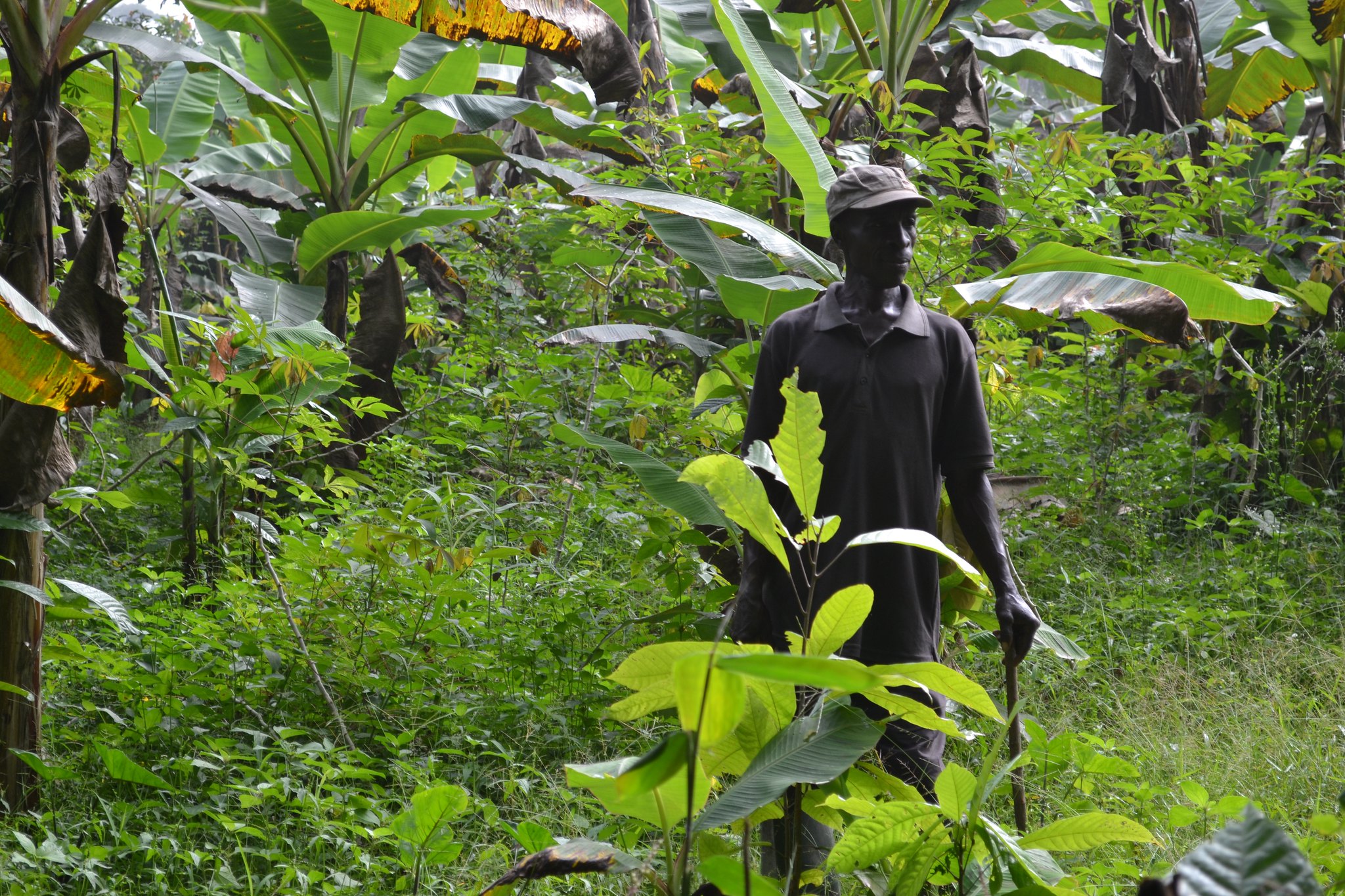
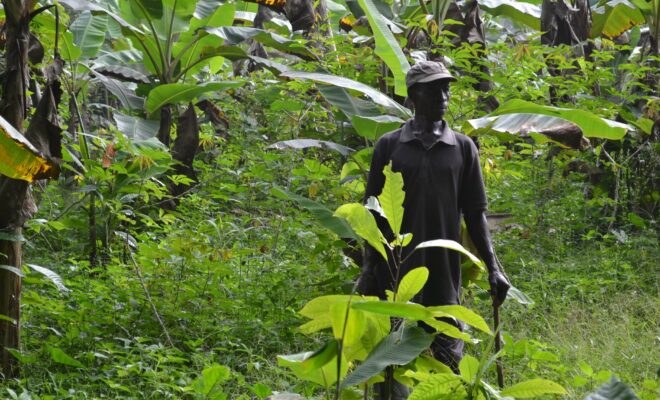
Cocoa farmer Kofi Saara on his farm in Assin district, Ghana. Ghana and Côte d’Ivoire grow more than 60% of the world’s cocoa. Photo: ESPA Directorate, CC BY-NC 2.0.
Power, not just policy
The standard answer is technical: one country had better infrastructure, the other better policies. My research found something else. Moving up a value chain is not only an economic step. It is a political bargain between farmers, processors and the state, and each group wants different things.
Farmers want a larger share of the export price, paid on time. Processors want a steady supply of cheap beans. The state wants revenue, stability and votes. Adding value at home means getting all three to cooperate, often by asking one group to give something up.
Which bargain wins depends on who is organised and who can block change. In Ghana, some 800,000 cocoa-farming families are a large, well-organised group that no government can ignore, and COCOBOD grew into a strong, fairly autonomous regulator. Institutions formed around protecting the farmer’s price and the bean’s reputation. In Côte d’Ivoire, reforms that opened up cocoa marketing gave exporters and grinders more say, and policy leaned toward their needs: more local grinding, supplied with beans at competitive prices.
Both countries went through the same structural-adjustment era and heard the same donor advice. The advice was filtered through different domestic power structures, and it produced different results.
This year’s decisions follow the same pattern. Ghana’s new Cocoa Board Act, passed in July, writes the farmer’s 70% share into law, adds a pension scheme for cocoa farmers and creates a tribunal to settle disputes in the sector. Côte d’Ivoire’s price cut was designed to keep its forward-sales system solvent and, as ministers said when they first cut the price in March, to make Ivorian beans cheaper for buyers. Each system is protecting the actors at its center.
Neither model is free of cost. Ghana’s farmer-first system has struggled badly: COCOBOD has run up liabilities of around GH¢60 billion, output has collapsed, and farmers still took a cut of more than a quarter in February. Côte d’Ivoire’s processing boom has added jobs and exports, but much of the added value goes to foreign firms while farmers absorb the price shock.
Ghana’s own story also shows how power shapes processing. The deputy finance minister explained that local factories went short because COCOBOD pledged beans as collateral for foreign loans, so it was ‘practically impossible’ to supply them. That was not a technology gap. It was a choice about who gets the beans first. The new law now requires that at least half the crop be processed at home, and it will test whether a farmer-centered system can also build industry.
What partners keep getting wrong
For three decades, the main development advice has been: join global value chains, then move up them. The World Bank’s flagship 2020 World Development Report made that case at length. Donors followed with programmes to train firms, rewrite regulations and attract investors.
That approach assumes that once the rules and skills are right, upgrading follows. The cocoa story shows why it often does not. Reform templates do not land on blank slates. They land on existing power structures, and those structures decide who gains.
The lesson is more urgent now. The United States formally closed USAID in July 2025 and is moving toward deals built on trade and investment. Other partners, from the European Union to China, also pitch investment in African value chains. If these deals ignore domestic power, they risk making the strong stronger and leaving farmers and small firms behind.
Four changes would help, whoever the partner is:
- Map power before designing programmes. Ask who is organised, who can block reform and whose interests an institution really serves, before choosing between farmer prices and local processing.
- Fund the institutions that make bargains stick. Forums where farmers, processors and the state negotiate, transparent pricing bodies and dispute tribunals like the one in Ghana’s new law rarely appear by themselves.
- Strengthen weaker groups. Where farmers are poorly organised, as in much of Côte d’Ivoire, support for cooperatives and collective bargaining is not market distortion. It is what lets them take part in the market on fair terms.
- Be patient. Institutional change takes a decade, not a three-year project cycle. Measure success by whether institutions last, not by how many workshops were held.
Ghana and Côte d’Ivoire faced the same crash in the same market this year and gave opposite answers. That is a vivid reminder that joining a global value chain does not decide who benefits from it. Domestic institutions, and the power behind them, do. Partners who want lasting results in Africa’s commodity economies should start there. That does not mean abandoning markets. It means building the institutions that make markets work for the people who grow the crop.