The tensions playing out in Kenya’s marine conservation
Mombasa, Kenya: Khadija Dossa charmed a group of visitors at her village in Wasini Island in Kenya’s coastal region with tales of how conserving coral reefs was improving livelihoods in her community. When she finally delivered her message however, it was clear there were gaps that needed mending.
Dossa belongs to the Mkwiro Beach Management Unit (BMU), and along conserving coral reefs, her group also farms octopus and seaweed while restoring mangroves. The investment has created jobs for hundreds of youth in the island struggling with unemployment after completing school.
It has come with the price of having to abandon the community’s long-held tradition of fishing freely whenever they liked and whenever it pleased them. During the free reigning days, Marine Protected Areas (MPAs) that restrict unauthorized access by communities did not exist.
“The ocean has provided us with food and a source of income from fish sales for generations and has a cultural connection to our people,” said Dossa, referring to the Swahili people who settled on the country’s coastal region.
In recent years, the world has united around creation of MPAs not just to protect coral reefs, but also to battle unsustainable fishing, water pollution and climate change, threats that were pitched to Dossa’s community by the government to convince locals to join the ocean conservation wave.
During the pitching sessions, she also heard that there would be money coming in from the government and the development community to support communities’ efforts. On this front, Bloomberg Philanthropiescommitted over $635 million to ocean conservation since 2014.
Recently, the Agha Khan Foundation launched a $500 million 10-year initiative to restore 15,000 hectares of mangroves and coastal ecosystems across six Indian Ocean countries through the ReGeneration project.
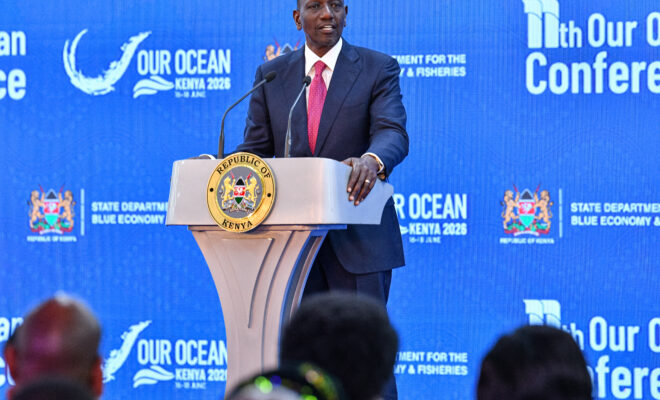
During the Our Oceans Conference in Mombasa, Kenya, in June, the global community raised about $6.4 billion to support ocean conservation, sustainable fisheries, climate resilience and the blue economy.
The promised financial support pleased Dossa, especially after getting convinced that the risks her colleagues are exposed to when diving into the ocean floor to plant corals would be softened. The support too would plug the financial gap that opened after the community accepted restricted ocean access.
According to Jesse Kosgei, a marine research scientist at the Wildlife Conservation Society (WCS) working with coral reefs and fisheries in Kenya, the funding from Bloomberg Philanthropies to Dossa’s community is mainly budgeted towards campaigning for conservation of unprotected coral reefs through public engagement.
In addition, the funds aim to co-manage and conserve the reefs within identified areas through a partnership between WCS, communities and the government, he added.
“We create co-management areas with communities. If it is within the MPAs, fishing practices are banned completely. There are patrols to ensure these places are not being exploited or destructive fishing gears are not being used,” said Kosgei.
But where donor money flows, politics will hitch a ride and corruption will follow. Salim Mohamed, a local from Malindi-Ungwana bay in the north-eastern side of the coastal town, Mombasa, knows this better more from experience than from propaganda.
About two years ago, a donor funded a conservation project by local fishers in his community. The money was distributed through the regional government devolved system. But it never reached the fishers. Much of it was raided by county public officers themselves, said Salim.
“The money benefited politicians and county government ministry of fisheries officials. They came up with their own registered companies and took tenders which were paid for with the funds. We got nothing,” he said.
Dossa’s community is aware of the accountability gaps associated with ocean conservation but does not know how to navigate them. Her fellow Swahili at Kipini village where Kenya’s biggest river, the Tana, meets the Indian ocean, do.
In the past few years, the community has protested questionable activities that have been going on contrary to the values of conservation. According to Twaha Mohamed Yusuf, his village has embraced MPAs not just to conserve corals, but also endangered species like the Turtle and Dungong’.
But trawling, which is operated by foreign companies, has been going on over the years despite locals protesting its association with declining fish stocks, interference with the seabed and breaching of community conservation sites.
Yusuf’s frustration intensifies when he recalls that government officials informed the community that trawling would be banned to allow marine conservation to thrive, yet it has been going on for years, and does not seem to be going away soon.
“There is no benefit for the community in this trawling business. The catch is declining, people have lost jobs and livelihoods, and there is no bursary for students who are going to school,” said Yusuf.
Kosgei confirmed Yusuf’s concerns, adding that the trawlers fish on community owned sites, yet they do not land catches ashore where they are expected to pay a fee of Kes. 2 (about 15 US cents) for every kilogram of fish caught.
“Neither do they support community social protection initiatives like having a development plan for orphans,” said Kosgei.
Back in Mohamed’s village, conservation sites are battling additional pressure – dredging. When he led a group from his Malindi Beach Management Unit (BMU) to complain that dredging was disrupting conservation sites, the government explained the excavation was aimed at expanding the port berth.
Unconvinced, they demanded to know why the dredging was excavating about 80 tonnes of sand everyday within three nautical miles, according to Mohamed’s research, while also seeking clarity from government representatives on rumors that it was a mineral exploration exercise veiled in infrastructure development. They were ignored.
“Their target is to excavate 800 thousand tonnes of sand (according to Mohamed) and yet there was no public participation before the dredging began. Are you going for titanium, are you going for other minerals and you are telling us you are removing all this sand in a day just to expand the port berth?” asked Mohamed.
Appetite for mineral exploration in Kenya’s coastal region has for long ignited collective rage among communities, and for a good reason. While the Constitution of Kenya says communities are entitled to resource benefit sharing, foreign companies collect all the benefits. Locals get none.
The exploitation has fueled poverty levels, and a simple visit to Dossa’s village proves that. Roads and telecommunications are underdeveloped and in some regions they are non-existent.
In case of a health emergency, patients must be taken inland to receive medical care due to lack of health facilities in the island. Yet experts say community-driven ocean conservation, especially on coral reefs, multiplies fish stocks through breeding and nesting, and creates wealth for communities and the country.
“In Kenya, the value of fisheries is worth billions but lack of transparency has not translated this value to communities. The wealth we have is not being realized and the same wealth is now being owned and benefiting other people and not the Kenyan people,” said Maisie Pigeon, the global fisheries transparency coalition director at Oceana, an ocean conservation advocacy group.
The gaps between community conservation rights and mineral exploitation have recently played out at Mrima hill, a mineral rich region reported to hold vast deposits of niobium and rare earth elements.
Its rich ecosystem is connected to neigboring settlements including Dossa’s Wasini, about 24 kilometers to the south east. Locals fear exploitation of these minerals, which have ignited a scramble from USA, China, Australia and even a senior Kenyan politician, will reverse the gains communities have made in ocean conservation.

Nevertheless, a local fisher said large-scale commercial mining is expected to commence soon despite protests from locals over displacement, environmental degradation, and land rights concerns. The same concerns were ignored over oil and gas exploration a few years back.
“Most of the fishermen do not know where to address their rights issues when they are breached yet they are the ones doing most of the ocean conservation. Government institutions are not delivering services,” said pigeon.
Before crossing to Dossa’s island, the roads leading to the shoreline cut through acres of ancient indigenous forests which have supported communities with homes, food, fuel and even herbal medicine for generations.
About five years ago, it was rare to spot a commercial establishment here. Lately, the indigenous forests, which also feed the ocean ecosystem including corals at Dossa’s village, are being replaced by eco-lodges with many springing up as of last year.
During a brief with the media just before the Our Oceans conference kicked off, Edward Karanja, a marine park ranger working with Kenya Wildlife Services, said eco-tourism was one of the development projects destroying coral reef habitats.
That has not stopped encroachment on the coastal forest ecosystem by developers. Dossa is not sure the collective community restoration efforts can match the pace at which indigenous plantations are disappearing.
“As a community we are in an island and our livelihoods depend on the ocean and that is why we saw the importance of conserving coral reefs and ecosystems. It is becoming too hot and the corals are dying of this heat. If they die, where shall we get fish as our main source of food and income from?” Dossa wondered.