DR Congo’s electoral process is at an impasse. Here are 3 scenarios for what comes next
The Congolese government is effectively boycotting its own elections
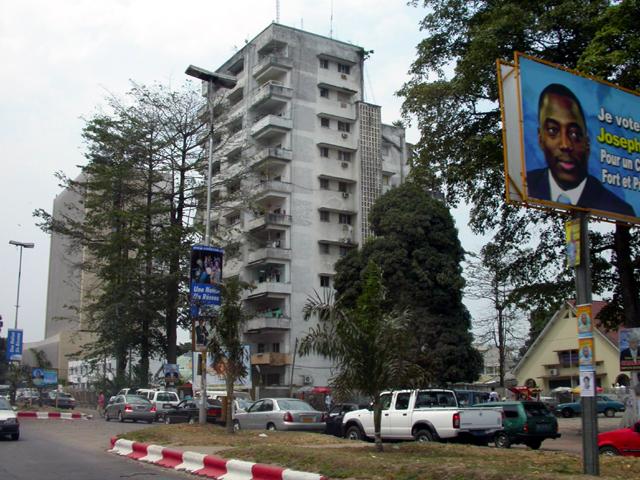
How long can President Kabila hold on the power? Credit: Tomas.
In February 2015, when the Democratic Republic of Congo’s electoral commission (CENI) published its calendar detailing all the steps in the process up to the elections slated for 27 November 2016, it was considered by most to be unrealistic. More likely, most national and international observers agreed, was that the elections will not take place on time, meaning President Joseph Kabila’s time in office will stretch beyond its constitutional limits.
One of the main reasons for this is the government’s total lack of ownership over the organisation of elections, which is almost equivalent to an active boycott. The sums budgeted for the different steps of the electoral process are not disbursed − the average disbursement rate for CENI’s operating costs is just 17% − and there has been a constant struggle between CENI and government for control.
It is highly unlikely the government will change its attitude, especially with the DRC’s economic situation worsening amidst China’s slowdown and low commodity prices. And without substantial financial contributions from international partners, the elections will not take place. We are caught in a vicious circle: the international community won’t give money without significant financial ownership from the government; and the government won’t take ownership because of its financial problems and lack of political will.
At this point, it seems unlikely Kabila will be able to push through a revision of the constitution or impose a transitional government that would create the circumstances for a third term. If he were able to take either of these routes, he would have done so already. At the same time, however, it is equally improbable that elections can be organised before the end of the year. For many people, le glissement (‘slippage’) is now a fact.
The Congolese political elite and others will have to come together to work out how to deal with this situation, though there are currently few signs that the presidential majority, the opposition or the international community has any clear plan.
Many things could yet happen in the coming months, but there are three basic scenarios of how things might pan out:
1) Best case scenario: consensus over credible elections within credible delays
A decade ago, the DRC went through a similar situation as today. After the Second Congo War, there was a transitional period, which began in July 2003 and was supposed to end in June 2005. But it was only in December 2006 that Kabila was sworn in as the newly-elected president.
The delays were not the end of the world, and the public largely accepted them because of two main reasons. Firstly, because there was a broad political consensus that they were necessary. And secondly, because the transition followed a credible process.
Today, a political consensus is again possible though difficult, but it is the latter condition that provides more of a sticking point. The electoral process cannot be credible when the state is actively boycotting it.
If this best case scenario is to happen therefore, the government will need to put in place a process that can realistically lead to free and fair elections within a reasonable timeframe, and with the explicit proviso that Kabila will not stand for a third term. It will be important that le glissement does not simply equate to a new transition, and the question of who will chair this period will be difficult to resolve.
However, importantly, the current situation does not have to lead to violence and chaos, not if the political elite manages to convince the public of the seriousness of a political agreement and process for going forwards.
2) Back to the end of Mobutu: chaos and crisis
If there is not such an agreement akin to the mid-2000s, and Kabila manages to remain in power beyond his mandated term, the crisis could instead resemble the end of Mobutu’s reign. Then, in the mid-1990s, any form of process seemed to vanish or evaporate to the point that no one knew what to expect.
Signs of a similar trend may already be emerging. The government’s paralysation of CENI and the improvised decentralisation of the country last year certainly create the impression of a deliberate deconstruction of the state. Meanwhile, different local conflicts in South and North Kivu in the east have flared up again, with the crisis across the border in Burundi increasing the possibility of a regional conflict.
Seen through this lens, the current situation is not too different from the chaos and uncertainty at the end of Mobutu’s reign.
3) Worst case scenario: state implosion under pressure from the street
Since the Kinshasa protests of January 2015 in which over 40 people were reportedly killed, everybody is aware of the important but unpredictable role the urban population might play in forthcoming events. Many urban Congolese are living under precarious living conditions and their frustrations are both palpable and showing signs of increasingly violent undertones.
A final scenario then is that large-scale violence kicks off in a major city − with Kinshasa, Lubumbashi, Goma and Bukavu seeming the most likely − and triggers a rapid implosion of the state and the crumbling of its institutions. This would a highly unpredictable situation as well as one likely to be destructive in human, material and institutional terms.
The confrontation between protest and repression could not only easily degenerate into violence, chaos and the annihilation of all the achievements since the end of the war in 2003, but, as a worst case scenario, could even lead to a situation comparable to the likes of Somalia two decades ago.
These three scenarios are of course very schematic and there are countless variants or intermediate forms these could take. However, at this point, what seems most crucial is that the Congolese political elite takes up its responsibilities, builds a consensus for a credible elections within a reasonable delay, and ensures Kabila does not run. Any other scenario involves a serious risks of chaos, destruction and violence.
Kris Berwouts has worked for a number of different Belgian and international NGOs over the past 25 years, focused on peace building, reconciliation, security and democratic processes. Since 2012, he has worked as an independent expert and writer on Central Africa. This article is a summary of conclusions from research conducted for DfID’s DRC Evidence, Analysis and Coordination Programme (EACP), on behalf of Integrity Research and Consultancy. Follow him on twitter at @krisberwouts.