Debating Ideas reflects the values and editorial ethos of the African Arguments book series, publishing engaged, often radical, scholarship, original and activist writing from within the African continent and beyond. It offers debates and engagements, contexts and controversies, and reviews and responses flowing from the African Arguments books. It is edited and managed by the International African Institute, hosted at SOAS University of London, the owners of the book series of the same name.

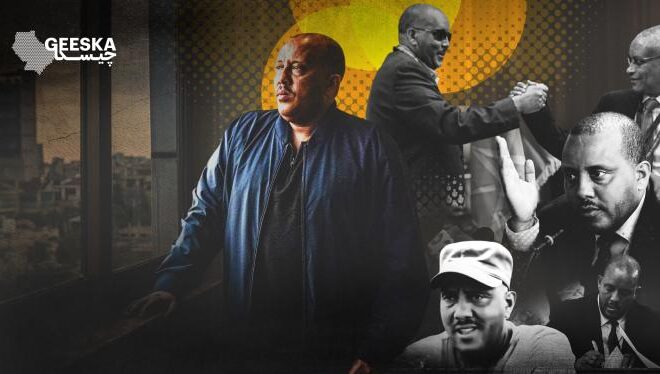
Getachew Reda @Geeska
In the aftermath of one of Ethiopia’s most devastating conflicts, few figures have commanded as much attention—or controversy—as Getachew Reda. Once a quiet academic immersed in philosophy and law, he emerged as the Tigray People’s Liberation Front (TPLF)’s eloquent face during a war that reshaped the Horn of Africa. He was the one sent out to address national and international media, explaining what his organisation was doing.
From his early days debating Marxist theory in Mekelle University classrooms to leading the Tigray Interim Administration amid hunger, displacement, and fragmentation—and ultimately splitting from the TPLF—Getachew’s trajectory has mirrored the turbulence of the region he seeks to guide.
Getachew was born in June 1974, at a critical juncture in Ethiopia’s turbulent history, on the eve of the country’s military coup. By 1990, at 16-years-old, he was already making a name for himself in his hometown of Alamata, then part of Wollo Province (now Southern Tigray). Known among classmates and teachers as a voracious reader and top student—so much so that he leapt two grade levels in a single year—Getachew’s natural leadership soon drew the attention of the incoming Ethiopian People’s Revolutionary Democratic Front (EPRDF).
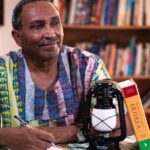
From his earliest days, Getachew Reda Kahsay distinguished himself as an avid learner. While he joined neighbourhood games and classroom lessons like any other child, his older brother recalls him disappearing into the pages of his favourite books for hours.
As EPRDF cadres swept into Alamata, they organised public seminars to reassure civilians and explain the movement’s objectives. Yet local officials grew uneasy when they discovered that a group of young people, led by this charismatic teenager, were holding unsanctioned meetings to debate current events. At one gathering, an official challenged the crowd: “Who is this Getachew?” A voice from the back stood up, applauded by the assembled youth, and declared: “He’s brilliant in school, and we follow him.” It was Getachew himself who then spoke—carefully balancing candour and caution—so as not to be labelled a dissident by the very forces claiming to bring peace. From that moment on, the once-quiet bookworm would be watched as closely as the nation’s fragile transition.
Upon reaching secondary school, Getachew didn’t stop at the prescribed curriculum. He delved into the classic texts of English literature and the expansive works of Karl Marx, Vladimir Lenin, and other towering intellectuals—sometimes tackling multi-volume sets that spanned years of scholarship.
Friends and family still find Getachew encircled by towering stacks of books. His reading list ranges from philosophy and politics to economics and global history, often extending well beyond his immediate field. As his younger brother, Dr Molla Reda, recounts, there was the night Getachew became so absorbed in a text that he read straight through until dawn.
In 1993, Getachew Reda enrolled at the School of Law at Addis Ababa University, where he earned his first law degree. After graduating, he returned to Tigray and joined the Business College in Mekelle, where he began his academic career as a lecturer. Eager to deepen his legal expertise, Getachew later travelled to the United States, enrolling at the University of Alabama to pursue a master’s degree in law. His time abroad would further shape his legal thinking and broaden his engagement with international legal and political discourse.
Muluwerk Kidane Mariam, a close friend of Getachew Reda during their time at Mekelle University, vividly recalls their first encounter at the Business College café. Getachew, then a fresh graduate and newly appointed lecturer, was seated alone, deeply engrossed in a book by Albert Camus. Curious—and somewhat sceptical—Muluwerk approached and asked, half-teasing, “Do you understand what you’re reading?”
At university, Getachew Reda’s lectures drew such acclaim that students from unrelated departments would often sit in, eager to hear him speak.
Without missing a beat, Getachew replied calmly that he did, listing several other works by Camus he had already read. Muluwerk admits he felt a twinge of embarrassment for having underestimated him. That brief exchange sparked a friendship rooted in mutual respect and a shared love of literature and ideas—one that would continue to thrive whenever they met.
At university, Getachew Reda’s lectures drew such acclaim that students from unrelated departments would often sit in, eager to hear him speak. His reputation as a compelling and thought-provoking lecturer quickly spread across campus. However, his lack of discipline and absence from key events—including examinations—was blamed on excessive drinking and ultimately led to his expulsion from the university. “He speaks his mind,” Muluwerk said. “He doesn’t shy away from criticism and has an exceptional memory.”
The two were at the college during the Badme border war between Ethiopia and Eritrea. Like many of their peers, both supported the Ethiopian government’s position. But Muluwerk vividly remembers a conversation that left a lasting impression. “Getachew told me, ‘If you’re like the Shabia [EPLF] government, you can get away with anything—you ignite a war, commit atrocities, and no one holds you accountable.’” Muluwerk underscored the point by invoking a line from Paulo Freire: “To be like is to be right, and to be right is to be like the oppressor.” He still holds similar views.
Getachew Reda’s ascent within the TPLF and the broader EPRDF political establishment was nothing short of meteoric—matched only by the swiftness of his later fall from favour. He did not pass through the rigorous processes of criticism and self-criticism. Unlike many senior TPLF figures, Getachew did not participate in the armed struggle that brought the party to power in 1991. Instead, his entry into politics came through academia.
In a recent interview with Ethiopia’s state-affiliated Fana TV, Getachew recalled that he became involved in organised politics while teaching at Mekelle University, at a time when many intellectual currents on campus aligned with the dominant party’s worldview.
Upon signing the TPLF membership form, he bypassed the usual grassroots process and was welcomed directly into the party’s upper leadership. He underwent senior-level political training and, within a year, was elected to the TPLF Central Committee.
Getachew Reda’s entry into government service began modestly around 2007, when he was hired part-time to edit the foreign ministry’s internal bulletin, Horn Week, a weekly publication overseen by senior diplomat Dr Tekeda Alemu. At the time, Getachew was not yet a member of the EPRDF’s Primary Organisation within the ministry—an internal party structure typically required for career advancement.
Despite this, his rise was swift and unconventional. Upon signing the TPLF membership form, he bypassed the usual grassroots process and was welcomed directly into the party’s upper leadership. He underwent senior-level political training and, within a year, was elected to the TPLF Central Committee. Less than 18 months later, he was elevated to the Politburo—an ascent that drew quiet resentment from some in the party’s old guard. Former TPLF members have claimed in private conversations that they were the ones who nominated Getachew for party membership.
His political trajectory accelerated further under Hailemariam Desalegn, who initially brought him on as an adviser during his tenure as foreign minister. Following the death of Meles Zenawi, the late former prime minister in 2012, Desalegn, now at the helm, appointed Getachew as a communications adviser in the prime minister’s office. He was later named Minister of Government Communications Affairs, succeeding Bereket Simon—a post he held until November 2016.
Within the TPLF, he emerged as one of its leading strategists and served as the party’s chief spokesperson during the Tigray War from 2020 to 2024.
As minister, Getachew became the government’s chief spokesperson during a period of rapid economic growth, which was shadowed by intensifying public unrest—particularly among the Amhara and Oromo communities. Known for his sharp rhetoric and command of the media, he gained a dual reputation as both a skilled communicator and an unapologetic defender of the ruling coalition’s hardline responses to protest movements. Despite his prominence, Getachew remained a controversial figure within political circles.
After stepping down in 2016, Getachew returned to Tigray, assuming a senior advisory role to regional president Debretsion Gebremichael. Within the TPLF, he emerged as one of its leading strategists and served as the party’s chief spokesperson during the Tigray War from 2020 to 2024. He was adept at exposing supporters of the Abiy regime who vented their anger at the TPLF. Known for his fluency in Tigrinya, Amharic, and English, Getachew challenged anti-Tigray narratives with precision, poise, and strategic clarity.
The Pretoria Agreement changed all that. Getachew found himself negotiating on behalf of the TPLF with Abiy’s government, where—in talks with Redwan Hussein—he struck a deal that ended the war. By March 2023, Getachew was appointed by the Ethiopian government as the interim leader in Mekelle. Although he was meant to be the person the TPLF placed in that position, his loyalties effectively shifted. He became closer to Addis Ababa than to his former comrades in the TPLF. This eventually turned into open confrontation with
In a striking and controversial interview, Getachew Reda pulled back the curtain on the inner workings of the TPLF during the fraught final stages of the war and the subsequent peace negotiations with Ethiopia’s federal government. Breaking from the party’s usual silence on internal affairs, Getachew levelled serious accusations against what he described as a “criminal network” operating within the TPLF’s upper ranks, implicating several senior leaders and military generals.