
Ghana’s Northern Sovereignty Gap: JNIM and the Burkinabe Border
In May 2024, Ghana’s former Ambassador to Burkina Faso, Boniface Gambila, offered a candid description of what happens along Ghana’s 602-kilometer border with its northern neighbor: ‘Believe it or not, they are able to come into Ghana and go back. They move in and go back.’ He was talking about operatives of the Group for Support of Islam and Muslims (JNIM), al-Qaeda’s Sahelian affiliate, which has spent years waging war in Mali, Burkina Faso, and Niger while establishing a logistics and support network that spans both sides of the Ghanaian-Burkinabe border. A senior Ghanaian security official, interviewed in 2024, explained the state’s posture toward this arrangement with equal frankness: the threat of an attack by JNIM ‘is why we don’t disturb them too much.’
These statements describe a form of what has been called a sovereignty gap, the distance between a state’s authority and its capacity. Ghana’s case reflects a distinctive variant. Ghana’s choice not to contest JNIM likely reflects officials’ lack of confidence in the outcome, but it may also reflect concerns that confrontation would destabilise northern regions where national elections are competitive enough that small shifts in local allegiance can determine outcomes. The gap that results isn’t between the state’s authority and its capacity, but between its authority and its willingness to exercise it.
Sovereignty withheld
Security analyst Kwesi Aning observed in a 2025 iWatch Africa report that Ghana hasn’t invested in its borders since the 1950s, and the conditions at the boundary with Burkina Faso bear this out. At the Hamile border post in the Upper West Region, immigration officers said that during the dry season, ‘every route becomes a potential crossing.’ ‘Some people just pass through. We can’t track them, we don’t even see them,’ one said. Surveillance systems are inadequate, and officers lack even basic tools to control movement. Ghana’s sovereignty gap along the Burkinabe border is a territorial condition, observable in the physical absence of the state from a space it formally governs. A 2026 study found that proximity to the Burkina Faso border significantly lowers civilian trust in the military while increasing trust in traditional authorities and community defense groups, confirming that the state’s absence is shaping who borderlanders turn to for security.
JNIM has organized itself around this absence. The borderlands function as connective tissue between JNIM’s war in Burkina Faso and the Ghanaian communities that economically sustain it. Stolen Burkinabe cattle flow south into Ghanaian markets, where militants sell livestock seized as forced ‘zakat’ payments through intermediaries at a fraction of market price. Weapons move in both directions: high-caliber arms from JNIM’s Burkinabe arsenals have fed the Bawku conflict with JNIM accused of selling to both factions, while commercial explosives from Ghana’s mining sector have been traced to JNIM- controlled sites in Burkina Faso and Mali. JNIM fighters also use northern Ghana as a logistical staging ground and medical base, crossing freely and routinely. Analysts have concluded that JNIM’s restraint toward Ghana appears calculated, as the group avoids disrupting supply chains it depends on. Where the Ghanaian state sees a peripheral frontier, JNIM sees space for its operations.
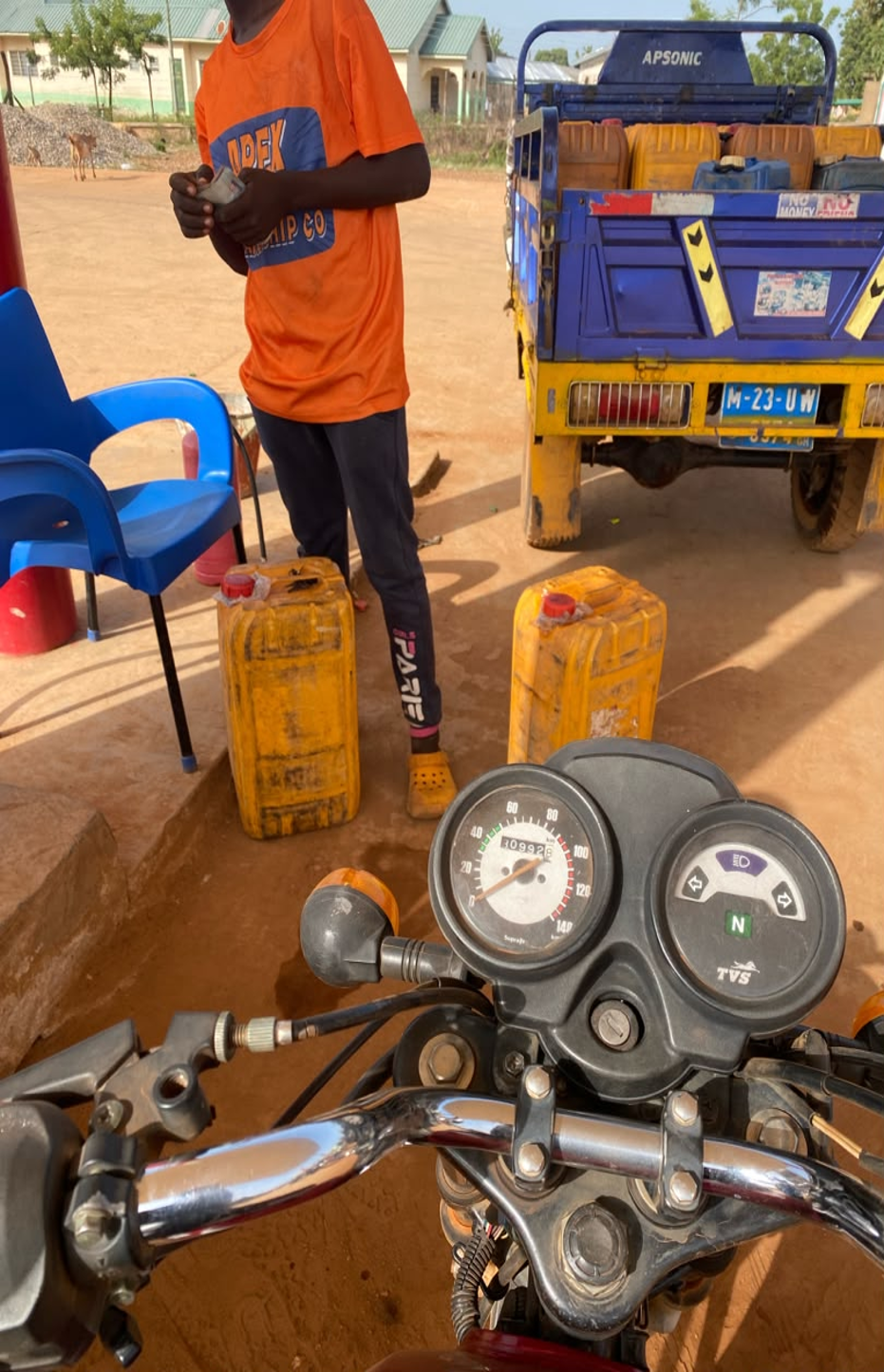
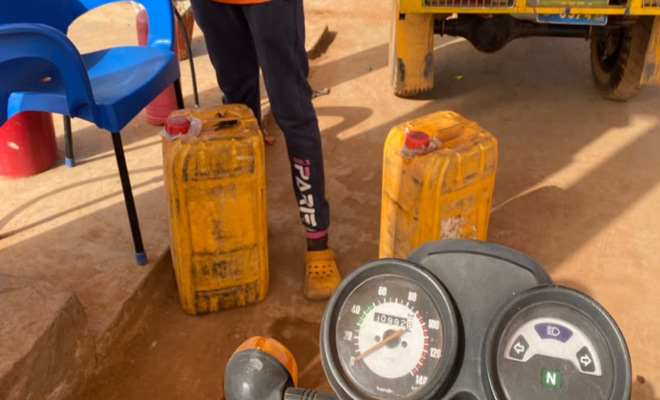
Informal fuel traders on the Ghana-Burkina Faso border. Author’s photo during fieldwork.
Ghanaian officials’ concerns about provoking an attack reflect an awareness that contesting JNIM’s use of the border zone could transform northern Ghana from a rear base into a front line. Ghana’s competitive two-party system amplifies this caution as both major parties, the currently ruling center-left National Democratic Congress (NDC) and the center-right New Patriotic Party (NPP), have strong reasons to avoid the disruption that a confrontation with JNIM would impose on electorally marginal northern communities whose votes they court.
Local consequences for borderlanders
Clingendael’s 2024 report identified three JNIM katibats, or operational units, within Ghana and tallied 40 suspected incidents inside the country since 2022, mostly nonviolent: movements of forces, procurement of arms and supplies, rest and recuperation, and recruitment. JNIM isn’t conducting operations against Ghanaian security forces but is sustaining its operations against other states through Ghana. Their presence has, however, worsened local conflicts. In Bawku, a town in the Upper East Region near the Burkinabe border, a long-running chieftaincy and land dispute between ethnic groups has killed hundreds and displaced thousands since 2021. Automatic rifles have replaced machetes and locally manufactured firearms, and a 2024 report confirmed Burkinabe fighters crossing south to participate. There is no consistent evidence that JNIM has picked a side in the Bawku conflict, but locals have become enmeshed in the same cross-border arms flows and smuggling networks that JNIM uses. Ghana’s decision not to disrupt those networks carries domestic consequences, as the violence that the state chose not to confront at the border now feeds conflicts within its territory.
A first-person account provided to the authors puts these dynamics at the ground level. In early 2025, a Ghanaian traveler was abducted by JNIM-affiliated militants in Burkina Faso’s Boulgou Province, less than 20 kilometers from the border town of Kulungugu. Burkinabe captives were killed immediately, but he survived because militants found a photograph of his Ghana national identity card on his phone and verified his nationality. During an interrogation, a militant asked him about the Bawku conflict by name: ‘So it’s you people who are fighting in Ghana right?’ The captive, who was from Bawku, understood that naming an ethnic identity associated with the Burkinabe military could get him killed. He lied about his ethnicity to survive.
Why the gap persists
Ghana’s sovereignty gap expands and contracts with the rhythm of the country’s electoral cycle. During campaign season, the state does extend into northern communities in a way that highlights its typical absence. Politicians travel to border districts, goods flow to frontier communities, youth groups are activated, and rallies are organised, bringing a physical presence of the state to places it otherwise neglects. But between elections, this presence withdraws. Ghana’s borderlands aren’t ungoverned: the state maintains military and police presence, conducts periodic operations, and retains formal jurisdiction. But governance is intermittent rather than sustained, and the periods between election cycles are when the sovereignty gap is widest.
The state’s intermittent engagement may inadvertently widen this gap, because the form that engagement takes is partisan competition rather than routine governance. The NPP government’s 2019 decision to create the North East Region out of the existing Northern Region redrew administrative boundaries in a way that reignited frozen chieftaincy disputes. In several northern towns district-level officials have intervened in communal disputes on behalf of their party’s preferred candidates, creating losers who are now seeking support in the current ruling party to relitigate their claims under the past government.
When the electoral cycle ends and political attention retreats, it leaves behind a territorial residue: unresolved communal disputes, vigilante groups experienced in organised violence but newly disconnected from their patrons, and Fulbe communities that were courted for their votes but whose grievances around statelessness and anti-Fulbe mob violence remain unaddressed. Clingendael found that in the short term, the density of partisan networks in northern constituencies actually frustrates JNIM’s ability to build local alliances, because communities are so thoroughly claimed by competing political entrepreneurs that an outsider would struggle to gain a foothold. But this resilience is an artifact of campaign season and may dissipate when politicians withdraw, leaving communities more fractured and more exposed to JNIM’s presence.
Ghana’s sovereignty gap reproduces itself because its political system generates visible gestures of authority without the sustained territorial presence that would alter conditions along the border. The distinction between performative and material sovereignty defines the gap, and it raises the question of whether a recent round of border agreements with Burkina Faso represents a departure from this pattern or another iteration of it.
New diplomacy across the gap
The February 2026 reactivation of the Permanent Joint Commission for Cooperation (PJCC) between Ghana and Burkina Faso is the most substantive institutional response to the sovereignty gap to date. Dormant for six years, the session produced seven bilateral agreements covering transport, cross-border cooperation, border authority consultations, boundary reaffirmation, disaster management, and counter-narcotics. The process began in September 2025, well before eight Ghanaians died in a February 2026 JNIM attack in Burkina Faso, and the scope of the seven agreements reaches into operational domains that would require Ghana to maintain a more sustained official presence at the border. Ghana has also announced plans to build military bases along the border, and recently conducted counter-terrorism exercises in the border zone, though these remain time-limited events rather than sustained deployments.
Whether any of this alters the sovereignty gap depends on whether it changes conditions on the ground. Transit protocols and drivers’ license reciprocity are useful administrative tools, but none requires Ghana to alter its posture toward JNIM. What sovereignty actually looks like in the border zone today is visible along the Bolgatanga-Bawku-Pulmakom corridor, where commercial traffic now requires military escort. In June 2025, President John Mahama ordered the military to guarantee safe passage along the route after a series of attacks on vehicles. Sovereignty along this corridor has been reduced to armed accompaniment on the road itself, with the territory on either side effectively outside the state’s control.
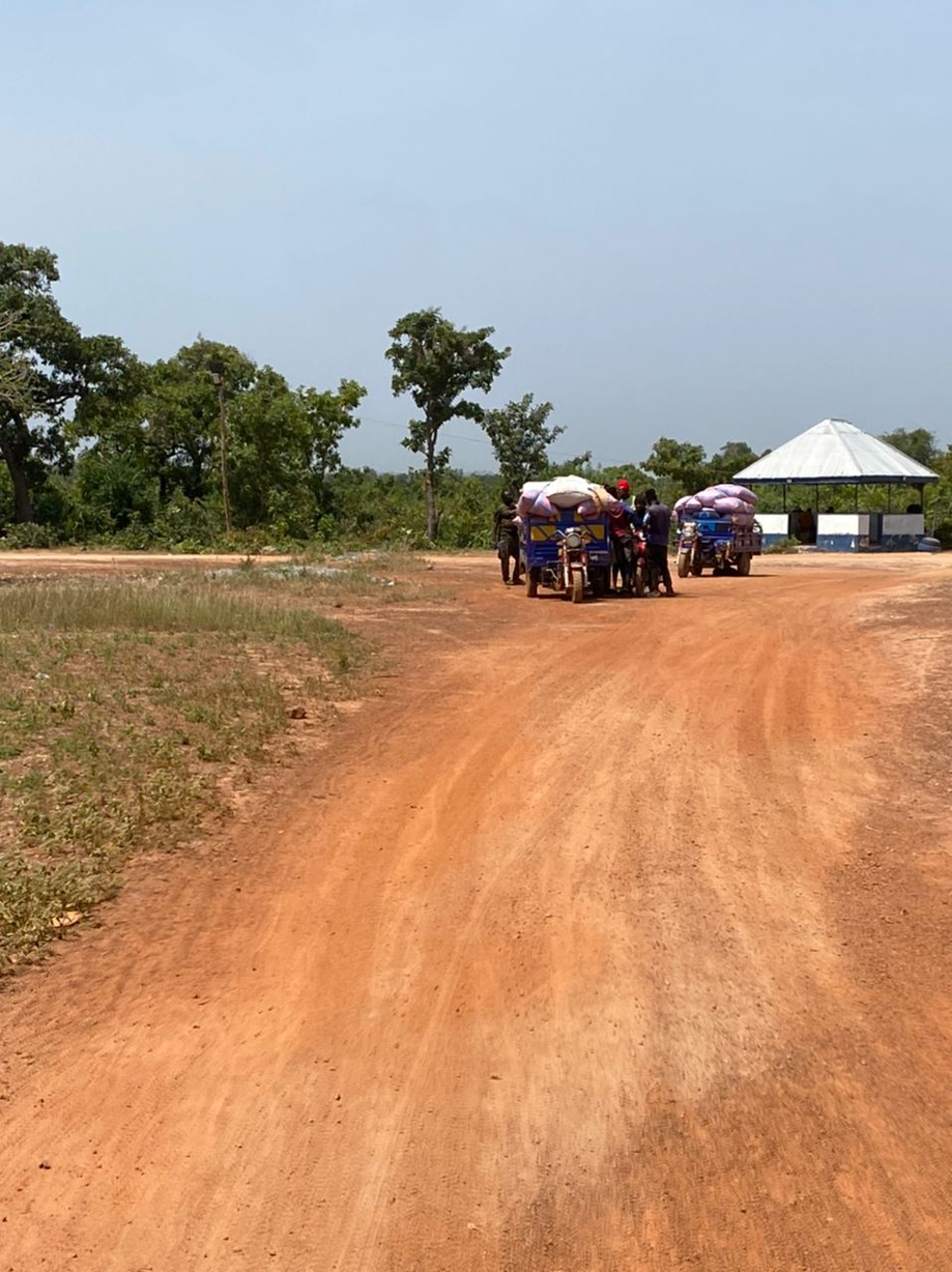
Motorised tricycles carrying goods arrive at a border checkpoint in Ghana’s Upper West region. Author’s photo.
Ghana’s durable gap
Ghana’s sovereignty gap is a geographic phenomenon produced by the intersection of an armed group’s territorial strategy and a state’s political dynamics. JNIM treats the Ghana-Burkina borderlands as a single operational space and has built logistics, intelligence, and economic networks that function across it. Ghana has declined to contest this arrangement, partly because JNIM maintains a credible deterrent and partly because the domestic political system raises the costs of confrontation in the very places where it would have to occur. The gap is the product of a political system interacting with a security environment that its own structure prevents it from addressing.
Ghana’s sovereignty gap will close when the state’s presence at the border becomes as durable as JNIM’s. Unfortunately for the borderlanders, nothing so far suggests that moment is near.


