Somalia: The Journalists Who Disappeared
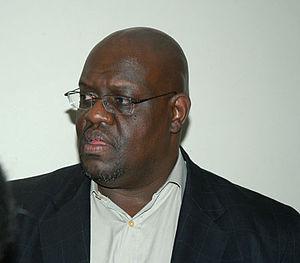
In October 2022, Abdalle Ahmed Mumin — Secretary-General of the Somali Journalists Syndicate (SJS), the organisation that documents what happens to journalists in Somalia — arrived at Aden Adde International Airport in Mogadishu carrying a ticket to Nairobi. He was travelling to seek medical care for injuries he had sustained during a previous detention.
He did not make his flight. According to documentation by the SJS and the Committee to Protect Journalists (CPJ), NISA officers detained him at the departure gate without a warrant, without stated charges, and without notifying his family or his organisation of where he was being taken. His apparent offence: he had issued a press statement ten days earlier expressing concern that a new government media directive was worded so broadly it would suppress legitimate journalism — and he had refused to retract it.
This was his first arrest. He was released, then arrested again when he attempted to travel for medical care. In February 2023, according to the SJS and RFK Human Rights, NISA officers detained him a third time. In his own public statements, as documented by the CPJ, he has said officers told him they would kill him if he resisted. According to the SJS and his own public account, he was held for thirty-three days and subjected to treatment that he has publicly described as torture. He was eventually released. Days later, as recounted by the SJS and IPI, a court order froze the SJS bank accounts, but no NISA officer involved in any of the three detentions was investigated, disciplined, or prosecuted.
Abdalle Ahmed Mumin returned to his desk.
“If I stop, they have won. If enough of us stop, there is no press left.”
— Abdalle Ahmed Mumin, Secretary-General, Somali Journalists Syndicate
That return — that refusal to stop — captures something about Somalia’s press freedom crisis that the international community is not fully seeing. The dominant narrative focuses on the journalists killed: seventy-three since the civil war began, according to the CPJ, with not one killing producing a conviction, according to CPJ records. That story is real and must be told. But alongside it, and increasingly supplanting it, runs a different and in some ways more calculated story: Somalia’s security apparatus has learned that arresting journalists is cheap, quiet, and equally effective.
Between 2007 and 2013, Al-Shabaab’s campaign against Somalia’s press was built on murder. Eighteen journalists were killed in 2012 alone — the highest single-year figure recorded in any country since. The killings generated international condemnation, press freedom resources, and diplomatic pressure. They were visible. Visibility, as those responsible eventually discovered, has costs.
The arrest figures tell the rest of the story. The SJS documented six journalist arrests by state security forces in 2015. By 2019, that figure had reached thirty-eight — a record, with thirty-seven journalists also beaten or threatened at gunpoint that year, predominantly by state forces rather than Al-Shabaab, according to the SJS. Between March and May 2025, the SJS and CPJ documented forty-one journalists arrested, assaulted, or harassed in sixty days. The International Press Institute (IPI) documented at least eighteen press freedom violations in Somalia in the second half of 2025 — among the highest totals recorded on the continent that period.
An overnight detention rarely makes international news. Confiscating footage, forcing a retraction, or freezing an organisation’s bank accounts achieves the same silencing effect as a death threat — at a fraction of the diplomatic cost. The journalist is silenced. The world does not notice. The officer who conducted the arrest faces no consequence.
How it works
Working as a human rights practitioner based in Mogadishu, I have observed alongside how detention is used as press suppression in Somalia, as has also been documented extensively by the SJS, the CPJ, and the US State Department. The patterns are consistent: arrest after publication to punish specific reporting; detention as leverage to force retraction; prolonged incommunicado holds designed to extract sources; newsroom raids to seize footage; and, most devastatingly, the targeting of the organizations that support journalists rather than only the journalists themselves.
The Abdalle Mumin case illustrates the last of these most clearly. According to the SJS and RFK Human Rights, his three documented detentions were followed by the court-ordered freezing of the SJS bank accounts. According to the IPI, this represented a coordinated effort against Somalia’s primary press freedom organization: the personal detention of its leader combined with the targeting of its finances. According to all three organizations, no investigation was initiated into any of it.
In April 2024, according to the CPJ, NISA arrested independent journalist Hussein Abdulle Ahmed within days of him publishing an investigation into the dismissal of NISA officials and a second report about an abandoned well allegedly used by security forces as a mass grave. According to the CPJ, he was held for approximately twenty-four hours without charge and released. The message was legible without anyone having to say it aloud.
The silence the numbers cannot capture
The most significant consequence of systematic arbitrary detention is one that no monitoring organisation can fully document: self-censorship. For every journalist arrested and released, colleagues see what happened and they recalibrated. The investigation not pursued. The source not contacted. The paragraph that mattered most, removed from the final report. These absences do not appear on any press freedom index. They disappear in silence — and in this context, silence is not absence. It is a product.
Somalia cannot build accountability without a press capable of independently documenting what its government does. A citizenry without accurate, independent information about the decisions being made in its name cannot hold its decision-makers responsible. The suppression of journalism is therefore not only a violation of journalists’ rights under Article 19 of Somalia’s own constitution. It is a violation of every Somali citizen’s right to know, under Article 18 of that same document.
The law and its absence
Somalia’s Provisional Constitution guarantees freedom of the press. In practice, according to multiple independent monitoring organizations, it is not enforced. Human Rights Watch, in its 2023 analysis of the NISA Act, documented that the law grants the agency sweeping powers of arrest, detention, and surveillance with what HRW characterized as minimal independent oversight, and that its broad wording risks being used to suppress the political opposition and media. The US State Department has documented across multiple annual reports what it characterises as a strong and widespread culture of impunity within Somalia’s security forces. According to available records, no security force officer has been prosecuted for the illegal detention of a journalist across the entire period documented in this article.
What must change
Three specific actions are required. First, Somalia’s Attorney General should initiate criminal investigations into the most serious documented cases — beginning with the three detentions of Abdalle Ahmed Mumin — to establish that the arbitrary detention of journalists in Somalia does carry legal consequences. Second, the Somali Parliament should enact a dedicated Press Freedom Law explicitly prohibiting arrest on the basis of published content and requiring judicial authorisation for any journalist detention exceeding twenty-four hours. Finally, International partners who fund Somalia’s security sector — including NISA — must make documented progress on press freedom benchmarks a formal condition of that funding: continued support without accountability requirements carries its own share of responsibility for the silencing that follows.
The journalists who did not stop
According to documentation by the SJS, CPJ, IPI, Human Rights Watch, and the US State Department, more than 200 journalists were arbitrarily arrested or detained in Somalia by government security forces between 2019 and 2026. In that same period, according to the same organizations, not one security force officer was prosecuted for illegally detaining a journalist.
Abdalle Ahmed Mumin was detained three times in thirteen months, held for thirty-three days, and subjected to treatment he has publicly described as torture, while, according to the IPI and SJS, the organisation he leads was targeted financially. According to the IPI and SJS, no one was held accountable for any of it. He continues to serve as Secretary-General of the Somali Journalists Syndicate. He continues to document.
Somalia’s constitution promises its citizens a free press. Its journalists are doing everything in their power — at costs that should not be required of them — to be that press. The gap between the constitutional promise and the documented reality is measured in arrests, deleted footage, frozen bank accounts, and thirty-three days in a NISA detention facility for the act of issuing a press statement. That gap is a political choice. The question is whether Somalia’s government, its parliament, and its international partners will finally take seriously what those journalists are risking their lives to document.
Further reading, sources, and cases:
Somali Journalists Syndicate (SJS) — Annual Press Freedom Report 2022: State of Press Freedom in Somalia
Committee to Protect Journalists — Somalia journalist killed database
CPJ — Abdalle Mumin first arrest (October 2022)
CPJ — Abdalle Mumin third arrest (February 2023)
CPJ — 41 journalists arrested March–May 2025
CPJ — Abuja (Mohamed Abdiwahab Nur) detained incommunicado (2020)
CPJ — Abuja acquitted by military tribunal (August 2020)
Human Rights Watch — Somalia: Revamp Intelligence Agency Bill (NISA Act, February 2023)
Human Rights Watch — World Report 2024: Somalia
US State Department — 2024 Country Report on Human Rights Practices: Somalia
IPI — Somalia: IPI condemns freezing of SJS bank accounts (April 2024)
IPI — Abshir Khalif Shidane killed; 18 violations July–December 2025
IPI — Somalia escalating attacks May 2026
IPI — Africa monitoring April–June 2025
RFK Human Rights — SJS and RFK Human Rights submit UN HRC communication on Abdalle Mumin