
What young Kenyan men say when no one is watching
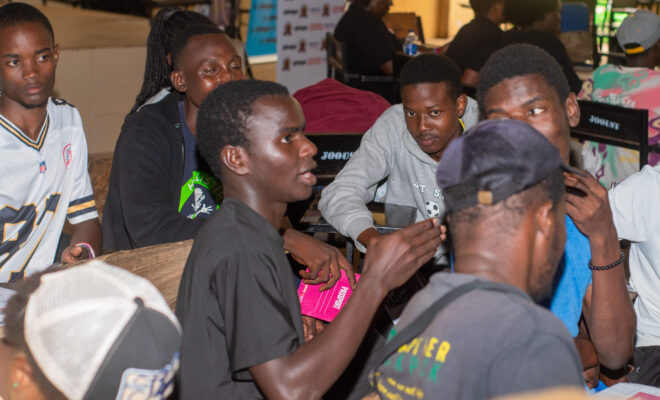
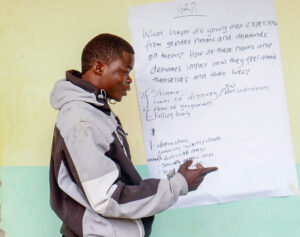
A young Kenyan man recently sent this anonymous message to a chatbot late at night:
“Mbogi wanasema mimi si mwanaume nisipolala na huyo mama… tangu lini mtu ashajiita mwanaume kwa sababu ya kulala na wanawake?”
(“My crew tells me I’m not a man if I don’t sleep with her. Since when did sleeping with women make someone a man?”)
That single sentence may explain more about the state of masculinity in Kenya today than many formal reports ever could.
The message came through Sema na Me, an AI-enabled WhatsApp companion developed by Shujaaz Inc. that allows young people to anonymously discuss relationships, sex, mental health and identity in Sheng without fear of judgement. Designed primarily as a safe and youth-friendly support platform, it has also become something else: an unusually candid window into the emotional realities many young Kenyan men rarely express publicly.
Between 30 October 2024 and 12 June 2026, young people exchanged more than 400,000 messages with the Sema na Me WhatsApp chatbot with over 180,000 of them being about relationships, employment, mental health, identity and gender.
Our analysis draws from this anonymised platform data and qualitative conversation trends, providing an unusually large evidence base into the concerns young Kenyans voluntarily raise when they believe they are speaking in confidence. Further among users who self-reported demographic information while joining the platform, young men accounted for most of the gender-identified users, although an increasing share of users in 2026 chose not to disclose gender.
Across Kenya today, young men are navigating a rapidly changing social and economic reality with very few spaces to process what it means. Expectations around manhood remain stubbornly fixed: provide financially, suppress vulnerability, prove masculinity constantly and maintain control. Yet the economic and social conditions required to fulfil those expectations are shifting rapidly.
Many young men are struggling quietly in the gap between those two realities.
This is not simply anecdotal. Across the Sema na Me platform, conversations about employment, financial pressure, relationships and emotional wellbeing consistently rank among the most common discussion themes raised by young users. Many of these conversations reveal the same underlying tension: expectations of masculinity remain high while opportunities to fulfil them are becoming increasingly uncertain.
This tension is unfolding at a moment of wider uncertainty for young Kenyans. High unemployment, rising living costs and the social aftershocks of recent youth-led protests have intensified questions around identity, dignity and belonging. Much of that negotiation is now happening online, where algorithm-driven content increasingly shapes how young men understand power, relationships and masculinity.
This reflects a broader trend. According to the International Labour Organization, young people continue to face disproportionate challenges entering and remaining in decent work
At the same time, Kenya recorded one of its deadliest years for women in 2024, with reports of femicide and gender-based violence increasing sharply according to rights groups and media investigations. Young Kenyan men also continue to die by suicide at significantly higher rates than young women, often in silence and with little access to support. The World Health Organization has in its reports consistently highlighted that men account for a disproportionate share of suicide deaths globally.
These crises are often discussed separately. Increasingly, they should not be.
Analysis of more than 2.3 million anonymous conversations suggests these concerns are neither isolated nor rare. Anonymous youth engagement platforms such as Sema na Me provide one of the clearest windows into how young people discuss masculinity when they believe they will not be judged. The anonymity matters. Users know they are not speaking to a parent, teacher, politician or religious authority. They are speaking into a neutral and non-judgmental space that responds in their own language and on platforms they already use daily.
As a result, conversations that might otherwise remain hidden begin to surface.
Financial pressure is one of the dominant themes emerging from the platform. Across thousands of conversations, young men repeatedly describe anxiety about unemployment, providing for families and the fear that financial insecurity makes them “less of a man.”
One young man wrote anonymously:
“Nataka kuwa father mzuri but sina kazi.”
(“I want to be a good father, but I don’t have a job.”)
Relationship dynamics and peer expectations also feature prominently. Young men frequently discuss pressure from friends to prove masculinity through sexual behaviour, emotional detachment or dominance, even when those expectations conflict with their own values.
One user admitted:
“Ukikataa kufanya vitu fulani unaambiwa wewe ni soft.”
(“If you refuse certain things, they say you’re weak.”)
Economic shifts within households are creating further tension. As more women gain financial independence, some young men are struggling to reconcile this reality with older ideas of masculinity tied almost entirely to provision and control. Social expectations have not evolved as quickly as the realities many young people are now living.
Against this backdrop, conversations increasingly reflect the influence of global online masculinity narratives. Users reference ideas, language and behaviours popularised through TikTok, YouTube, podcasts and other social platforms,suggesting that digital culture is becoming an important source of identity formation alongside family, school and community.
Many young Kenyan men are repeating scripts imported almost directly from American online culture, often without fully recognising where those ideas originate or where they can lead.
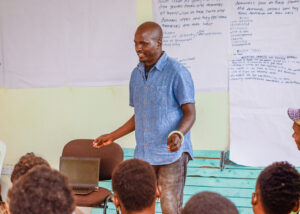
What makes this particularly dangerous is that many young men do not feel safe discussing these pressures openly. Vulnerability itself is still widely treated as weakness. Seeking help feels unmasculine. The questions, fear and confusion remain underground until they surface through violence, withdrawal, emotional collapse or online radicalisation.
This is why conversations around gender equality in Kenya must become more nuanced.
Too often, public discourse frames young men primarily as perpetrators, obstacles or problems to solve. Yet many are also navigating profound social confusion, economic anxiety and emotional isolation. Ignoring that reality does not reduce resentment. In many cases, it deepens it.
Addressing masculinity is therefore not separate from addressing gender-based violence. It is central to it.
Young people do not form their understanding of masculinity through policy papers or formal workshops alone. They absorb it through stories, peers, music, influencers, family dynamics and digital culture. If harmful narratives are spreading at scale, healthier alternatives must also exist at scale.
Importantly, the overwhelming majority of these conversations are not expressions of hostility towards women. They are questions, uncertainties and attempts to understand changing expectations around relationships, identity and adulthood. The findings suggest there is still significant space to engage young men before harmful narratives become entrenched.
This is where storytelling becomes critical.
Across Africa, entertainment and youth culture have historically shaped public understanding far more effectively than formal institutional messaging. The challenge today is not simply providing information but creating emotionally believable alternatives to the versions of masculinity currently dominating online spaces.
Some initiatives are beginning to recognise this by combining mass-media storytelling with anonymous digital safe spaces where young men can ask questions without fear of judgement. Encouragingly, many young Kenyan men are already questioning older scripts quietly. They are asking whether manhood must always be defined through dominance, sexual conquest or financial control.
The challenge is that these voices often remain private.
The task now is not to lecture young men, but to create public conversations where alternative versions of masculinity feel visible, relatable and socially legitimate. Young men need to see models of manhood that feel culturally grounded and emotionally possible within the realities they are living.
This is consistent with evidence from organisations such as Equimundo which argues that engaging boys and young men is critical to preventing violence and advancing gender equality.”
Taken together, the conversations suggest that many young men are not rejecting gender equality itself. Rather, they are trying to understand where they fit within rapidly changing social expectations. That distinction matters because interventions based solely on correction are unlikely to resonate as effectively as those that also acknowledge uncertainty, aspiration and the search for identity. Because this conversation is ultimately not about political correctness, but rather, social stability.
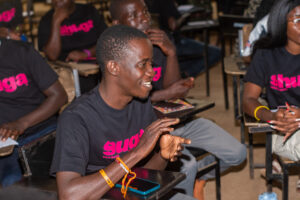
Kenya is not unique in this regard. Across many parts of Africa and globally, young men are navigating rapid cultural and economic change while online algorithms increasingly reward anger, grievance and performative masculinity.
A generation of young men is negotiating identity in real time under economic pressure, digital influence and cultural transition. What emerges from that negotiation will shape relationships, communities and public life for years to come.
Many young men in Africa are already trying to write a different story for themselves. The question is whether society is willing to hear them before louder and more destructive voices answer first.