
Malawi’s economic crisis: Can recovery begin?
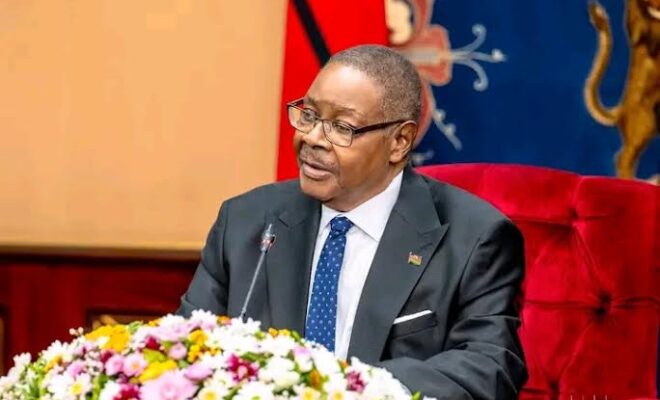
Almost nine months after Malawian President Peter Mutharika returned to power, his administration finds itself grappling with a severe and protracted economic crisis. The government faces the urgent challenge of restoring foreign exchange reserves, managing a growing external debt burden, reducing inflation and addressing chronic food insecurity.
When Malawi’s sixth president, Lazarus Chakwera, assumed office in 2020 after defeating Peter Mutharika in a court-ordered presidential election rerun, he pledged to rebuild the battered economy, create one million jobs for young people and root out systemic corruption in the civil service. His broader promises of wealth creation, entrepreneurship, good governance and food security, however, fell short of expectations.
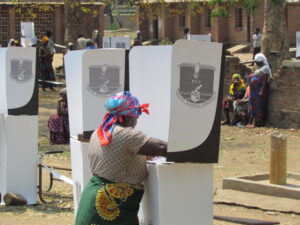
By 2025, the election year, the Tonse Alliance — a coalition of nine political parties — had effectively collapsed. Seven parties withdrew from the alliance, citing corruption, nepotism and a lack of clear policy direction within the Chakwera administration. The coalition had also been shaken by the death of Vice President Saulos Chilima in a plane crash in June 2024.
Underlying causes of economic decline
As Chakwera’s term drew to a close, critics accused his administration of indecisiveness in the face of mounting economic challenges. Procurement scandals, allegations of nepotism and elite capture were widely cited as factors that allowed corruption to flourish, undermining efforts to stimulate economic growth.
The economy also suffered significant external shocks. Global supply chain disruptions following the Russia-Ukraine war drove up the cost of imports, while successive climate-related disasters devastated agricultural production. Tropical Cyclone Freddy caused widespread flooding and mudslides that affected more than 2.2 million people in southern Malawi, compounding the country’s recovery from Tropical Storm Ana and Tropical Cyclone Gombe.
Opposition parties, led by Mutharika’s Democratic Progressive Party (DPP), together with civil society organisations, criticised the Chakwera administration for excessive government spending, rising public debt and its handling of the International Monetary Fund’s Extended Credit Facility (ECF), which lapsed in May 2025.
In a statement issued on 16 May 2025, Reserve Bank of Malawi Governor Dr McDonald Mwale said: “The Reserve Bank of Malawi acknowledges the mutual decision by the Government and IMF to allow the ECF programme to lapse. This reflects ongoing fiscal and external challenges but does not signal a shift in Malawi’s commitment to sound macroeconomic management.”
On 9 November 2023, the Reserve Bank of Malawi announced a 44 percent devaluation of the Malawi kwacha. The central bank said the move was intended to allow the exchange rate to adjust to a market-clearing level and better reflect underlying market fundamentals.
Defending the decision, former Minister of Finance Simplex Chithyola argued that the overvalued kwacha had discouraged local production.
“If people find it cheaper to import goods than to buy locally produced products and services, it is a sign that the exchange rate is misaligned,” he said. “If this had continued, the long-term consequence would have been the collapse of local production and the transformation of Malawi into a dumping ground for cheap imported goods that add little value to our economy.”
Resuscitating the ‘Sick baby’
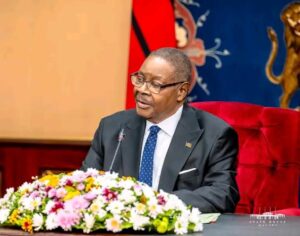
Malawi’s President Peter Mutharika
Reviving the economy will be a formidable task. The Mutharika administration hopes to stabilise the kwacha, restore reliable supplies of fuel and foreign exchange, and create employment opportunities. Progress could be strengthened if negotiations with the IMF result in a new Extended Credit Facility programme.
Talks with an IMF delegation were scheduled for 9–18 June, with the Treasury indicating that it seeks support for itsNational Economic Recovery Plan without imposing reforms that would disproportionately burden ordinary Malawians.
A new agreement following the lapse of the four-year US$175 million ECF approved in November 2023 could restore donor confidence and support macroeconomic stability.
Finance Minister Joseph Mwanamvekha told The Nation – a leading local daily – that government would only accept reforms that promote economic recovery while protecting vulnerable citizens.
“We will agree only to measures that help stabilise the economy, strengthen fiscal discipline, promote recovery, create jobs and reduce poverty. We will not endorse reforms that harm the very people we seek to uplift,” he said.
But the IMF staff team concluded a visit to Malawi on June 18, 2026, without finalizing a new ECF deal, though discussions are set to continue. While the IMF said it is ready to speed the credit programme for Malawi, its success “will depend on the country’s willingness to implement the economic reforms.”
In his State of the Nation Address to Parliament in February, titled The Path to Economic Recovery: Delivering a People-Centred Development, President Mutharika outlined his government’s strategy to stabilise the economy.
He said inflation, which stood at 28.7 percent in September 2025, was projected to fall below 21 percent in 2026, while economic growth was expected to increase from 2.7 percent to 3.8 percent in 2026 and 4.9 percent in 2027. He cited stabilising maize prices, improving fuel supplies and introducing austerity measures as early signs of recovery.
“We found inflation at 28.7 percent in September 2025 and project to reduce it to below 21 percent in 2026. We also found economic growth at 2.7 percent and expect it to rise to 3.8 percent in 2026 and 4.9 percent in 2027,” Mutharika said. “Foreign exchange reserves remain below the desired three months of import cover. My government is therefore implementing measures to boost forex generation, including reviewing foreign exchange regulations and increasing gold purchases and monetisation.”
The government has also introduced austerity measures aimed at improving public service delivery, including reducing fuel entitlements for Cabinet ministers and senior government officials and restricting both domestic and international travel.
“I thank Malawians for their understanding that we are facing an economic crisis and that difficult decisions are necessary. We expect these sacrifices to be rewarded through economic recovery,” the President said.
The administration has also announced investments in road rehabilitation, expansion of electricity generation capacity from the current 561–583 megawatts to more than 1,000 megawatts by 2030, expansion of fuel storage infrastructure and reforms in the mining sector, including the establishment of a Sovereign Wealth Fund to manage future mineral revenues.
Despite these plans, fuel shortages and foreign exchange scarcity continue to constrain economic activity. The Malawi Energy Regulatory Authority (MERA) says rising global oil prices, driven by geopolitical tensions in the Middle East, have increased Malawi’s fuel import costs. This has pushed up transport and food prices while raising fertiliser costs, posing a threat to agricultural production.
No easy path to growth
Successive administrations, including those led by the Democratic Progressive Party (DPP) and the Malawi Congress Party (MCP), have repeatedly pledged to finalise debt restructuring, curb expensive commercial borrowing, and rely more on concessional financing. They have also promised to remove restrictive foreign exchange surrender requirements and build foreign currency reserves to support imports and manufacturing. However, political commitment to implementing these difficult but necessary reforms has often fallen short.
Economists argue that restoring macroeconomic stability, empowering the private sector, and strengthening climate resilience are essential if Malawi is to achieve sustainable growth. Key priorities include enforcing fiscal discipline, expanding reliable infrastructure, and diversifying exports through the Agriculture, Tourism, Mining and Manufacturing (ATMM) strategy.
The World Bank says Malawi must not only implement reforms but also sequence them effectively to quickly ease pressures on businesses, restore investor confidence, and support exporters. By stabilising the macroeconomy, encouraging private investment, and improving productivity, the country can move onto a more resilient and inclusive growth path that creates more and better jobs, particularly for young people.
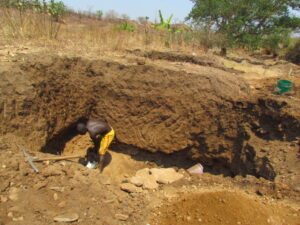
However, Malawi’s recovery efforts face an additional challenge as development partners scale back financial support. One of the country’s largest bilateral donors, the United Kingdom, has announced a 60 percent reduction in aid for the 2026/27 financial year, with further cuts planned for 2028/29, bringing the total reduction to 90 percent. Earlier, the United States government also terminated contracts worth US$230.4 million, a move expected to directly affect programmes in key sectors such as health and education.
Experts warn that these funding reductions could have serious implications for public service delivery and human development. The cuts are also likely to intensify foreign exchange shortages, putting further pressure on inflation by increasing the cost of critical imports and essential public services.
Agness Nyirongo, Economic Justice Programme Officer at the Centre for Social Concern in Lilongwe, says the donor funding cuts come at a time when Malawi is already grappling with a growing public debt burden. Successive governments have relied on both domestic and external borrowing to finance development projects and address fiscal challenges.
While borrowing can support development when managed prudently, concerns have grown over debt sustainability and the country’s ability to generate sufficient revenue to meet its repayment obligations.
“Large debt obligations reduce the fiscal space available for investments in critical sectors such as education, healthcare, agriculture and infrastructure. At the same time, debt servicing consumes resources that could otherwise support poverty reduction and economic transformation. The challenge facing Malawi is not simply the amount of debt but ensuring that borrowed resources finance productive investments capable of stimulating growth and improving citizens’ welfare,”Nyirongo says.