A Child’s Fifth Birthday Should Not Depend on a Foreign Budget
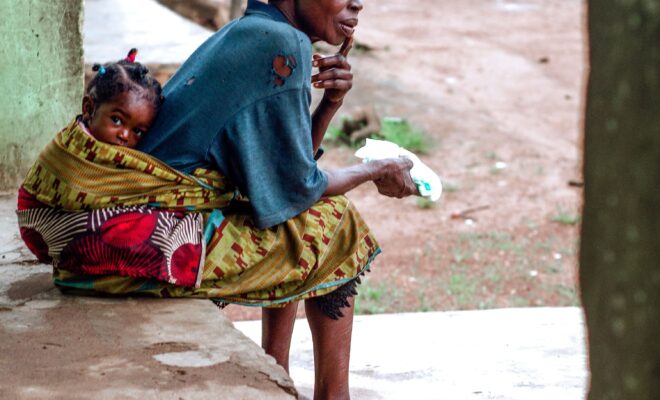
A fifth birthday should be unremarkable.
For too many African families, it is not.
An estimated 4.9 million children died before reaching the age of five in 2024, and nearly six in ten of those deaths occurred in sub-Saharan Africa. Most were preventable with interventions we already know how to deliver. In Nigeria, the latest estimate is 116 deaths per 1,000 live births, roughly one child in nine.
Judith Leveillee, UNICEF’s field chief in Nigeria, recently told The Independent that child survival will be one of two priorities in the agency’s next country programme. “These are the most basic of the basics,” she said. She also warned that short-term funding makes the slower work of strengthening systems harder.
The OECD projects that health aid could fall by 29 to 46 percent between 2024 and 2026, equivalent to $5 billion to $8 billion. Those cuts will hurt. But they also force a harder question: how did we allow a budget decision made thousands of miles away to have this much power over whether our own children live or die?
Aid cuts are exposing weaknesses in African health systems. They did not create all of them.
I have seen this problem as a physician, hospital administrator, researcher, and now through health financing and policy. The amount of money available matters enormously. But so does what happens after it is allocated.
I encountered this directly while working on immunisation financing in Niger. Even when resources had been provided for planned activities, moving them through administrative levels could take time as approvals and signatures were completed. We began designing a mechanism to shorten that path and move some resources more directly to districts and facilities, including through digital transfers.
The work is ongoing, so I will leave the results for another day. But it changed how I think about health financing. Sometimes the question is not simply whether money has been made available, but whether it reaches the point of service quickly and predictably enough to be useful.
How money moves can matter almost as much as how much is pledged.
Years earlier, as a clinician in Ghana, I saw another part of the same problem. For people outside the National Health Insurance Scheme, almost everything could become an out-of-pocket payment. Even insured patients sometimes had to buy medicines privately because what they needed was unavailable at the facility.
At the bedside, the financing terminology mattered less than the consequence. A clinician could know what a patient needed, insurance could exist, and the medicine could be available somewhere in town, yet the family still had to find the cash before care could continue.
To the parent of a sick child, the distinction between an inadequate allocation, a delayed release and a stock-out is largely irrelevant. The child still does not get the care.
Ghana’s new Free Primary Healthcare programme is an interesting test. In an analysis Banda Khalifa and I wrote for The Meridian Letters, we argued that it is best understood not as a replacement for NHIS, but as an attempt to make first contact with care earlier, easier and more reliable. It begins in 150 underserved districts and brings maternal and child health services, immunisation, screening and treatment for common conditions closer to where people live.
The difficult work starts after the announcement. Are medicines and staff available? Does screening lead to treatment and follow-up? Are resources reaching facilities and families paying less from their own pockets?
As we argued in The Meridian Letters, good reforms are not sustained by applause. They are sustained by design. Free primary care can make the front door of the health system easier to enter. It still has to lead somewhere.
That is also how I think about a Fifth Birthday Guarantee: less as a new programme than as a test of whether the financing system works.
No government can guarantee that every child will survive. But governments can identify the services most likely to keep children alive, cost them, budget for them, release the money, make sure the services reach children, and report honestly on what happened.
Cost it. Budget it. Release it. Deliver it. Report it.
The package will differ by country, but would typically include immunisation, maternal and newborn care, nutrition, malaria services where relevant, treatment for pneumonia and diarrhoea, and functioning primary care. We should see adequate allocations, reliable disbursement, verifiable improvements in children’s health, and care delivered without pushing families into catastrophic or impoverishing expenditure.
Governments could simply relabel existing spending. Donors could turn the idea into another vertical programme. Both would miss the point. Child survival should be integrated into primary health care, benefit packages, insurance arrangements and existing supply chains, without losing sight of whether children actually receive the services.
The financing answer will differ between countries. Some governments have room to prioritise health better, improve efficiency and move existing resources faster. Others face severe fiscal constraints. UNCTAD estimates that 3.4 billion people live in countries spending more on interest payments than on either health or education. Telling every country simply to “mobilise more domestic resources” does not solve that problem.
For those countries, grants and concessional finance will remain necessary, alongside debt relief and other ways of creating fiscal space. The Global Fund’s Debt2Health programme has converted close to $500 million in bilateral debt into about $330 million for health across 11 countries, showing what is possible.
Elsewhere, the central challenge is managing existing resources. There, external partners can do something more valuable than permanently financing around weak systems: help countries strengthen them.
For me, the test of good external support is what is left behind. Five years later, can the country manage more of its own financing? Are fewer families paying ruinous amounts for care? Are children healthier because of the way support was prioritised and phased?
The measure of successful aid should not be how permanently indispensable it becomes.
COVID-19 should have cured us of one illusion. When vaccines and other essential supplies became scarce, donor countries first protected their own populations. That is not an accusation. It is a fact African leaders should plan around.
International cooperation still matters. Diseases cross borders, and no country can do everything alone. But cooperation is different from dependence.
Health sovereignty, to me, is practical. It means a country can, for the most part, take responsibility for the health of its people: understand what they need, plan for it, budget for it, release the resources and make the services work. External support may still matter. But the system should not be permanently at the mercy of political change elsewhere.
An Ilaje proverb from southwestern Nigeria captures it well: “The person who has not lifted or carried it does not know how heavy it is.”
A child-health allocation can look like another expenditure competing with salaries, roads, schools and debt service. But money spent keeping children alive, healthy and able to develop is an investment in the country’s future productive capacity.
Behind every mortality statistic is somebody’s child.
A mother sitting beside a sick child in Lagos wants what any parent anywhere wants. Her child laughs, plays, annoys her, falls asleep in her arms and occupies a future in her imagination.
If that child were yours, would you accept that a vaccine existed but the money needed to deliver it never reached the facility? That treatment appeared in a national policy but was unavailable when she arrived? Or that a political decision thousands of miles away determined whether the service existed at all?
There are no other people’s children.
A fifth birthday should be unremarkable.
And whether a child reaches it should not depend on a foreign budget