African Newsrooms Can No Longer Delay Creating the Conditions for Women to Stay
When one Black South African journalist decided to leave the profession after only four years, she did not walk away because she had stopped believing in journalism: ‘I mourned because I knew I could have done so much in that space.’
Her experience is documented in a 2025 Reuters Institute fellowship paper by South African journalist Bongekile Macupe. After difficult experiences in the newsroom, including during her pregnancy, the journalist eventually decided to leave. Yet her words suggest that what disappeared with her departure was not her passion for journalism, but the possibility of what she might have contributed had the conditions allowed her to stay.
That sense of loss is part of what the Kigali Declaration on the Elimination of Gender Violence in and through Media in Africa by 2034 is trying to prevent.
Led by African Women in Media (AWiM), the Declaration calls for action across the media ecosystem; from media organisations and professional associations to journalists, journalism educators, funders, digital platforms and regulators, to address gender violence both within media institutions and through the content they produce.
Its ambition builds on a problem that has been documented for years: for many women journalists across Africa, entering a newsroom is only the first step. Staying, progressing and practising journalism without discrimination, harassment or violence can prove to be another challenge altogether.
Entering journalism is not enough
In 2020, AWiM and Fojo Media Institute published Barriers to Women Journalists in Sub-Saharan Africa based on questionnaire responses from 125 women journalists across 17 African countries, alongside interviews and focus groups. Significantly, the research did not look only at women’s ability to enter journalism. It examined barriers to entering, progressing and staying in the profession.
The women who participated had entered journalism with strong ambitions. Passion, societal good and the desire to tell overlooked stories emerged prominently among their motivations.
One Kenyan journalist explained: ‘I loved the career and still do because I wanted to inform and highlight some issues affecting people in remote communities.’
Another participant described journalism as a way of telling ‘untold stories’ capable of influencing policy and improving people’s lives. Yet the professional environments encountered by women did not always nurture those ambitions.
The AWiM study identified job stagnation and salary disparities, gendered allocation of assignments, sexual harassment, bullying, sexism and racial discrimination, family responsibilities and unequal access to leadership among the barriers affecting women’s careers.
The research also documented how gendered expectations around family life could affect retention. Women spoke about the difficulty of reconciling journalism with childcare and family responsibilities, particularly when combined with poor pay and limited opportunities for progression.
The contrast is striking: women described entering journalism because they wanted to tell stories, serve communities and create change, while the structures of the profession could eventually make remaining within it difficult.
The question, therefore, is not simply whether women can become journalists. It is whether the conditions exist for them to remain journalists.
When leaving becomes an option
Macupe’s 2025 Reuters Institute paper brings that question into sharper focus. She interviewed ten Black African women with newsroom experience ranging from one year to more than 30 years in South Africa. One of the observations that troubled her most was generational: younger journalists described experiences echoing those of women who had entered the profession decades earlier.
The women spoke about unequal access to opportunities and resources, exclusion from networks of influence and repeated challenges to their authority. One former journalist described the informal networks she saw operating around her: ‘These guys are all friends. They drink together. They party together… if a position comes up, the first person they think of is another guy. It can never be a woman.’
Another woman described the daily struggle of managing men who resisted her authority: ‘You have to assert your authority all the time. And it becomes a daily struggle. Every day you are fighting.’
For some, eventually, leaving became preferable to continuing that fight. One journalist who left after 16 years described reaching the point where she thought: ‘You know I’m actually worth more than this, I deserve better.’
These experiences suggest another way of thinking about migration: what happens when skills, experience and voices move out of a profession, even when the person herself does not cross a national border?
Macupe’s conclusion makes an important distinction. Some of the women who left, she writes, ‘did not fall out of love with journalism’. They left after becoming exhausted by constantly having to prove their worth.
This takes us back to the woman whose words opened this article. She did not describe leaving with relief. She described mourning what might have been. And the loss was not hers alone. When an experienced or promising journalist leaves, journalism potentially loses the stories, sources, knowledge and perspectives she would have brought with her.
Professional displacement and geographical migration
The departure of women from journalism raises another question for me, as a woman of African descent working in the media and living in Europe: what happens when leaving the newsroom is followed by leaving the continent?
Neither the AWiM nor the Reuters Institute research establishes a causal relationship between gender inequality in African newsrooms and women’s migration to Europe. It would therefore be wrong to suggest that these barriers drive African women journalists to migrate, or that those who move to Europe necessarily abandon journalism. But looking at the issue from this side of the migration journey opens the question whether the professional displacement documented in African journalism can be compounded by the experience of starting again in a new labour market. European data gives us reason to ask that question.
According to the European Commission, 35.1% of people born outside the EU were overqualified for their jobs in 2024, compared with 19.8% of people born in their country of residence. The Commission also found that overqualification among people born outside the EU was particularly pronounced among women. Difficulties with the recognition of foreign qualifications and language barriers are among the obstacles identified.
These figures are not about journalists, nor specifically about African women. But they reveal a broader reality confronting highly qualified migrant women in Europe: crossing a border does not necessarily mean that professional experience, qualifications and skills cross with the same value.
For an African journalist, editor or media professional arriving in Europe, another question is whether there is a newsroom on the other side of that journey. Research by the Ethical Journalism Network into structural racism in UK newsrooms adds another dimension; It has documented experiences of exclusion and racism among Black journalists, despite increased industry attention to diversity.
These findings cannot tell us what an African migrant woman journalist will experience, but they expose two documented realities that may intersect: migrant women face a heightened risk of professional overqualification, while Black journalists already encounter racial barriers within a major European media industry. What happens then when gender, race and migrant status converge in the career of an African woman trying to remain a journalist after crossing a border?
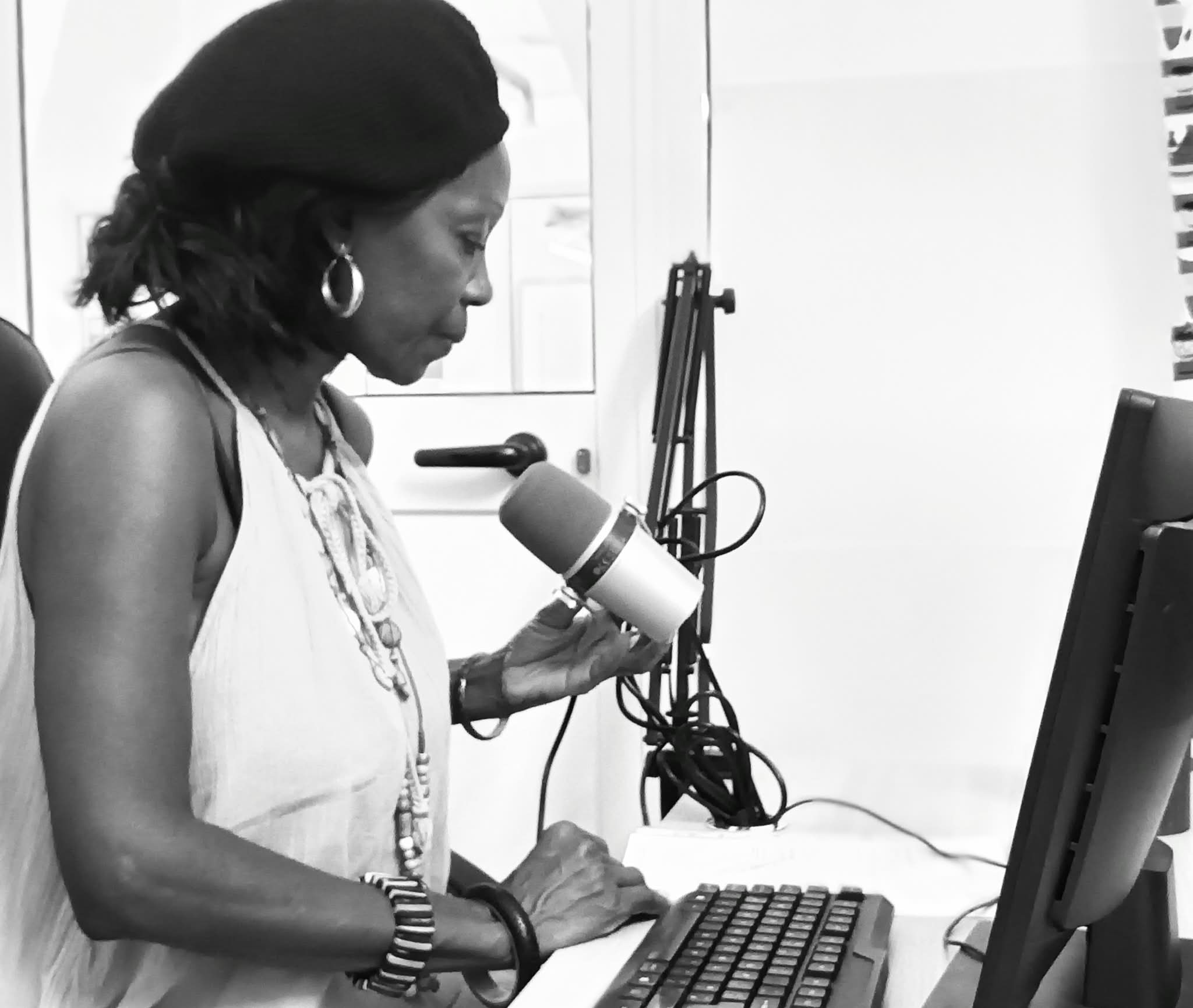
Régine Nguini is a Cameroonian-born community journalist based in Malta. She is the Director of the African Media Association Malta (AMAM)
Who gets to remain to tell the story?
That question brings the discussion back to Kigali. The importance of the Kigali Declaration lies not only in demanding safer workplaces. Its ambition raises a broader question about the journalism African media want to produce and who gets to produce it.
When women leave journalism, newsrooms potentially lose professional experience, knowledge, sources and perspectives. When migration subsequently leaves professional skills underused, that loss can extend beyond one newsroom or one country. Macupe ends her research with a remarkably simple demand on behalf of the Black African women whose experiences she documented: ‘See us.’ They are trained, talented and capable, she writes. They want to be recognised for their contribution and presence, ‘not as tokens or afterthoughts, but as important voices in the newsroom.’
The Kigali Declaration sets 2034 as its horizon for eliminating gender violence in and through African media. Achieving that ambition will require more than getting women through newsroom doors. It will require creating conditions in which they can progress, lead and, crucially, choose to stay.
Because fighting gender violence in the media also means asking who gets to remain to tell the story and which voices disappear when the conditions to stay no longer exist.