African Arguments

Top Menu

  • About Us
  • Submit
  • Contact us
  • Advertise
  • Newsletter

Main Menu

  • Home
  • Country
    • Central
      • Cameroon
      • Central African Republic
      • Chad
      • Congo-Brazzaville
      • Congo-Kinshasa
      • Equatorial Guinea
      • Gabon
    • East
      • Burundi
      • Comoros
      • Dijbouti
      • Eritrea
      • Ethiopia
      • Kenya
      • Rwanda
      • Seychelles
      • Somalia
      • South Sudan
      • Sudan
      • Tanzania
      • Uganda
    • North
      • Algeria
      • Egypt
      • Libya
      • Morocco
      • Tunisia
      • Western Sahara
    • Southern
      • Angola
      • Botswana
      • Lesotho
      • Madagascar
      • Malawi
      • Mauritius
      • Mozambique
      • Namibia
      • South Africa
      • Swaziland
      • Zambia
      • Zimbabwe
    • West
      • Benin
      • Burkina Faso
      • Cape Verde
      • Côte d’Ivoire
      • The Gambia
      • Ghana
      • Guinea
      • Guinea Bissau
      • Liberia
      • Mali
      • Mauritania
      • Niger
      • Nigeria
      • São Tomé and Príncipe
      • Senegal
      • Sierra Leone
      • Togo
  • Politics
  • Economy
  • Society
  • Culture
  • Photo
  • Books
  • Donate
  • About Us
  • Submit
  • Contact us
  • Advertise
  • Newsletter

logo

African Arguments

  • Home
  • Country
    • Central
      • Cameroon
      • Central African Republic
      • Chad
      • Congo-Brazzaville
      • Congo-Kinshasa
      • Equatorial Guinea
      • Gabon
    • East
      • Burundi
      • Comoros
      • Dijbouti
      • Eritrea
      • Ethiopia
      • Kenya
      • Rwanda
      • Seychelles
      • Somalia
      • South Sudan
      • Sudan
      • Tanzania
      • Uganda
    • North
      • Algeria
      • Egypt
      • Libya
      • Morocco
      • Tunisia
      • Western Sahara
    • Southern
      • Angola
      • Botswana
      • Lesotho
      • Madagascar
      • Malawi
      • Mauritius
      • Mozambique
      • Namibia
      • South Africa
      • Swaziland
      • Zambia
      • Zimbabwe
    • West
      • Benin
      • Burkina Faso
      • Cape Verde
      • Côte d’Ivoire
      • The Gambia
      • Ghana
      • Guinea
      • Guinea Bissau
      • Liberia
      • Mali
      • Mauritania
      • Niger
      • Nigeria
      • São Tomé and Príncipe
      • Senegal
      • Sierra Leone
      • Togo
  • Politics
  • Economy
  • Society
  • Culture
  • Photo
  • Books
  • Donate
Politics

Nigerians in Gao: was Boko Haram really active in Northern Mali? – By Jacob Zenn
By African Arguments
January 20, 2014
918
1
Share:
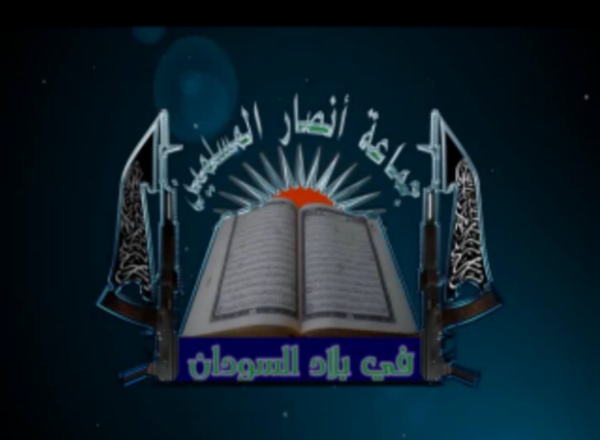
Ansaru-logo-2

The logo of Nigerian islamist group, Ansaru, which was found on a poster in Mokhtar Belmokhtar’s compund in Gao.

Around two years ago, in April 2012, curious news emerged from the city of Gao, which, along with Timbuktu and Kidal, comprised the short-lived “Islamic State of Azawad” in northern Mali. According to Agence France-Presse and other media, “dozens of Boko Haram fighters” helped al-Qaeda in the Islamic Maghreb (AQIM) and Movement for Unity and Jihad in West Africa (MUJWA) “seize” Gao. Yet, no Boko Haram militant ever claimed to be in Gao in 2012 or afterwards, no photo or video of a Boko Haram member in Gao has been released, and no Boko Haram members were captured in Gao among the dozens of other international jihadists in the city.

Was Boko Haram really there?

In my visit to Mali over this past week, I learned from Malians who were in Gao in 2012 or who fled the city and now live in Bamako that they unanimously agree that “Boko Haram” was in Gao. Upon further inquiry, when I asked “how do you know they were “˜Boko Haram’?,” it became clearer that there were Nigerians in Gao, but they did not identify publicly as “Boko Haram.” Rather, the Nigerians in Gao, like the Mauritanians, Chadians and other nationalities, fought under MUJWA, which was the governing body in the city.

This inquiry is important because if Nigerians were in Gao and we know with whom they allied and created new networks, we can better forecast their future operations. For example, in the mid-1990s, according to a journalist and former political prisoner I spoke with in Mauritania, current Ansaru leader Khalid al-Barnawi and Mokhtar Belmokhtar (aka Mr. Marlboro) smuggled cigarettes and later cocaine together. In the 2000s they became high profile kidnappers of foreigners for millions of dollars in ransom by using their knowledge of the desert and attacking the same border guards that were their enemies when they were smugglers (but they now justify their attacks with jihadist ideology).

Similarly, if Nigerians were in Gao in 2012 and early 2013 with MUJWA, we may start seeing an increase in tactics and ideologies learned in Gao in Nigeria. One example of such tactics of desert warfare is the mounting of weapons on to 4x4s, which we saw in Gao in 2012 and in Nigeria for the first time in March 2013.  In terms of ideology, MUJWA was most opposed to France, whereas Boko Haram was mostly opposed to the Nigerian government and the US, but starting in 2013 Boko Haram also began to adopt MUJWA’s enmity of France and, in February and December 2013, Boko Haram kidnapped a French family and French priest in Cameroon in revenge for the “French President’s war on Islam“ in Mali.

My thesis is that there were Nigerian militants in Gao in 2012 and that some of them were certainly members of Ansaru, some of them were likely sans affiliation to any group, and some of them may have been in Boko Haram””but most likely all three assessments are true. The analysis that follows shows the evidence of Ansaru and Boko Haram.

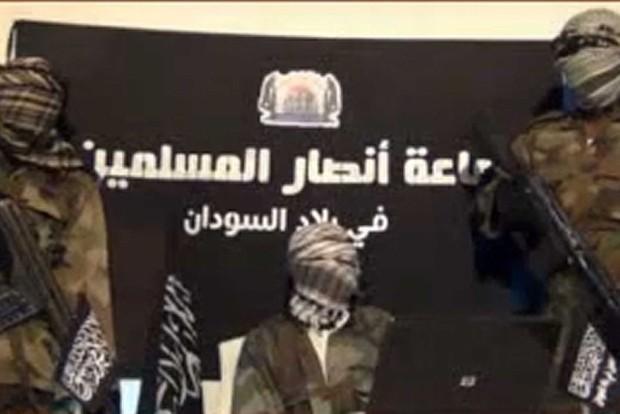
I believe the most compelling evidence of Ansaru in Gao was a poster with Ansaru’s logo that Norway-based Aftenposten found in Mokhtar Belmokhtar’s compound in Gao in February 2013. Ansaru’s first videos with the Ansaru logo started in emerging in June 2012″” could they have been filmed in Gao, where al-Barnawi and Belmokhtar met?

Another example of an Ansaru presence in Gao was the attack that Nigerians reportedly led on the Algerian consulate in Gao in April 2012. Algeria has long been the primary target of AQIM and Belmokhtar as well as MUJWA. Since Ansaru and al-Barnawi have close historical, ideological and operational ties to MUJWA, Belmokhtar and AQIM, they most likely have similar perceived grievances against Algeria. The kidnapping of the Algerian diplomats – and their execution by MUJWA in November 2012 – is also similar to Ansaru, which has expertise in kidnapping. Belmokhtar’s attack on In Anemas energy plant in Algeria in January 2013 included a Nigerian Ansaru militant, Abu Ali al-Nigeri, in the claim (30:30), which further establishes the Belmokhtar-MUJAO-Ansaru relationship.

The primary connection of Boko Haram to Gao comes only from a video released by Boko Haram leader Abubakar Shekau in November 2012. The video was unique because the version released on online jihadist forums contained an introductory narration praising the Ansaru-claimed prison break in Abuja, Nigeria’s capital, several days before the release of the video. I think it is likely that the Boko Haram produced the video, but that Ansaru’s media team released it on the forums and that in between the time Shekau filmed it and Ansaru released it on the forums the narrator had time to add praise for the attack.

This film was the first one that Boko Haram ever released on such forums and was unique because Shekau spoke Arabic (as opposed to Hausa or Kanuri, which he usually uses), was in a vast desert like in northern Mali with several armed militants, and he dedicated the statement to the “Soldiers of God in the Islamic State of Mali…our brothers and sheikhs in the Islamic Maghreb.” This video may represent one of the first examples of Ansaru and Boko Haram’s renewed cooperation more than one year after Ansaru’s “public formation“ in January 2012.

When MUJWA left Gao, according to locals I spoke with, the last thing they said was that “we’ll be back.” The locals, in return, poured a glass of beer and sarcastically toasted the departing fighters, saying “see you then.” Whether or not MUJWA returns will depend largely on whether MUJWA finds other safe havens in Africa, such as southern Libya, to train and prepare for a return. Chadian and Nigerian officials have expressed concern about Boko Haram members in southern Libya. Such reports should be closely watched by analysts because the ideological and operational trajectory of militant activities in Nigeria will likely correlate with whom Nigerian militants are interacting in Nigeria and in the region.

Jacob Zenn is an analyst of African and Eurasian Affairs for The Jamestown Foundation and is carrying out field research in Western Sahara, Mauritania, and Mali.

Previous Article

Bringing Eritrea in from the cold: we ...

Next Article

Remembering Komla Dumor – By Dele Fatunla

49
Shares
  • 0
  • +
  • 0
  • 0
  • 42
  • 7

African Arguments

Related articles More from author

  • Politics

    Ellen Johnson Sirleaf: “Leymah Gbowee is too young to know what we’ve done to reach peace and security in our ...

    October 31, 2012
    By African Arguments
  • Politics

    South Sudan’s Uncertain Future: first end Ugandan military support for Kiir – By Atieno Oduor

    February 24, 2014
    By African Arguments
  • Politics

    Revisiting the Genocide Debate

    October 15, 2007
    By Alex de Waal
  • Politics

    Zambia: saga of the President’s health continues – By Arthur Simuchoba

    October 24, 2014
    By African Arguments
  • Politics

    Congo: Kabila reshuffles his military pack – By Alex Ntung

    October 9, 2014
    By African Arguments
  • Politics

    Somalia: The Godane Coup and the Unraveling of Al-Shabaab – By Hassan M. Abukar

    July 2, 2013
    By African Arguments

1 comment

  1. Manji Cheto 24 January, 2014 at 10:09

    Jacob Zenn, I would like to congratulate you for being one of the very few commentators that attempts to really dissect the ‘Boko Haram’ narrative, and present a more complex but compelling picture of what is really going on.

    It is such a breath of fresh air and miles apart from the usual lazy and simplistic assertions about the group made by analysts, the media, and at times even by writers on this blog.

    Well done!

Leave a reply Cancel reply

  • Robert Kyagulanyi Sentamu aka Bobi Wine on the campaign trail. Credit: Bobi Wine.
    PoliticsUganda

    Uganda: 3 lessons from the Ghetto President’s by-election triumph

  • Politics

    Olara Otunnu: Democratic change is the non-violent resistance’s objective

  • Politics

    Joyce Banda: Between Saving the Economy and Winning Elections – By Jimmy Kainja

Sign up to the newsletter


Find us on Facebook

Follow us on twitter

  • 51019
    Followers
  • Editor's PicksPoliticsSomalia

    “Neutral” Somalia finds itself engulfed in Saudi Arabia-Qatar dispute

    President Farmaajo withstood significant pressure in staying out of Saudi Arabia’s feud with Qatar. But it may pay a cost for its neutrality. Six months since President Mohamed Abdullahi Mohamed ...
  • BurundiEditor's PicksPolitics

    Burundi 2020: Is President Nkurunziza already at it again?

    The government claims Burundi is safe, that political disagreements have been resolved, and that the people want term limits removed ahead of 2020. Two years since Burundi was plunged into ...
  • Congo-KinshasaEditor's PicksPolitics

    DR Congo: Opposition elites won’t save us

    Observers hope that prominent opposition figures can provide an alternative to President Kabila. But many Congolese distrust these would-be leaders. It has been a grim couple of months in the ...
  • Editor's PicksPoliticsZambia

    Zambia: Lungu attacks law body but dictatorship remains out of reach

    The well-respected Law Association of Zambia is the latest target of President Lungu’s increasing authoritarianism. Where is this heading? On 5 July, Zambia’s President Edgar Lungu added to concerns over ...
  • EastEditor's PicksPoliticsWest

    Call it a comeback: Israel’s grand “return” to Africa

    In exchange for development support, Israel wants African votes at international forums. This may prove trickier than it thinks. This June, Israel’s Prime Minister Benjamin Netanyahu broke new ground as ...

Most Read

  • Isabel Dos Santos, daughter of the president, is reportedly Africa's richest woman and heads up the state oil company Sonangol.
    Angola’s ruling family is worth billions. What happens when dad steps down?
  • Somalia's President Farmaajo with Saudi Arabia's King Salman bin Abdul Aziz during the former's visit to Riyadh this February.
    “Neutral” Somalia finds itself engulfed in Saudi Arabia-Qatar dispute
  • Libyan authorities have increasingly been interrupting rescue missions in the Mediterranean. Credit: Photo: Yara Nardi / Italian Red Cross
    Dance with the Devil: Europe finances Libyan militias to curb migration
  • Kenya election rally. Credit: Commonwealth Secretariat.
    Kenya voted for change and got it…at the local level
  • Thousands take to the streets in Togo to demand the reinstatement of the 1992 constitution.
    50 years of hurt: Togo protesters vow to continue

About

African Arguments is a pan-African platform for news analysis, comment and opinion. We seek to analyse issues facing the continent, investigate the stories that matter, and amplify a diversity of voices.

Get in touch

editor@africanarguments.org

Brought to you by


  • Cookies
  • Privacy Policy
  • Terms & Conditions
© Copyright African Arguments 2017
By continuing to browse the site you are agreeing to our use of cookies.