When a Story of Homecoming Is Filmed in a Homeland Still Awaiting Return
I am from Dakhla, on the Atlantic coast of Western Sahara. For thirteen years, I have been unable to return safely because of my human-rights advocacy, my defence of the Sahrawi people’s right to benefit from the resources of their land and to express their views freely.
Friends and fellow Sahrawi activists have been prosecuted and imprisoned, while others have been pressured into silence. My close friend the Sahrawi activitst Hassana El Wali died in custody in a military hospital in Dakhla. Dozens of Sahrawis remain in prison, including members of the Gdeim Izik group as reported by the UN Office for the High Commissioner of Human Rights (OHCHR). In Western Sahara, a political opinion can become a criminal case, and years of a person’s life can disappear behind bars.
Dakhla is not an abstract point on a map or an exotic cinematic landscape. It is my city and my home. It is also a place from which many Sahrawis have been separated by conflict, repression and an unfinished process of decolonisation.
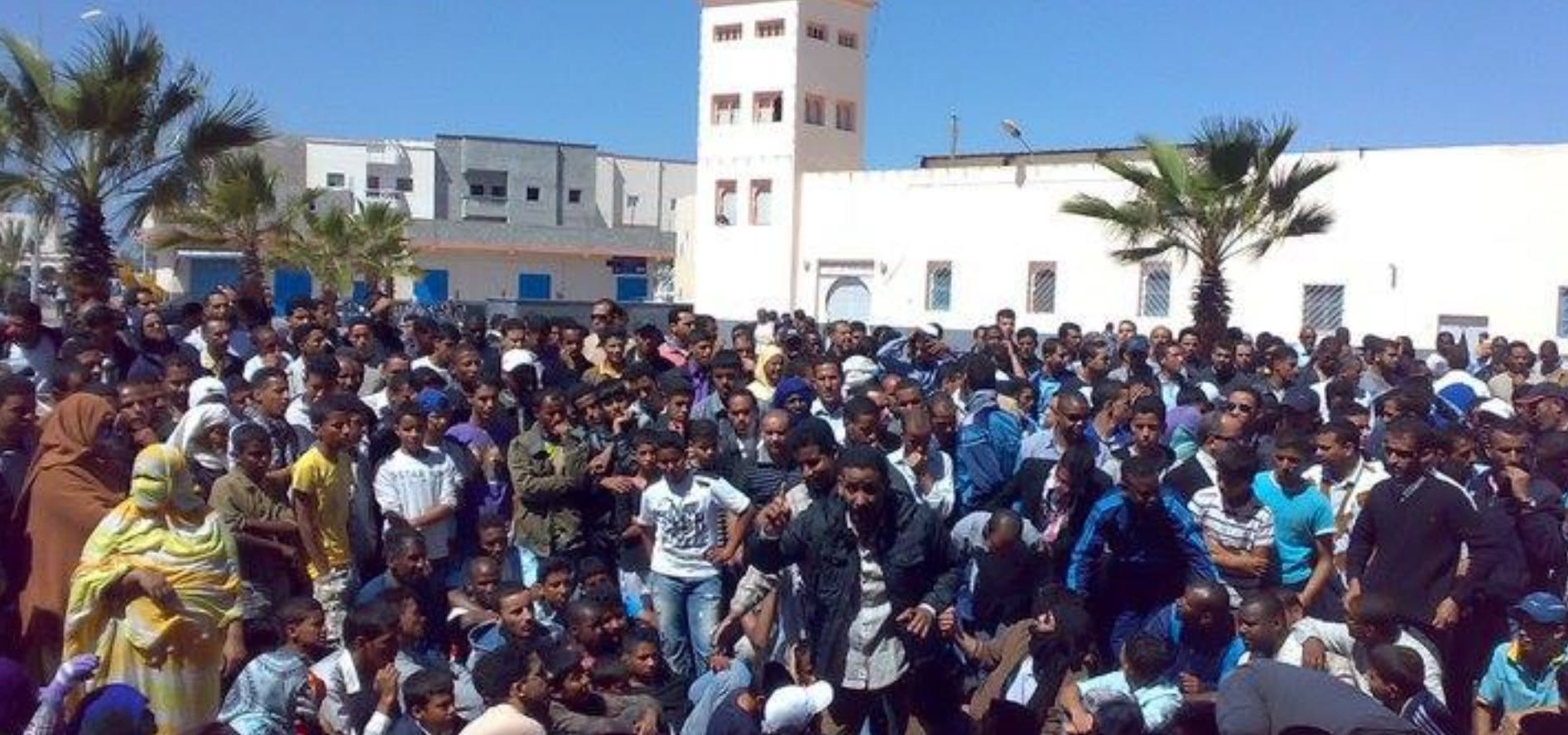
The author speaking to a Sahrawi audience in Dakhla in 2011.
That is why Christopher Nolan’s decision to film part of The Odyssey near Dakhla raises questions far beyond cinema.
Nolan’s film draws on one of Western literature’s foundational stories: Odysseus’s struggle to return to Ithaca after war, displacement and years of separation. It is a story about home, absence and the determination to recover a place central to identity.
Yet part of this retelling was filmed in Western Sahara, where a people have spent more than half a century living their own experience of exile, divided families and a return indefinitely postponed.
Odysseus is given a name, a face, a voice and a destination. His desire to return is treated as morally intelligible. The audience is invited to understand that being prevented from returning home is a wound to memory, dignity and identity.
But when Western Sahara appears on screen, the Sahrawi relationship with that land risks disappearing. The territory becomes a powerful visual setting, while the people whose history gives it political and human meaning remain outside the frame.
Western Sahara has been on the United Nations list of Non-Self-Governing Territories since 1963. Morocco controls most of the territory and describes Dakhla as part of its ‘southern provinces’. The Sahrawi people, however, retain an internationally recognised right to self-determination.
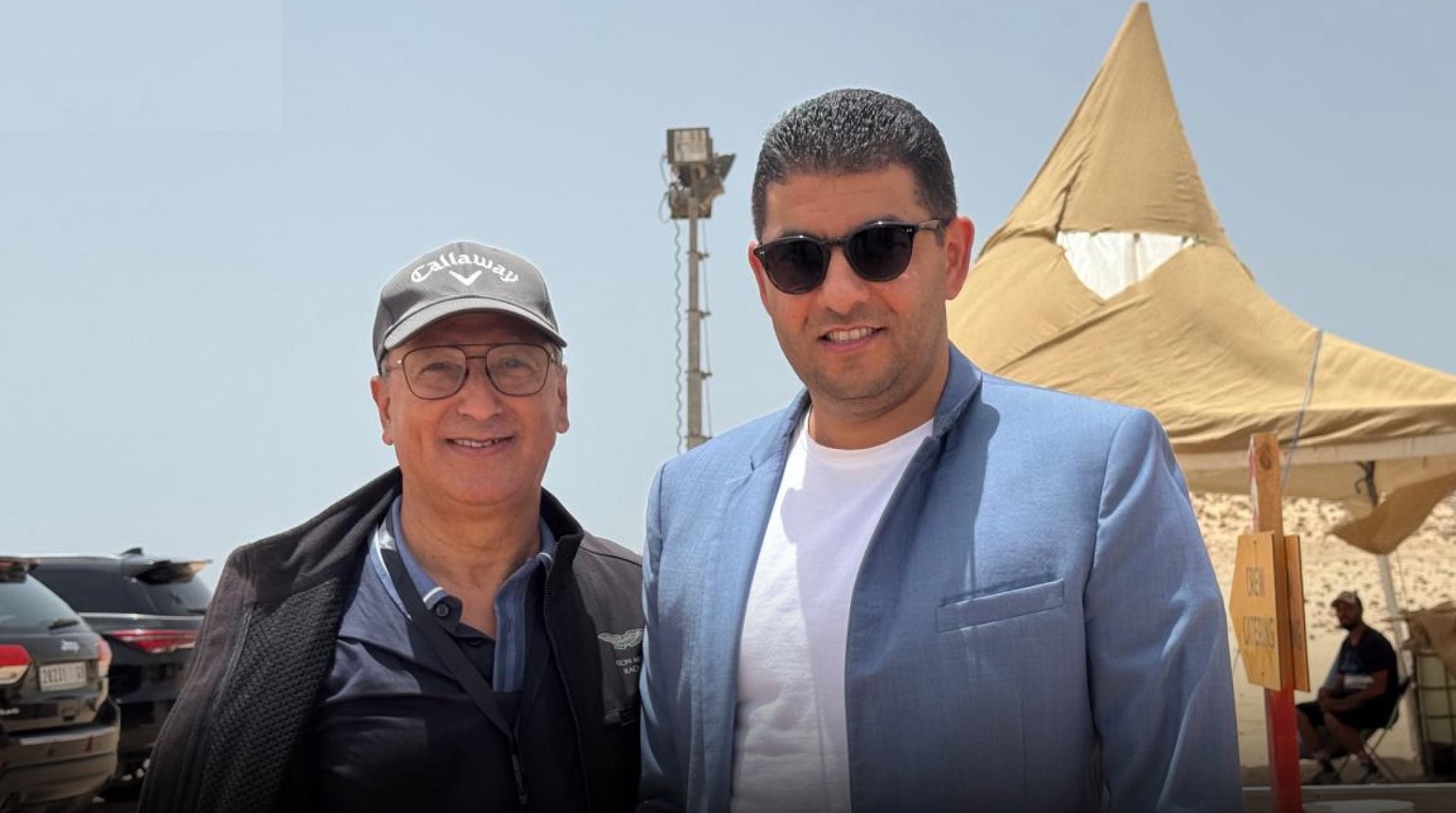
Christopher Nolan appears on Moroccan television.
In 1975, the International Court of Justice found no territorial ties of sovereignty capable of displacing self-determination through the free expression of the will of the people of Western Sahara. In October 2024, the Court of Justice of the European Union again treated Western Sahara as separate and distinct from Morocco and ruled that agreements affecting the territory required Sahrawi consent.
A film production is not governed by the same legal framework as a fisheries or trade agreement. It would therefore be unwise to declare filming near Dakhla unlawful without examining the permits, contracts and applicable law. But that distinction does not remove the production’s political, ethical and human responsibilities.
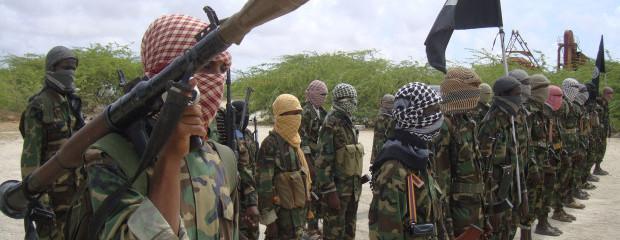
Dakhla is not an ordinary filming location in a settled territory. It lies at the heart of an unresolved conflict and within an environment where many Sahrawis live under political and security pressure. Expressing an opinion may carry the fear of surveillance, prosecution, imprisonment or retaliation.
The presence of an international production in this reality, particularly when it benefits from official facilitation by the authority controlling the territory, cannot be treated as entirely neutral. The same permits that open roads for cameras may be issued where local people do not enjoy an equal ability to tell their own story.
Administrative permission does not automatically amount to the consent of the Sahrawi people. An authority may control access to the land, but it cannot grant the right to represent a people whose political status remains unresolved. Nor can silence produced by fear or exclusion be treated as acceptance.
Films do not simply record landscapes. They shape how those landscapes are understood. They determine which place names appear, which national identity is assigned to a location, which authority is presented as legitimate and which histories remain invisible.
When Western Sahara is shown without context, the omission creates a narrative of its own. The territory appears settled, Moroccan control appears natural and the absence of Sahrawi voices suggests that no unresolved question of consent remains. This is normalisation through silence.
Criticism, however, should not end the conversation.
I invite Christopher Nolan, the film’s producers and its leading actors to respond seriously to the concerns raised by filming in Western Sahara. I also invite them to undertake an independent humanitarian visit to the Sahrawi refugee camps, where generations have lived away from their homeland for decades.
Such a visit would allow them to hear directly from families, refugees, young people and victims of human-rights violations, as well as Sahrawis inside the territory and across the diaspora.
This should not be a publicity exercise or an endorsement of a particular political solution. It should be a genuine human encounter with the people connected historically, legally and emotionally to the land used in the film.
Listening would not oblige the production to adopt one political position. But it would prevent the filmmakers from relying entirely on the narrative of the authority that facilitated filming. It would also help ensure that a production celebrating home, return and human dignity does not obscure a people demanding those same rights.
The filmmakers could turn this controversy into an ethical opportunity by acknowledging the sensitivity of the location, identifying Western Sahara accurately and creating space for Sahrawi voices. Such steps would not weaken the film. They would give it greater moral coherence.
The enduring power of The Odyssey lies in its recognition that home is not interchangeable with any other place. Ithaca matters because it is tied to Odysseus’s memory, family and identity.
Christopher Nolan and the cast and crew of The Odyssey have chosen to retell a story about the human need to return home. They are now invited to listen to a people living that story beyond the screen.