
Violence, Profit, and the Economy Sustaining Eastern Congo’s Endless War
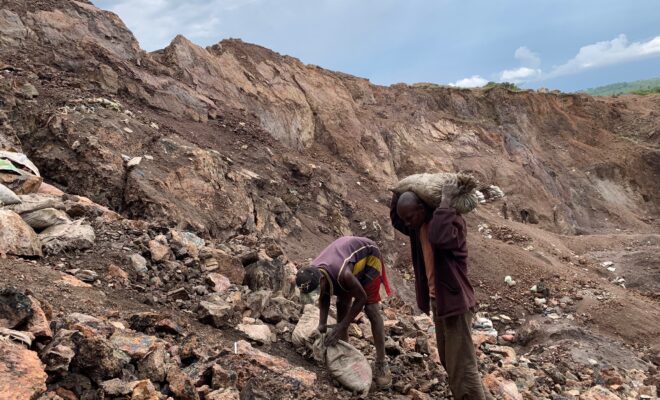
At a checkpoint between Miba and the Kachanga hill in Fizi territory, soldiers of the Congolese army wave through bicycles loaded with mineral ore, one at a time, charging fifty cents a crossing. At least four thousand bicycles pass daily, delivering at least two thousand dollars a day into the hands of men in uniform who are nominally fighting the war surrounding that checkpoint. Nothing about that transaction looks like a battle. It looks like a toll booth, and that is the point new wars theory makes about a conflict now in its fourth decade.
This framework, which originated in Mary Kaldor’s New and Old Wars and was extended by Herfried Münkler’s The New Wars, offers a useful lens on why this crisis persists. Both theorists argue that in this kind of conflict, force is directed mainly against civilians, with population displacement and political control of territory becoming the actual goal of fighting, not the decisive battle against an opposing army. The economies that fund these wars are decentraliaed and depend on external resources. Fighting units sustain themselves through plunder, illegal taxation, and the black market, not state financing, and because none of these revenue streams survive peace, the war itself becomes something the belligerents have an interest in prolonging. Münkler adds that when armed force becomes cheap and no single actor can fund it legitimately, paramilitaries end up feeding themselves through extortion and plunder as a simple condition of their own survival. A 2024 study of taxation and armed groups in eastern Congo’s hinterland gives this theoretical claim empirical support. When the state cut off the rebels’ income by force, they did not surrender. They began stealing directly from civilians to survive, which caused even more harm. Negotiating with rebels instead avoided that plunder, but it weakened the state’s legitimacy and encouraged new armed groups to form, so neither option was truly cost-free.
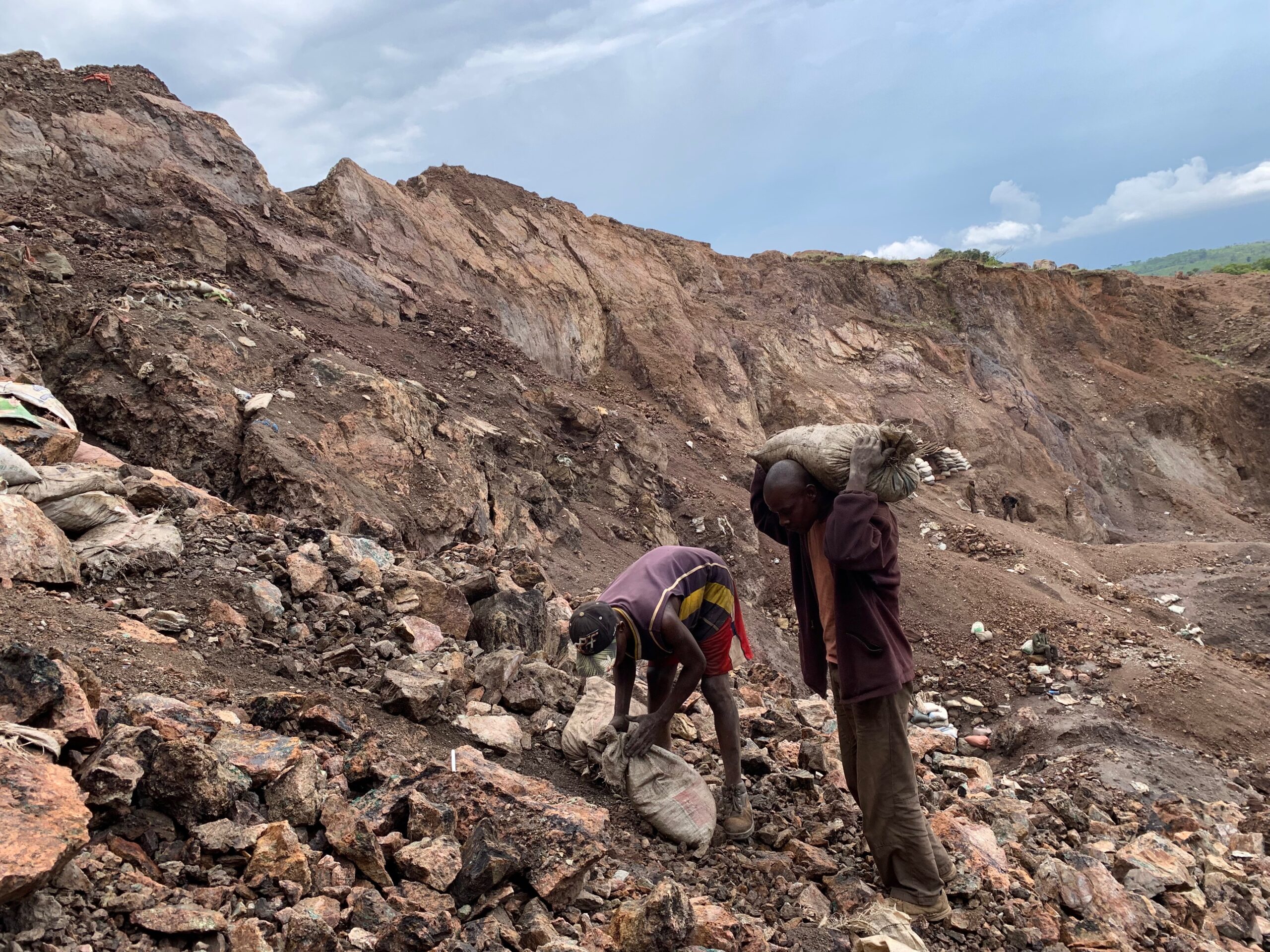
Artisanal cobalt miners in easter Congo.
These dynamics are rooted in the region’s history. It traces to the 1994 Rwandan genocide, when an estimated one million people, most of them Tutsi, were killed in a hundred days. The killers then fled into eastern Congo alongside nearly two million Hutu civilians, eventually forming the Democratic Forces for the Liberation of Rwanda, a militia the Rwandan government has cited ever since as its pretext for military intervention. That is now a conflict of over thirty years that has never seen a settlement addressing the war economy underlying it. Between 1998 and 2004 alone, International Rescue Committee mortality surveys estimated that 3.9 million people had died in the broader conflict. Fewer than 10 percent of those deaths came directly from violence, with the vast majority from preventable diseases such as malaria, diarrhea, pneumonia, and malnutrition made fatal by collapsed basic services. That pattern, mass death from the destruction of hospitals, water systems, and food supply, not violence itself, is the humanitarian signature of a conflict sustained by continued fighting, not one resolved by it.
The current war economy is where this pattern is most visible. The UN Group of Experts found that M23’s capture of the mining town of Rubaya in April 2024 was aimed explicitly at monopolising the coltan trade, and once the group cut the last legal export routes, it simply began collecting illegal taxes on the smuggling that continued anyway. M23 collects at least $800,000 a month from taxing coltan and manganese in Rubaya and ensures that roughly 120 tonnes of coltan alone reaches Rwanda every four weeks, and over that same stretch, Rwanda’s own coltan exports rose 50 percent between 2022 and 2023. M23 also controls illegal logging in Virunga National Park worth $40,000 to $50,000 a week at wholesale prices in Goma, money that lets armed groups keep fielding fighters long after any military objective has been won or lost. That is why interdicting one commodity rarely ends the fighting. The economy simply routes around it.
Gold shows that adaptability at its clearest, because it is the hardest of these commodities to trace. Primera Gold, the formaliaed exporter operating under due diligence rules, saw its monthly exports collapse from a range of roughly 550 to 625 kilograms between May and October 2023 to just 164 kilograms by March 2024, as traders diverted supply to smugglers offering better prices in Rwanda, Uganda, and Burundi. On the Rwandan side, the Gasabo Gold Refinery in Kigali, the country’s only such facility, had no established procedure for tracing the origin of gold delivered to it. President Paul Kagame effectively confirmed that gap when he told a ministerial swearing-in ceremony in November 2022 that minerals from Congo mostly pass through Rwanda before reaching Dubai, Brussels, and Tel Aviv. Roughly 98 percent of gold mined in eastern DRC is smuggled, not formally exported, and this is not a coincidence of geography but a measurable regulatory effect. An accounting study of Dodd-Frank’s supply chain transparency rule found that conflicts fell in tin, tantalum, and tungsten territories while rising in gold territories after the law took effect, the one mineral it could not trace effectively. That substitution is the clearest evidence that predatory war economies do not collapse when a single revenue stream is cut. They migrate to whatever mineral is hardest to trace.
This economy is not confined to armed groups outside the state. FARDC personnel stationed in Misisi ran that fifty-cent bicycle checkpoint described above, and a state army profiting from the same predatory taxation it is nominally fighting to end shows how thin the line between state and non-state predation has become. Research on taxation and authority in eastern Congo argues this blurring is built into how these armed actors govern. Armed actors, state and non-state alike, extract revenue by invoking the same long-standing customary and national registers of legitimate rule. The sixth meeting of the Joint Security Coordination Mechanism (JSCM) between the DRC and Rwanda in August 2026 addressed troop disengagement and FDLR neutralisation, matching every JSCM statement since 2025, none of which mentions mineral taxation, checkpoints, or the extraction economy. This traces back to the Peace Agreement itself, which created the JSCM for security matters while handling minerals separately through a Regional Economic Integration Framework focused on formal supply chains. The informal extraction economy funding the region’s armed factions falls outside both, which is why a peace agreement between governments leaves the underlying war economy untouched.
The human cost of this economy is specific. Controlling territory means controlling the population on it, and the UN Group of Experts documented executions, torture, and the burning of entire villages in the Rutshuru chiefdoms of Bwito and Bwisha, where Hutu communities were targeted over perceived ties to FDLR and Nyatura militias, conduct the Group concluded may constitute war crimes. That targeting ran in both directions, as more than 170 Tutsi individuals were detained in prisons in Kinshasa and Goma on suspicion of collaborating with M23 and Rwandan forces, and the Group also documented public harassment, assassination, and mob violence against FARDC officers of Tutsi or Banyamulenge origin. Ethnicity itself has become grounds for suspicion on every side of the conflict. Children are particularly exposed, with the Group calling for investigations into the cross-border trafficking of minors taken from refugee camps for M23’s benefit, a practice sitting alongside child recruitment by nearly every armed actor in the conflict, on a scale the UN itself has described as unprecedented. Sexual violence is deployed just as widely across multiple factions, as much a weapon of war as any checkpoint or mine.
The displacement numbers that result are difficult to grasp at scale. By the end of March 2024, nearly 1.7 million people had been forced from their homes in North Kivu alone, a surge of over 830 percent since M23’s territorial expansion began in October 2022. When M23 and Rwandan forces captured Goma in January 2025, a city that had already absorbed hundreds of thousands of the displaced, the offensive alone killed between 900 and 2,000 people.
A ceasefire ends fighting between armies, but it does nothing to a coltan tax, a gold-smuggling route through Kampala, or a bicycle toll in Fizi. All of these survive any pause in combat because they never depended on combat succeeding, only on territorial control persisting. Coltan, gold, timber, and checkpoint tolls fund the fighters, and the fighters need territory and population control to keep collecting. Civilians pay for that control through displacement, ethnic targeting, sexual violence, and preventable diseases that a collapsed health system can no longer treat. The new wars lens does not explain every actor in this conflict, but it explains why the profit motive and the human toll are inseparable, and why peace processes built around military and political settlements keep failing to reach the economy underneath them. Armed groups still issue passes to move between Zone and Miba, and men are still fighting over that ground.