A Century of Agricultural Investment in Sudan: Why Has Development Failed?
This article is translated and adapted from an Arabic article published in Sudanese Online. The ideas reflect arguments presented by the author in his book on agriculture in Sudan.
For decades, Sudan has been described as one of Africa’s countries with the greatest agricultural potential. Its vast arable land, diverse climatic zones, water resources, and livestock wealth have repeatedly led policymakers to portray it as a potential “breadbasket” for Africa and the Arab world.
However, a persistent paradox remains: despite more than a century of agricultural investment, Sudan has failed to transform agriculture into a driver of inclusive development or a foundation for political and social stability. Rural Sudan has grown poorer and more vulnerable, while areas that should have been sources of food security and prosperity have become centers of conflict and of displacement.
Today, after the war that began on April 15, 2023, this paradox is clearer than ever before. The war did not destroy the thriving agricultural sector. Rather, it exposed the limits of an investment model that failed to deliver balanced development, strengthen food security, or build peace over many decades.
This raises a fundamental question: if Sudan has the resources and investment has continued, why has its rural population remained poor and vulnerable, with limited access to services, while the countryside has become the main theatre of many of the country’s armed conflicts?
The answer lies in the fact that Sudan’s crisis has never been simply a crisis of resources or financing. This is a crisis in the agricultural investment model itself.
Since the establishment of the Gezira Scheme in the 1920s, followed by the New Halfa, Rahad, and Suki schemes, the expansion of mechanized rain-fed agriculture, and programmes supported by international institutions after independence, agricultural investment has generally been measured by the number of cultivated hectares, the volume of production, or the value of exports.
More fundamental questions have largely been excluded from the debate: who benefits from investment? Where is the investment directed? Does it address the roots of marginalisation? Does it build local institutions and sustainable markets?
Some of these projects succeeded in increasing production during specific periods. However, they did not produce a structural transformation of the rural economy, narrow the gap between the center and peripheries, or establish integrated agricultural markets capable of creating decent employment and improving living standards.
Indeed, some agricultural policies indirectly deepened regional inequalities and reinforced the sense of marginalization, which later became one of the drivers of conflict in Sudan.
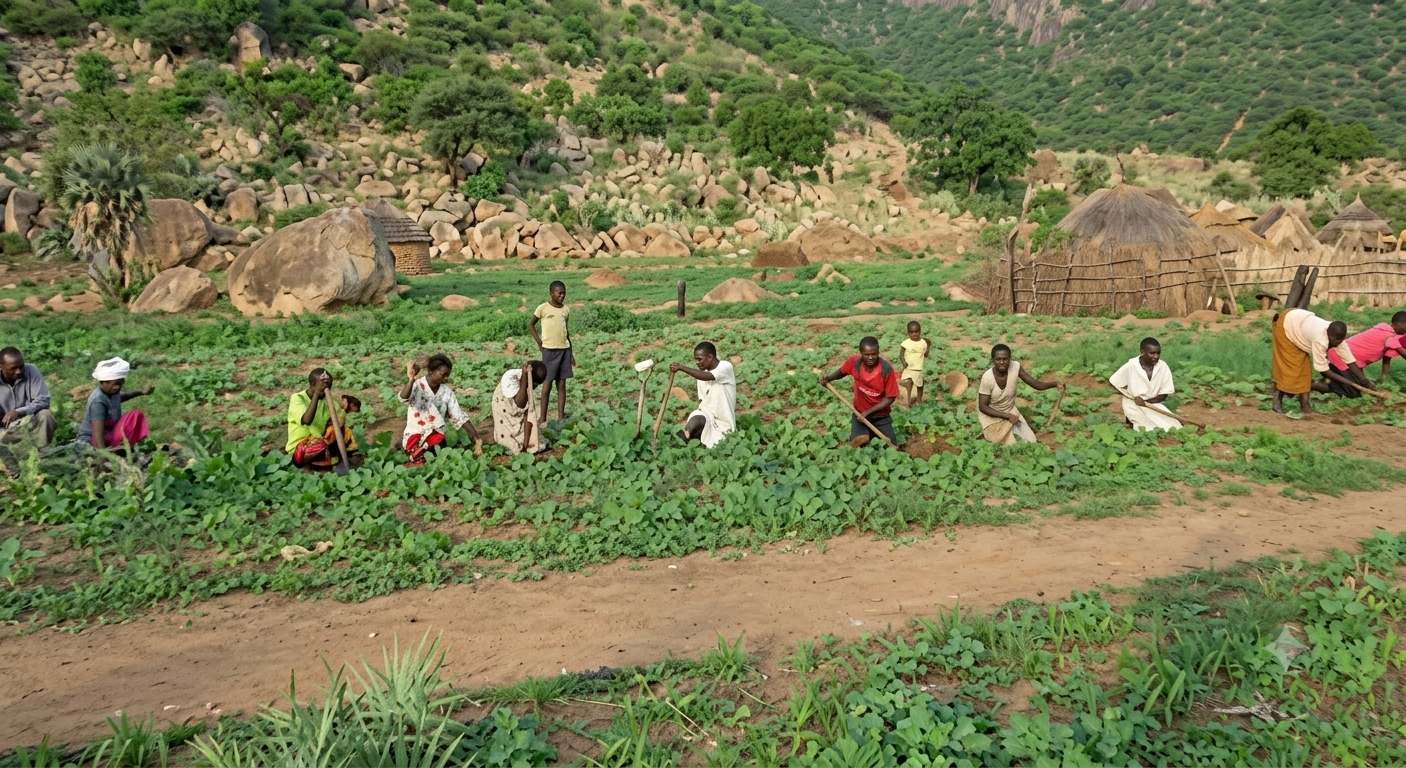
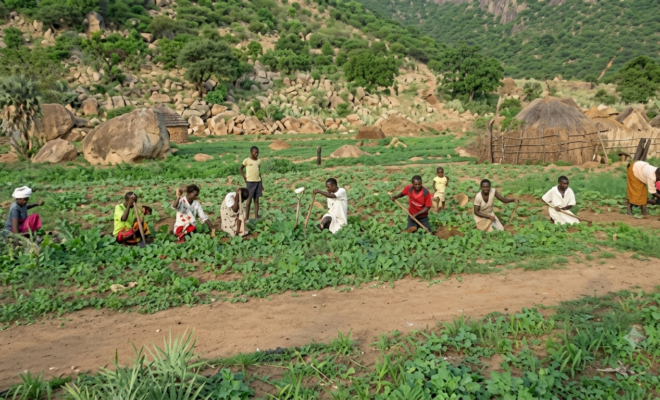
This problem is particularly evident when comparing different investment patterns. Large irrigated schemes receive a disproportionate share of public financing, infrastructure, and research and extension services. In contrast, traditional rain-fed agriculture, on which millions of farmers and pastoralists in Darfur, Kordofan, Blue Nile, and large parts of eastern Sudan depend, remained outside national planning priorities for decades.
Simultaneously, mechanised rain-fed agriculture expanded at the expense of forests, grazing lands, and pastoral routes. This has contributed to growing disputes over land and natural resources.
The livestock sector did not perform much better. Despite their major contribution to exports and rural livelihoods, investment in veterinary services, infrastructure, markets, and value chains remains limited. This weakened one of the sectors with the greatest potential to support balanced and geographically inclusive developments.
Structural consequences
Historical agricultural investment policies have produced consequences that go far beyond economic indicators. They have affected Sudan’s social fabric, political relations, and environmental systems. These policies were not merely technical or economic decisions; they reflected structural and ideological biases in how development was conceived and implemented.
Poverty
The extractive and centralized investment model generates sharp economic inequalities. According to the figures cited in this analysis, approximately 60 percent of financing was directed towards large irrigated schemes in the central regions, 30 percent towards large-scale mechanized rain-fed agriculture, and only 10 percent towards rain-fed agriculture in the peripheries.
This distribution has turned large parts of rural Sudan into spaces of poverty and economic insecurity. Darfur and Kordofan offer stark examples: their high poverty rates—reported at 64% and 54%, respectively—reflect not a lack of resources but the absence of public investment and the persistence of developmental marginalization.
The model also reduced local communities from partners in production to sources of low-paid seasonal labor. Rather than strengthening local ownership and productive capacity, investment frequently extracted value from rural areas while directing the main benefits elsewhere.
Food insecurity
Agricultural policy often prioritizes export-oriented activities, including cash crops and fodder, over local food security. In some areas, land previously used to produce staple foods, such as sorghum and millet, was redirected towards export crops.
This contributed to the transformation of rural communities from relatively self-sufficient food-producing areas into consumers increasingly dependent on imported food sold at high prices in the market. In this model, higher exports do not necessarily translate to improved local food security.
The central problem was not production alone but the relationship between production, access, markets, and livelihoods. A country may increase the value of its agricultural exports, while rural households remain unable to afford adequate food.
Conflict
The unequal distribution of investment and the historical neglect of rain-fed agriculture helped generate grievances that fuelled the armed conflict. Policies involving the appropriation of land for investors, enclosure of large areas, and restriction of access to common resources intensified tensions between farmers and pastoralists.
The disruption of pastoral routes and the weakening of customary systems for managing land and water have made disputes more difficult to resolve. Therefore, competition over natural resources was not simply the result of environmental pressure. It was also shaped by political decisions regarding ownership, access, and investment.
Environmental degradation
Poorly regulated investment policies, particularly in fodder production, such as alfalfa, have contributed to what can be described as the hidden export of water. Large-scale production for external markets can consume substantial quantities of groundwater, including nonrenewable reserves.
The unplanned expansion of mechanized agriculture and forest clearing have also accelerated land degradation and desertification. Meanwhile, the focus on monocropping has reduced biodiversity and weakened the ecological resilience of rural communities.
Environmental damage reduces land productivity and increases competition over shrinking resources. This has created a vicious cycle in which economic insecurity and ecological fragility reinforce each other.
Displacement and migration
The marginalisation of rural areas and the destruction of livelihoods contributed to forced migration from the peripheries to cities and central regions. This helped produce the “belts of poverty” surrounding urban centres.
As productive opportunities disappeared in rural areas, young people were left with increasingly limited options. For many, recruitment into armed groups or migration into artisanal mining became among the few available ways to survive and earn an income.
Migration was therefore not simply an individual response to poverty. It was also a symptom of the failure to create viable rural economies and inclusive local institutions.
The weakening of the state
These policies eroded the legitimacy of the state in peripheral regions because public institutions failed to provide meaningful services or protect producers’ rights. The securitisation of development—funding security institutions instead of investing in grassroots development—contributed to the creation of a coercive but fragile state with limited popular legitimacy.
The result was a cumulative crisis that weakened both the state’s capacity and society’s ability to generate sustainable development. Reconstruction must therefore move beyond repairing visible infrastructure. It must rebuild the economic and social foundations of the state, making responsible agriculture a means of restoring human dignity and rebuilding public legitimacy.
Towards a new agricultural investment model
Sudan’s reconstruction does not require more conventional agricultural projects based on the same assumptions. It requires a new investment model capable of addressing the reasons previous investments failed to deliver balanced development.
This model must treat agriculture as an integrated system rather than merely a productive sector. It should combine fragility analysis, political economy, systems thinking, market-systems analysis, value-chain development, governance, balanced spatial development and responsible investment.
It must also include mechanisms for monitoring, learning and adaptation, allowing interventions to change as conditions evolve. In a post-war context, investment cannot be designed as a fixed technical package imposed from above. It must respond to local realities, conflict dynamics, ecological limits and the priorities of affected communities.
Agricultural investment in Sudan is no longer only an economic issue. It is also a question of state-building, restoring trust between citizens and public institutions, and reintegrating regions that have experienced decades of marginalisation.
The success of Sudan’s post-war recovery should therefore not be measured by the number of hectares returned to production. It should be measured by the country’s ability to build an investment model that makes agriculture a driver of development, a bridge towards peace and the foundation of a fairer and more sustainable social contract.
In a forthcoming article, I will present the main elements of an integrated framework for agricultural investment and reconstruction in Sudan. The framework will seek to translate this vision into a practical planning and investment methodology that can be used by government, development partners, the private sector and local communities.